Plastic Bonding Techniques
Plastic Bonding – Secure Adhesion for Every Type of Plastic
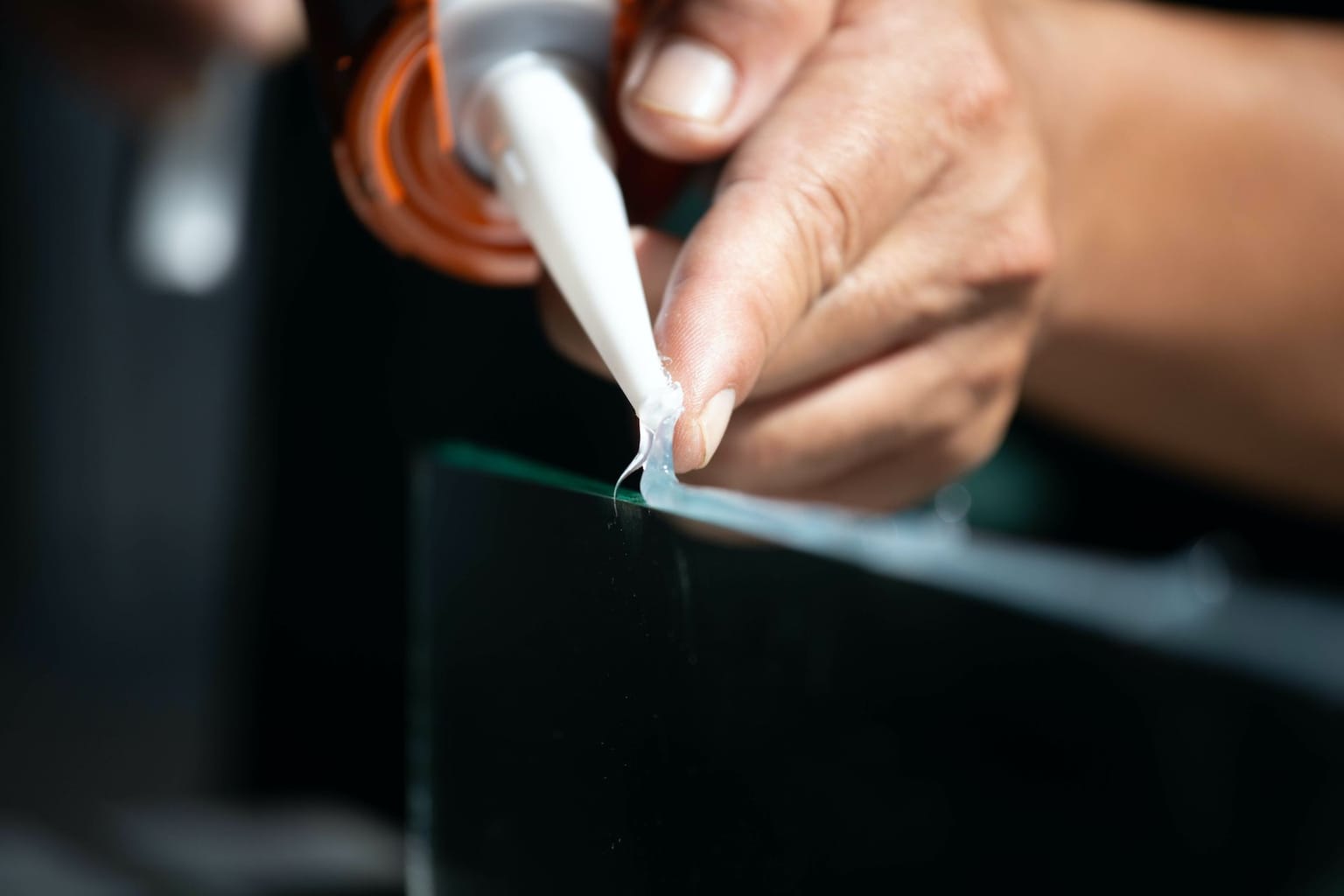
An overview of bonding plastics
- Process: Material-bonding joining using adhesives
- Advantages: flexible, cost-effective, sealing, vibration-damping
- Suitable plastics: ASA, PC, PMMA, PS
- Special feature: suitable for thermal and mechanical load
What does bonding plastic mean?
Plastic bonding is one of the material bonding processes. During the bonding process, adhesive is applied to the surfaces to be bonded either selectively or over the entire surface and cured. The resulting bond in plastic bonding is form-fit and permanent, and must be able to withstand mechanical and thermal loads depending on the area of application. In the case of plastics, it is essential that the selected plastic has an adhesive surface. This makes it possible to bond the thermoformed parts together.
Key Factors to Consider When Bonding Plastics

Pre-Treatment for Adhesion
Certain plastics, such as polyolefins (PP, HD-PE), have low natural adhesion and require pre-treatment through thermal, electrical, or chemical processes to ensure a strong bond.
Surface Cleaning Before Bonding
Plastics must be free from contaminants like oils, greases, and dust. Maintaining a clean workspace is essential to achieve optimal adhesion.
Consulting Experts for Specialized Applications
For specialized plastic bonding applications, expert consultation with adhesive manufacturers ensures that bonded thermoformed parts meet specific performance requirements.
Advantages of bonding plastic parts

High strength
Bonded joints can withstand high mechanical and thermal loads
Process reliability
The adhesive fixing prevents slippage during further processing.
Versatile
Plastic bonding can replace joining techniques such as welding or screwing and is often faster and cheaper.
Functional enhancement
Plastic adhesives can seal, insulate, dampen vibrations or prevent corrosion.
How does the bonding process work?
- Cleaning the surfaces: Before bonding plastic, the surface must be degreased. This can be achieved with organic solvents or by convection heating in an oven.
- Mechanical pre-treatment: Roughened surfaces bond better. Techniques such as grinding, brushing and sandblasting are used for this purpose. This changes the surface roughness and size, which is crucial for the effectiveness of the bonding. At the same time, loosely adhering reaction products, polishing and lubricating agents, and stabilisers are also removed.
- Physical pre-treatment: Processes such as flaming or plasma activation increase the surface energy. This makes the plastic more wettable and adhesive.
- Chemical pretreatment: This process uses oxidation or phosphating to create a new structural boundary layer with significantly higher polarity. Wet chemical pretreatment, for example with chromic sulphuric acid, can be used to treat components of various shapes.
Which plastics can be bonded?
Find out which plastics can be bonded so that you can start your thermoforming project straight away.


An overview of bonding techniques for plastics
Reaction adhesives
Solvent adhesives
Dispersion adhesive
Hot melt adhesive
Process tip: Using surface energy correctly
Je höher die Oberflächenenergie, desto besser die Haftung. Bei schlecht benetzbaren Kunststoffen kann die Klebefähigkeit durch Beflammen oder chemische Aktivierung deutlich verbessert werden. So entsteht eine stabile, dauerhafte Verbindung.
Frequently asked questions about bonding plastic parts
Which plastics are difficult to bond?
Polyolefins such as PP and HD-PE have poor adhesion, but can be pre-treated by flame treatment or plasma activation.
Other Joining Techniques for Thermoformed Plastics
Want to explore additional joining techniques for thermoformed plastics? Learn more about:


