Forming from the plastic sheet up to 4000 x 3000mm forming area | up to 15mm initial thickness | Fast prototypes | Surface finishes


Thermoforming with plastic sheets is used in the manufacture of large, voluminous parts.
Thermoforming plastic sheets produces large, voluminous plastic components. From a material thickness of approx. 3 mm, rolls are no longer used; instead, sheets are used. These can be up to 15 mm thick and 4,000 x 3,000 mm in size.
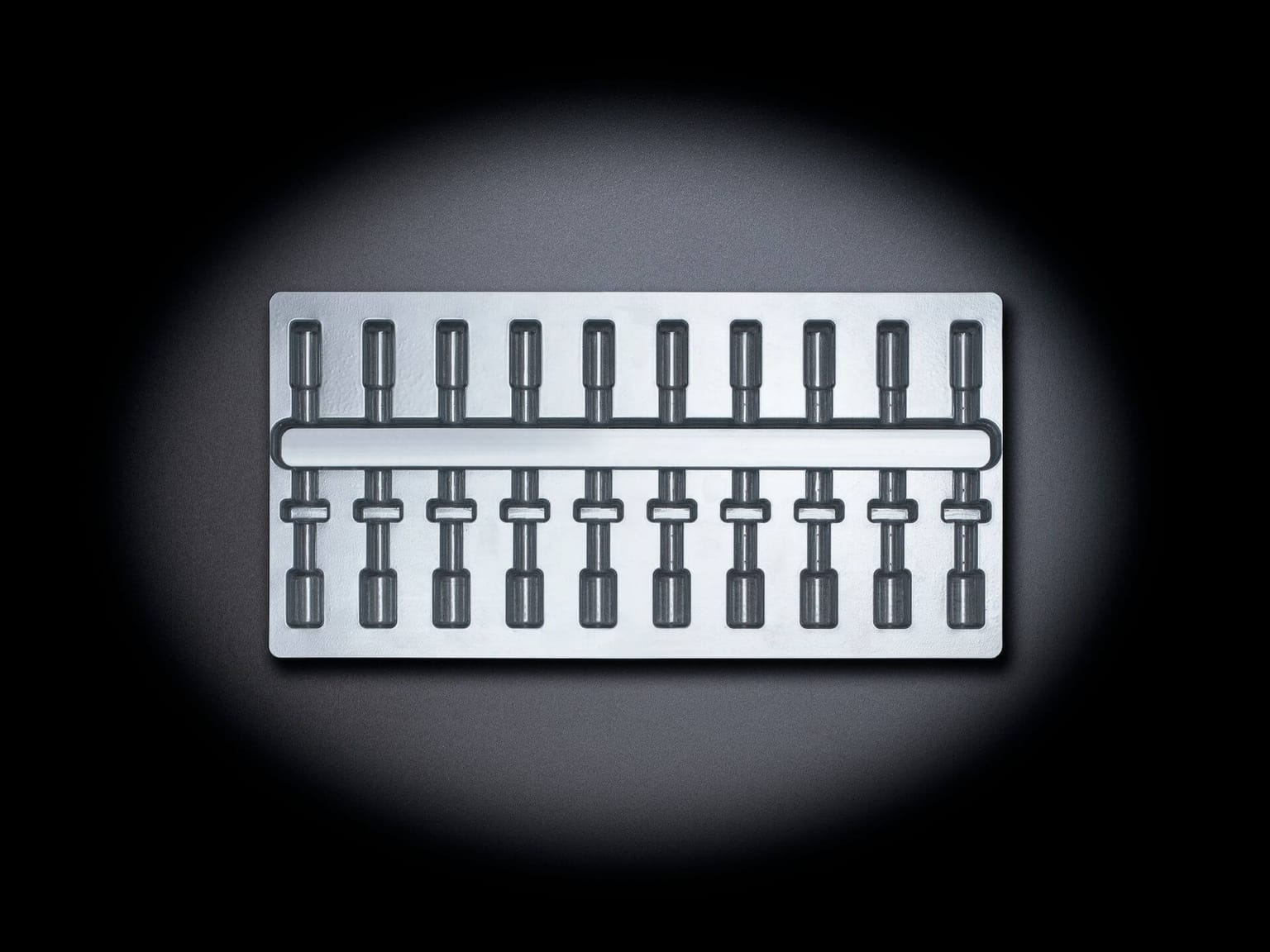
Deep-drawn sheets are particularly suitable for covers, housings, and large-volume workpiece carriers that need to be lightweight, stable, and precise.
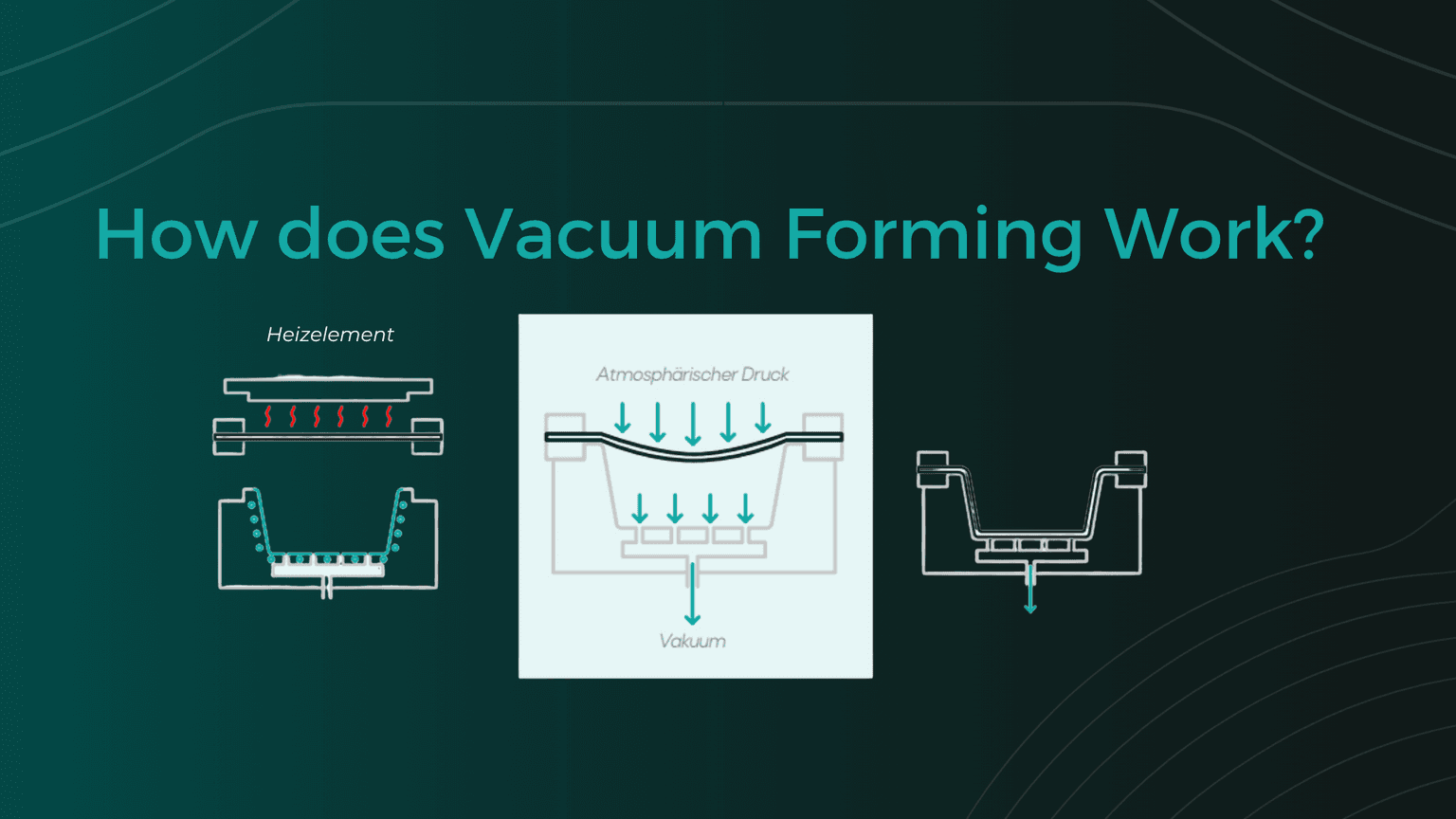
Plastic sheet is clamped in a frame
Sheet is heated
Material is pre-stretched with compressed air
Tool forms the thermoformed part
Frame opens, thermoformed part is removed
| Procedure | Advantages | Typical applications | Limitations |
|---|---|---|---|
| Thermoforming sheets | Large parts up to 4000 × 3000 mm, wall thicknesses up to 15 mm, low tooling costs | Machine covers, caravan parts, medical technology housings | Longer cycle times, not for million-unit series production |
| Thermoforming films | Very fast cycle times, economical for thin wall thicknesses, fully automatic | Blister packs, trays, packaging | More suitable for small to medium-sized parts |
Lower project costs compared to metal parts, fiberglass-reinforced plastic (FRP), or small to medium injection molding series.
Depending on the application, forming from plastic sheets is cost-effective from just a few hundred units up to several thousand.
Sheet-forming machines process materials directly with texture and color—no post-processing needed.
Surface finishing options include grinding, polishing, painting, printing, and electroplating.
Thermoforming on plastic sheets enables the production of large, thin-walled, and lightweight parts.
Fast and precise contours, openings, slots, and recesses are achievable with 5-axis CNC milling machines.
The base plate is the first component of the so-called substructure. In sheet-forming machines, the base plate is an integral part of the forming machine and does not need to be separately manufactured when ordering a forming tool.
| Part areas | Relevant points and tolerances |
|---|---|
| Dimensional measurements | Tolerances according to DIN ISO 2768-c or -m |
| Material thickness | - Semi-finished material: Manufacturers typically allow a tolerance range of up to +/-10% in material thickness. - This must be checked before production to proactively adjust for thickness variations within a tighter tolerance range. - These fluctuations must be considered within the tolerance window. |
| Trim edge | - Milling: Milled edges are deburred. The precision and cleanliness of the milling cut depend on the chosen milling head size and milling speed. - Knife-cut punching: In knife-cut punching, attention must be paid to whiskers (fine filaments) along the trim contour. - Shear-cut punching: In shear-cut punching, burr formation at the trim edge must be considered. |
Thermoformed sheets are thicker materials (3 mm and above) and large-volume parts such as covers and containers. Rolls/films are intended for thin-walled, small plastic trays and blister packs.