Thermoforming vs. 3D Printing – Advantages, Disadvantages, Differences, and Similarities
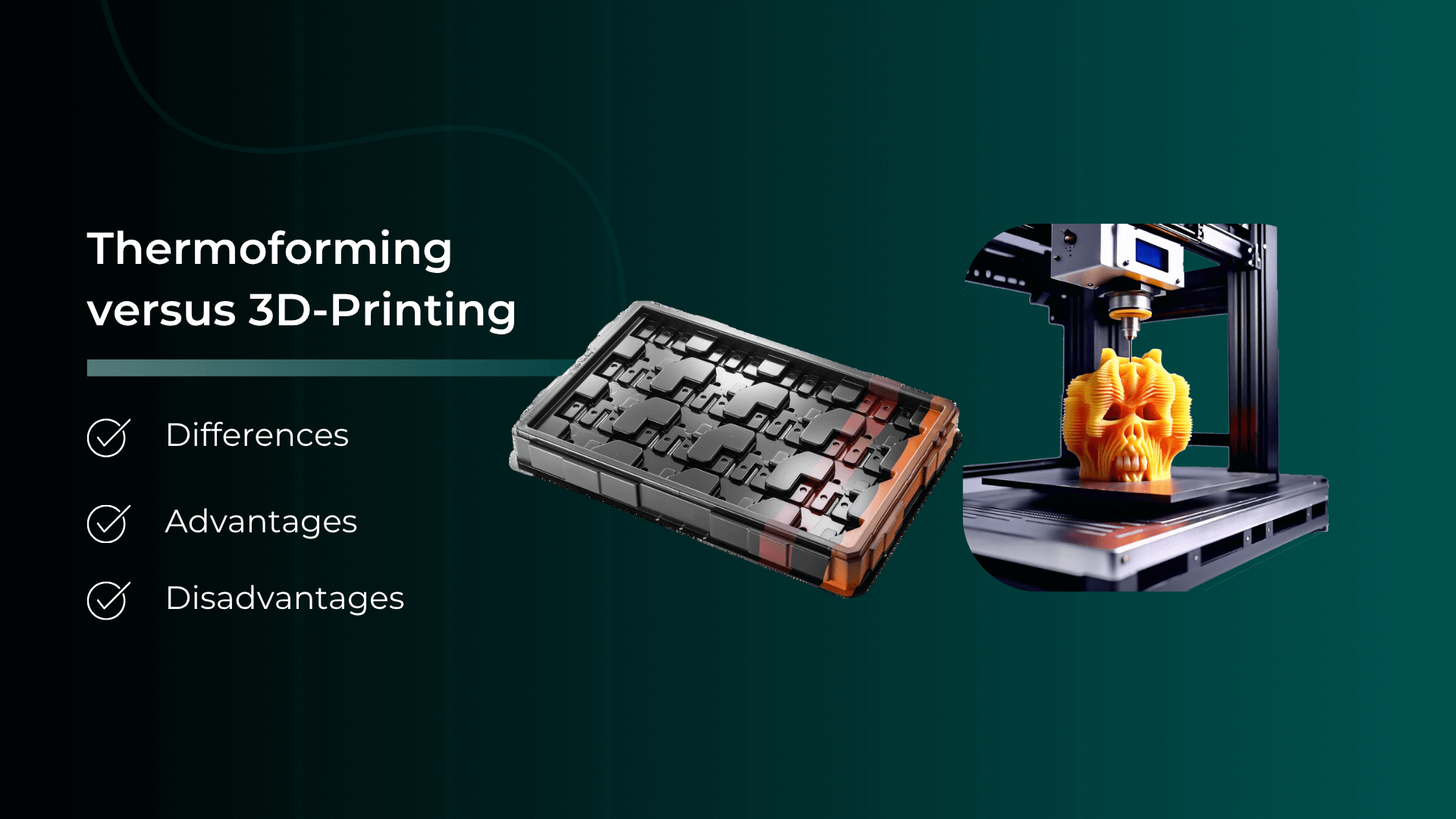
Plastic parts are manufactured using various processing methods. In this article, we focus on comparing the processes of plastic thermoforming and 3D printing.
Amin Lakhal
Updated on August 28, 2026
Share
Thermoforming vs. 3D Printing - The Essentials in Brief
Thermoforming is suitable for cost-effective series production of large plastic parts with flexible shapes and high material efficiency.
3D printing is ideal for prototypes, small series and complex components without tooling, but slower and with limited material choice.
Thermoforming is worthwhile for medium to high volumes, 3D printing primarily for customized or quickly needed parts.
→ For a quick overview, we recommend our video on the same topic:
By playing the video, you agree that your data will be transmitted to YouTube and that you have read the Privacy Policy.
How Does Thermoforming Work?
In thermoforming, also known as plastic deep-drawing, thermoplastic plastics are formed by heating using thermoforming machines. After cooling, the desired shape is cut by punching or milling.
ℹ️ In addition to classic plastic thermoforming, also known as the single-sheet process, there is also twin-sheet thermoforming, in which two plastic films/sheets are heated simultaneously. For more information, see our blog post on the twin-sheet process.
Thermoforming on a negative mold
The Thermoforming Process
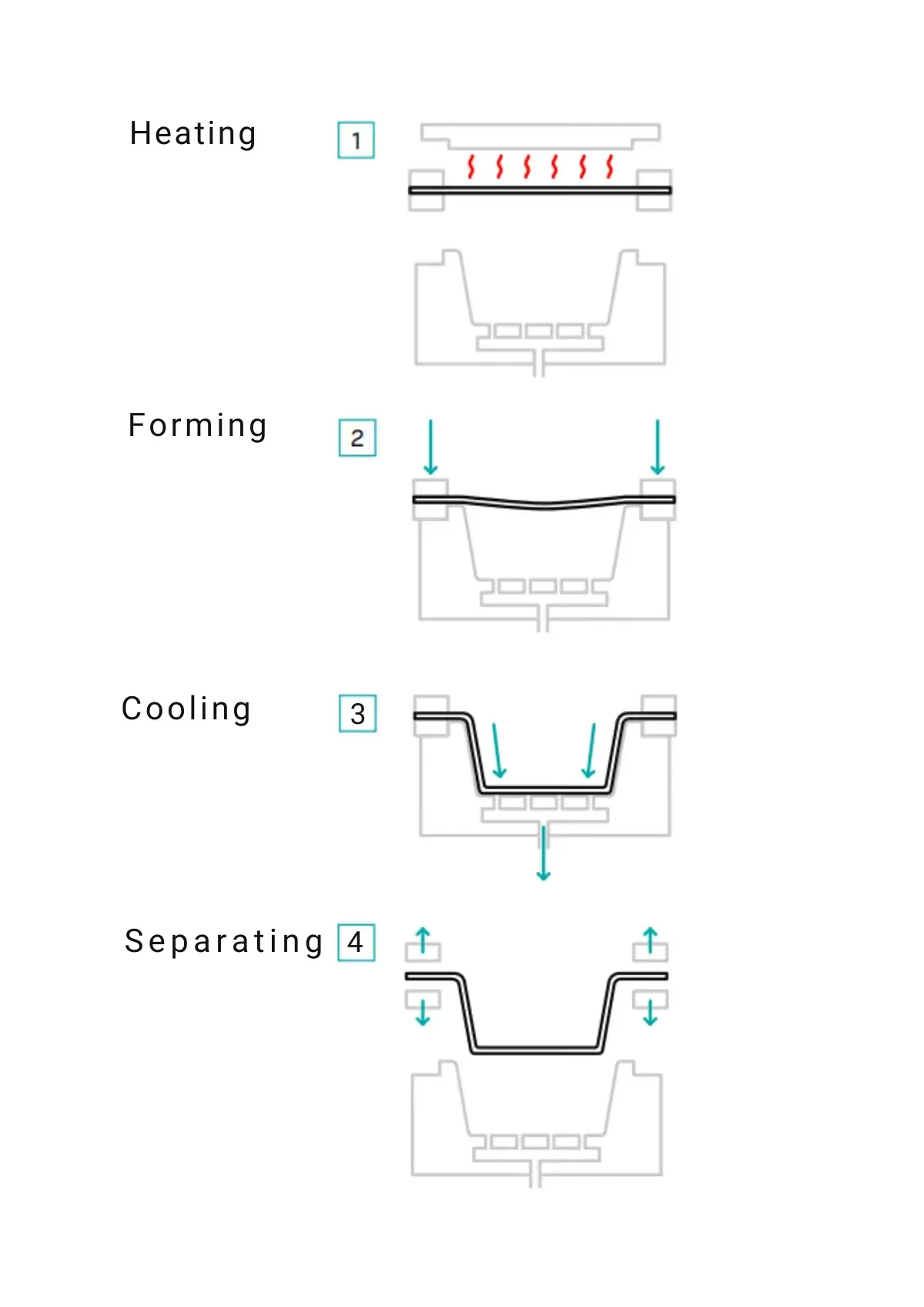
This is how the process of thermoforming plastics works:
Heating: During the heating process, the thermoplastic is heated to the so-called forming temperature. At this stage, the plastic shows rubber-elastic behavior.
Forming: During the forming process, the semi-finished product is stretched into the desired shape. The material is clamped in a frame and positioned on the thermoforming tool. The entire process usually takes only a few seconds.
Cooling: After the semi-finished product has made contact with the tool, the cooling process begins. Cooling occurs through contact of the tool-side material surface with the aluminum surface.
Separation: After the thermoformed part has cooled, the next step is demolding. Various separation methods, which can be divided into punching and milling, are used to remove the material remnants.
What is 3D printing?
3D printing definition: 3D printing, also known as additive manufacturing (AM), begins with the creation of a digital 3D model, which is divided into thin horizontal layers - a process known as "slicing". The 3D printer then builds the object layer by layer by applying material such as plastic.
A brief look at the history of 3D printing
The 3D printing process was invented in the early 1980s and has therefore existed for about four decades. Originally, 3D printing was a slow and expensive manufacturing method. However, thanks to extensive technological developments, 3D printing technology has evolved into a process that finds applications in various industries.
What 3D printing processes are there?
3D printing is a versatile plastic processing method, which in turn can be divided into several printing processes. Three important ones are the following:
SLS - Selective Laser Sintering
In this 3D printing process, a laser selectively fuses plastic powder particles. This creates a three-dimensional component layer by layer. One advantage here is that the residual powder can be reused.
SLA - Stereolithography
3D printing process with SLA: A laser is used here and cures the part from liquid resin. This process offers the highest precision, but limited material selection.
FDM - Fused Deposition Modeling
The printing material required for this is heated in the 3D printer and the object is built up layer by layer along the path. Once printing is complete, support structures or support materials must be removed from the object, if present.
How Does 3D Printing Work?
Here is a simplified breakdown of the FDM 3D printing process:
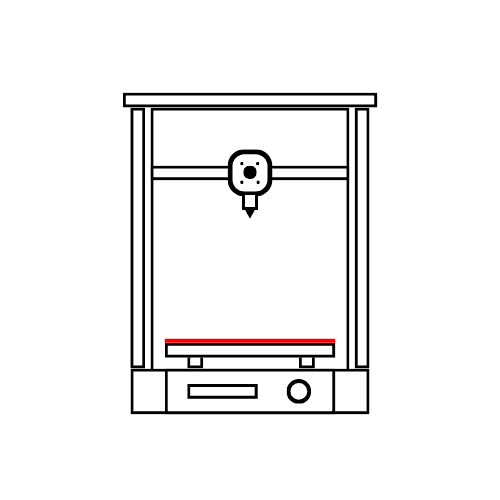
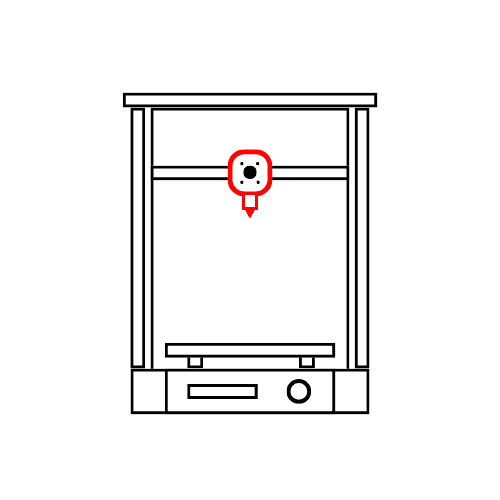
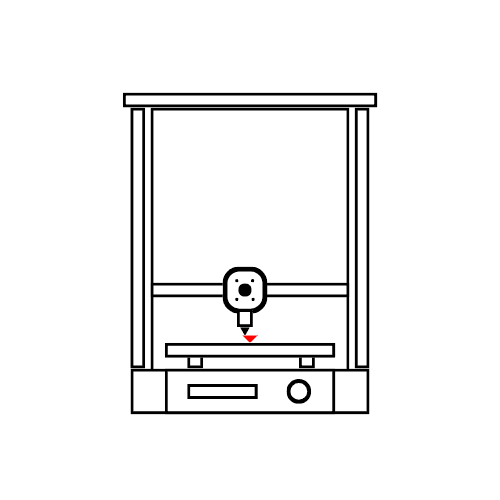
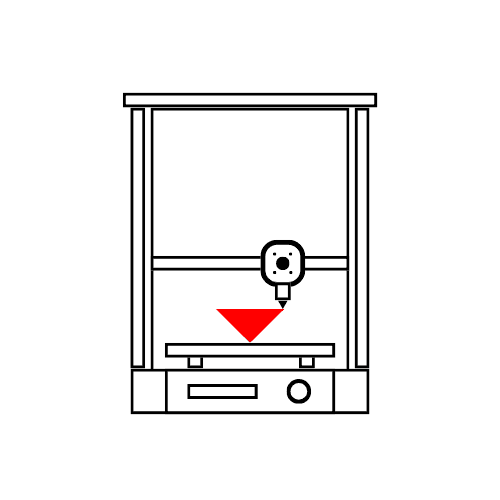
3D printing material preparationHeating up the 3D printerApplying the layersCooling and hardening
Material preparation: The 3D printer is loaded with the appropriate plastic material. The printing parameters, such as printing temperature and speed, are set according to the material requirements. The print bed is prepared and, if necessary, treated with special adhesives to ensure good adhesion of the material during the printing process.
Heating the 3D printer: The 3D printer is heated to the required temperature to bring the material into a liquid or at least easily malleable state.
Applying the layers: The 3D printer continues building the object layer by layer, placing or solidifying each layer over the previous one. This layer-by-layer construction continues until the entire object is printed.
Cooling and hardening: After the printing process, the printed object is cooled and hardened to achieve its final strength. If necessary, post-processing steps can be carried out after the printing process, such as removing support structures or smoothing surfaces.
The differences between thermoforming and 3D printing
Thermoforming and 3D printing are two completely different processes for manufacturing plastic parts. While thermoforming is mainly used for series production, 3D printing is primarily suitable for prototypes and small series.
Comparison of the two processes
Factors
Thermoforming
3D Printing
Volume
Medium > 5
Low < 5
Lead time
Weeks
Days
Tooling costs
Medium
No tooling needed
Tolerances
-
-to++
Volumes in comparison
3D printing: Typical in the prototyping area, lead times are often only a few days. For large series, 3D printing is limited due to slower production speed, poor scalability and higher material cost share.
Thermoforming: Due to the tool design, the thermoforming process is scalable for volumes from 5 to millions. Production takes place at high cycle speeds and is therefore also suitable for mass production.
Tooling costs and lead times
3D printing: No tooling required → therefore there are no lead times. As soon as the CAD data is available, parts can be manufactured within a few days.
Thermoforming: Requires a tool, which costs 500-10,000 € depending on the design (for large parts also more). Tool production usually takes several weeks, in the best case 1-2 weeks.
Production time
3D printing: The parts can be produced practically "overnight" after the design is approved.
Thermoforming: Dependent on tooling. Initial sampling usually takes several weeks.
Tolerances
Thermoforming: In most industrial and packaging applications ± 1 mm according to ISO 2768-c (for components from 120-400 mm).
3D printing: Depending on the process, e.g. ±0.2% for SLA and ±0.5% for FDM.
ℹ️ More information about thermoforming volumes, lead times and more can be found in the Design Guide.
Possibilities and limitations of thermoforming
Thermoforming proves to be an extremely cost-effective option, even when producing large volumes. This is partly due to fast and cost-effective production, low tooling costs, high material efficiency and flexible shaping. The large selection of materials, additives and surface finishes of the semi-finished products also make thermoforming an extremely attractive solution in various industries. The disadvantage - depending on the series size - lies in the necessary investment in a tool.
Overview of the advantages and disadvantages of thermoforming
Advantages of thermoforming Disadvantages of thermoforming
Disadvantages of thermoforming
Low investment costs for tools
Tool adjustments can be expensive
Cost-effective production
Potential sources of error in semi-finished product manufacturing due to frozen stresses in the material during extrusion
Worthwhile even for small quantities
Complex shapes with very thin walls are limited
Optimal options for post-processing
Potential difficulty in achieving uniform material thicknesses in complex shapes
Post-industrial recycling possible for simple cycles
One-sided material contact
Unrivaled for thin-walled parts
More complex geometries cannot be produced using 3D printing
Short lead times
Semi-finished products more expensive than with 3D printing
Large selection of materials
Cutting and punching costs
All sizes and shapes possible (large parts)
Complex geometries that cannot be produced using 3D printing
What are the advantages and disadvantages of 3D printing?
3D printing is particularly suitable for the production of complex prototypes and small series. However, compared to thermoforming, it also brings some limitations.
3D printing advantages
3D printing enables the production of complex, customized parts with high precision and minimal material waste or material scrap. This leads to material and cost savings for smaller volumes or prototype development. In addition, the need for expensive molds or tools for production is eliminated, which reduces the initial investment.
3D printing disadvantages
3D printing is generally slower and less cost-effective when producing large volumes. The limited material selection and strength can also mean that 3D printing is not suitable for all applications. In addition, due to the layer structure of the parts, time-consuming post-processing may be necessary, which requires time and resources.
Comparison to thermoforming
In comparison, a thermoformed part can often be used without additional grinding, polishing or painting work. The appropriate finish can be achieved directly with the material or by introducing an imprint of the desired surface structure in the tool.
Overview of the advantages and disadvantages of 3D printing
Advantages of 3D Printing
Disadvantages of 3D Printing
No tooling costs
Low quantities
Short delivery times
Slow manufacturing process
Complex shapes possible
Limited material selection
No long setup times & tool changes
Surface may require post-processing
No tool adjustments
Component size limited
Constant price per part
Manufacturing process is more prone to errors, especially with complex components
Shortened production time for prototypes
Slightly larger manufacturing tolerances
/
Low material efficiency → necessary support structures
3D printing possibilities and application areas
The 3D printing process offers diverse application possibilities, ranging from prototype development to the production of customized medical implants. The process is particularly suitable for flexible small series that can be implemented without tooling costs.
Samples/small series and prototypes
3D printing is particularly suitable for the cost-effective production of small series, as expensive tools are not required. This is particularly advantageous for companies that need flexible and demand-driven production of construction or spare parts. In addition, 3D printing technology is ideal for producing detailed samples and models, especially in industries such as design and architecture, where realistic models are of great importance for planning and visualization.
Healthcare
In healthcare, 3D printing enables the production of customized medical elements that can be precisely tailored to the individual characteristics of a patient. This increases the success rate of implantations and minimizes the risk of complications.
Industry & mechanical engineering
In various industries such as mechanical engineering or automotive, 3D printing is used to produce customized spare parts. This enables efficient production of components, especially for models where conventional manufacturing methods may no longer be economical.
Application areas in thermoforming
The thermoforming process has been an established production method for transport packaging, housings, covers and blisters for decades. It is characterized by high formability, low tooling costs and fast cycle times.
Automotive industry
In the automotive sector, thermoforming is the preferred method for plastic trays.
Use for body parts, electronic modules and vehicle components
Complex and precisely fitting carrier systems secure transport
Increasing efficiency along production lines
Industry & mechanical engineering
In industrial use, thermoformed plastic parts are used for a variety of applications, including:
ESD protection through specific surface resistance and material selection
ℹ️ Would you like to compare plastic thermoforming with other processes? In our article A Comparison of Plastic Manufacturing Processes, we show you the differences and similarities between thermoforming and injection molding, CNC milling, and foam solutions. If you’d like to compare deep drawing directly with injection molding, we recommend our article Injection Molding vs. Thermoforming.
Thermoforming and 3D printing - A conclusion
In conclusion, the comparison of thermoforming and 3D printing shows that both technologies have specific strengths and weaknesses that should be considered depending on the requirements of a project or product. 3D printing is primarily suitable for creating short-term prototypes and very small quantities. Thermoforming proves to be a cost-effective option for medium to large volumes. In addition, thermoforming offers fast production costs, comparatively low tooling costs and material efficiency, as well as broad material requirements.
Do you have questions about thermoforming? We are happy to help. Simply contact us or subscribe to our newsletter for the latest information from the world of thermoformed parts!
Save this post
Want to continue reading this blog post later or use it on your computer? Download and save it now.
Frequently asked questions about thermoforming and 3D printing
Thermoforming is suitable for cost-effective series production of large plastic parts with flexible shapes, while 3D printing is ideal for prototypes, small series and complex components without tooling. Thermoforming is faster for large volumes, 3D printing more flexible for customized parts.
Thermoforming is particularly suitable for medium to high volumes, as the process is fast and cost-efficient through the use of tools. Volumes from a few hundred to several million are possible.
3D printing is mainly used in prototyping, design, architecture, healthcare and industry for small series and customized parts. Thermoforming finds application in packaging, automotive industry, housings, covers and blister packaging.
3D printing is particularly suitable when frequent design changes, complex internal channels, undercuts, customized parts or rapid development are the focus. 3D printing is less suitable for large series, perfect series optics or very tight tolerances.
Thermoforming is particularly suitable for large, thin-walled parts with simple geometry. The process is especially interesting when low tooling costs and medium series are the focus.
Typical thermoformed parts are packaging, equipment covers, interior trim and housings.
Further Content
Thermoformed Parts in Practice
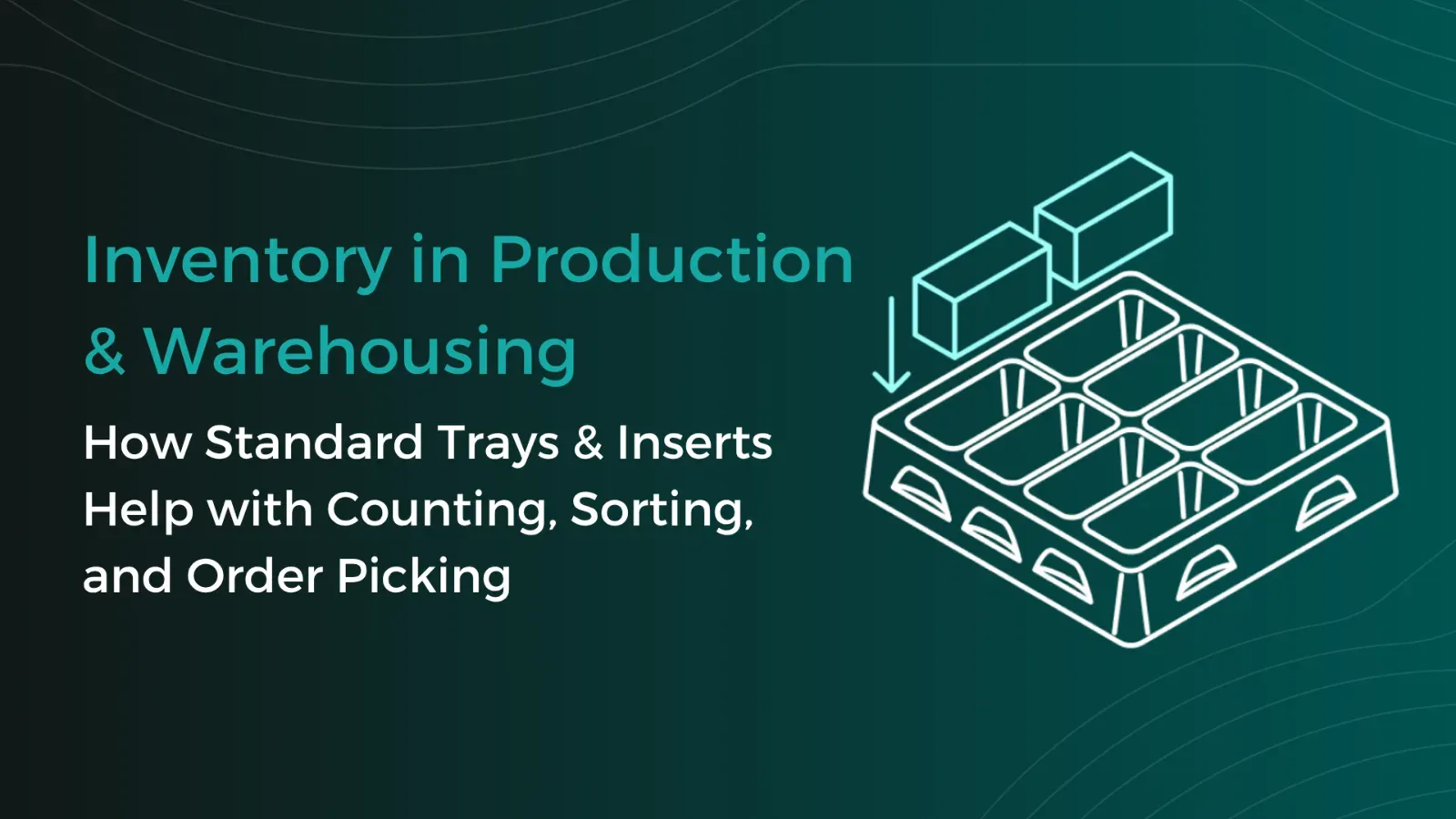
Warehouse Inventory: Tips & Tricks for Better Warehouse Organization and Efficiency with Trays
Warehouse inventories cost time, tie up staff, and often disrupt ongoing operations. This is especially true for small parts, serial components, or recurring components, where counting quickly becomes confusing if parts are stored loose in boxes or shelf compartments. Standard trays create a simple yet effective structure here for better warehouse organization. This article shows how trays optimize inventory counts in both the warehouse and production.
Thermoformed Parts in Practice
Tray Labeling: How to Use Labels Effectively for Your Packaging
To ensure that trays can be correctly identified and used, clear labeling is essential. Depending on the application, quantity, and process requirements, different methods can be used, such as permanent engraving or flexible labels. In this article, you will learn which tray labeling methods are available, when each method makes sense, and how labeling can already be incorporated into the tray design using formary’s 3D Tray Generator.
Thermoformed Parts in Practice
Supplier Guide for Plastic Thermoformed Parts – 10 Key Factors That Matter
Choosing the right supplier for plastic thermoformed parts is crucial for the quality, efficiency, and cost-effectiveness of your production. Our 10 tips will show you what to look for when selecting a supplier.
Platform & Features
3 Factors That Accelerate Your Procurement with formary
The three key factors—time, speed, and efficiency—are crucial for success in industrial manufacturing, from inquiry to delivery. That’s why formary has optimized this process, significantly accelerating the procurement of plastic thermoformed parts. Learn more in this article.
Thermoformed Parts in Practice
Rapid Prototyping in Thermoforming – Definition, Benefits & Processes
Rapid prototyping is used in product development to quickly create preliminary models. In thermoforming, rapid prototyping offers numerous advantages for producing high-quality prototypes efficiently and cost-effectively.
Platform & Features
Project Planning in Thermoforming – From Concept to Mass Production
From the initial idea to mass production, various factors must be considered in thermoforming project planning, including material selection, tool manufacturing, and quality control. This article provides a detailed look at how a thermoforming project with formary is executed.
Thermoformed Parts in Practice
Thermoforming vs. 3D Printing – Advantages, Disadvantages, Differences, and Similarities
Plastic parts are manufactured using various processing methods. In this article, we focus on comparing the processes of plastic thermoforming and 3D printing.
Thermoformed Parts in Practice
Injection Molding vs. Plastic Thermoforming – Advantages, Disadvantages, Differences, and Similarities
In the world of plastic processing, there are various common manufacturing methods used to produce precise plastic components for industrial applications. We compare two of them: Injection Molding and Plastic Thermoforming.
Thermoformed Parts in Practice
Checking CAD Models for Thermoformability: The Designer's Guide
Whether a plastic part is thermoformable is determined in the CAD model. Anyone who discusses geometry, wall thicknesses, and demoldability only after the first sampling pays for this loop with tool modifications, material waste, and lost weeks in the project timeline. This can be avoided during design: with a structured check that evaluates each model along this guide and makes typical sources of error visible early on.