Construction Data in Thermoforming: These Factors Must Be Considered for Plastic Deep Drawn Parts
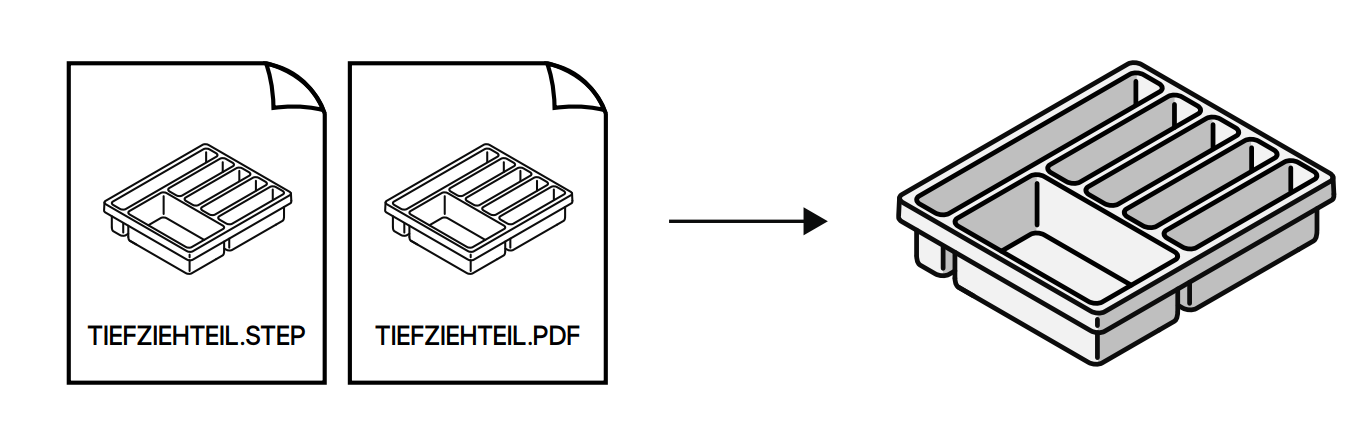
Deep drawn parts are custom-made and designed individually in a CAD format. Before a deep drawing tool is manufactured, a customer approval process of the CAD data or the derived, dimensioned PDF drawing takes place.
Sarah Guaglianone
Updated on August 7, 2026
Share
Design Data in Thermoforming - Key Points at a Glance
Precision of design data: Dimensions, material, material thickness, draft angles, and radii must be carefully checked to ensure functionality, quality, and design of the thermoformed part.
Cavity geometry & installation situation: Components must be optimally designed for transport, assembly, and integration into the overall product. Tolerances and packing density are critical.
Process & data formats: CAD data (STEP for 3D, PDF for 2D) is created, reviewed, approved, and sampled before series production starts (timeframe approx. 3–5 weeks).
→ Do you already have a CAD file that you want to check for thermoformability? Upload it in our automated DfM analysis and receive a feasibility check within seconds.
What is Design Data?
When referring to design data in plastic thermoforming, it means the CAD (Computer-Aided Design) file or the dimensioned drawing derived from it (often in PDF format) of the finished end product, in this case the thermoformed part.
When creating the data, both customer requirements and Design for Manufacturing (DfM) recommendations from the thermoformer or toolmaker are incorporated.
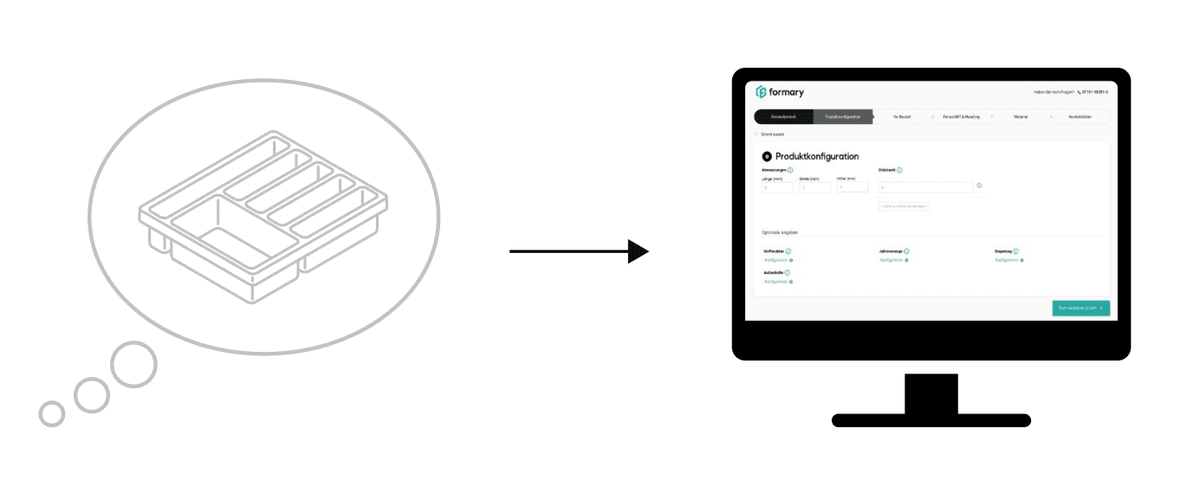
formary usually develops the product and therefore the design data completely from scratch based on customer requirements. Sometimes, however, customers also provide finished CAD data for the thermoformed part. This happens either when the plastic thermoformed part already exists in the company and is being requested again, or when the internal design department has created a proposal.
ℹ️If you have already created your own CAD data or a STEP model, it is worth carrying out a structured thermoformability check before approval. This includes evaluating the tool side, draft angles, radii, draw ratio and possible undercuts. You can find a practical guide on this in our article Checking CAD Models for Thermoformability: A Guide for Design Engineers.
What Format Should Your Construction Data Have?
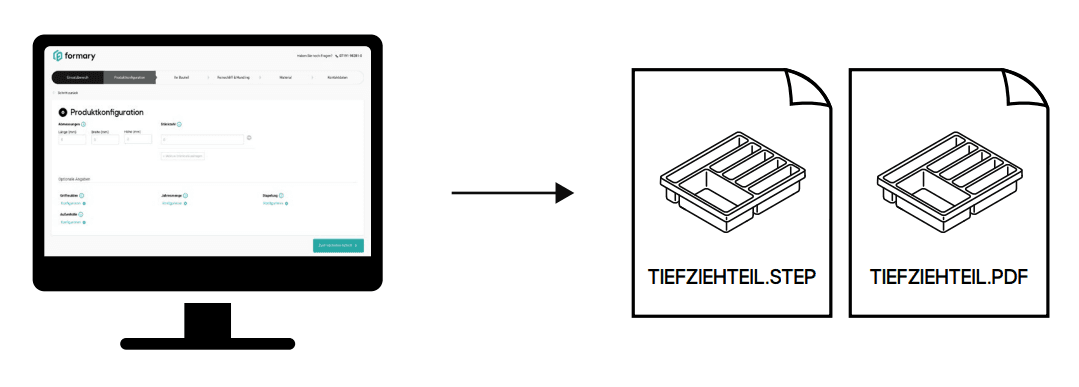
At formary, construction data is always provided to customers in the form of 2D drawings in PDF format and 3D data in STEP format.
What does STEP mean?
STEP (Standard for the Exchange of Product model data) is a file type that enables the exchange of 3D models between CAD systems, regardless of which system the model was created on.
The technical drawing includes detailed information about:
Textures
Tolerances
Material properties
A precise and careful review of the construction data is crucial to ensure that the thermoformed parts meet the desired requirements in terms of functionality, quality, and design.
The Key Factors in Reviewing Construction Data for Approval
To ensure that the created deep draw design meets the requirements and guarantees functionality, the following factors must be carefully considered:
Dimensions
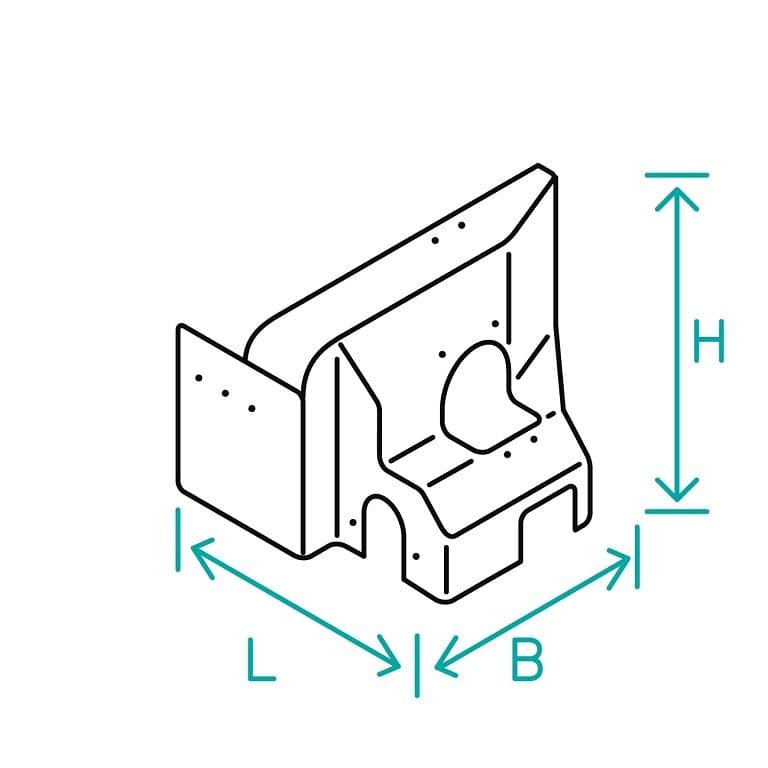
The tolerance-compliant adherence to length dimensions (e.g., length x width x height) is always relevant to ensure that the final product meets the desired specifications. It should be checked whether the construction data were created with dimensional accuracy according to the agreed DIN ISO 2768 length measurement standard.
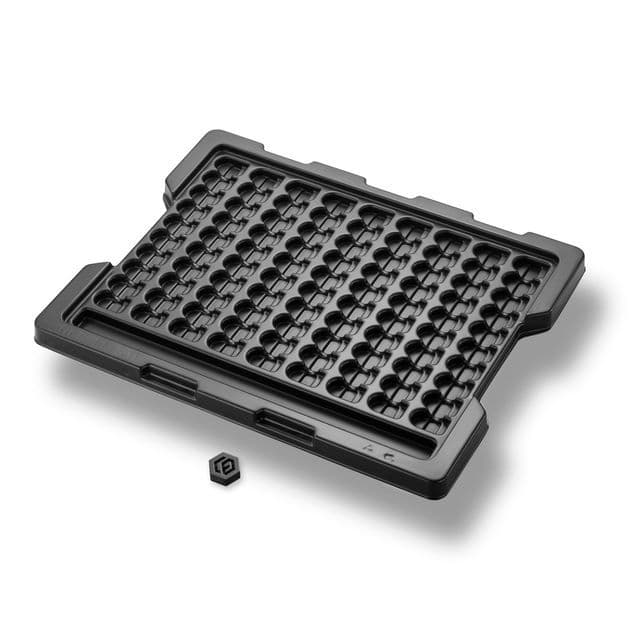
Are the components placed in the agreed orientation?
Are the components picked up by the desired geometry to ensure safe transport along the planned route (factory, road or rail)?
Are handle recesses included for easy removal?
Is the packing density as discussed?
The construction data should therefore provide clear information on the conditions and tolerances that apply to the nesting geometry of the plastic deep drawn parts. This means the parts should be designed to make optimal use of the available space while ensuring smooth production flow.
Thermoformed tray with custom-fit cavities
Assembly Situation
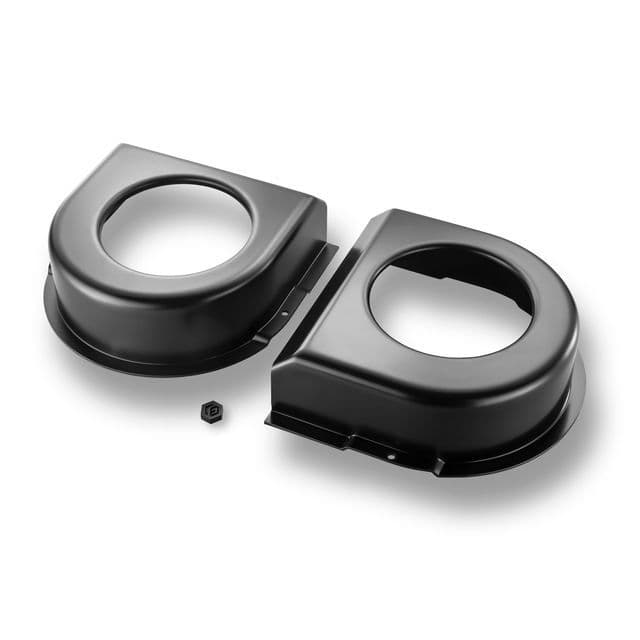
Covers require specific data on the installation situation. The installation situation refers to the integration of the thermoformed part into the overall product or overall assembly of the customer's product. This is important to ensure that the part fits seamlessly into the intended environment and meets all assembly requirements. Therefore, it is necessary to check:
Do the dimensions at attachment and mounting points match the specifications?
Are tolerances for assembly taken into account?
Is compatibility with other components ensured?
Thermoformed plastic covers
Material
Different plastics have different properties and are suitable for different applications. The material specified on the drawing should therefore be checked for accuracy.
More information on plastics can be found in Materials.
Plastic granules
Initial Material Thickness
The initial material thickness refers to the thickness of the plastic sheet or roll used in thermoforming. The initial material thickness was determined during quote creation based on technical criteria and can therefore be compared with it.
If multiple initial thicknesses are sampled to achieve the optimal stability and geometry result, the final design drawing is updated accordingly to the chosen solution.
The Process Flow for Creating and Reviewing Construction Data at formary
For the creation and review of design data, the process looks like this: Requirements - Design - Data Approval - Sample - Sample Approval - Series. In detail, project planning in thermoforming proceeds roughly in the following steps:
1. Request Your Project
Enter your requirements in the configurator and send your inquiry to formary. You will receive an offer within 24 hours.
2. Let Us Create Your Data
In the second step, you have two options:
Do you have a design department?
Then feel free to create your plastic thermoformed part yourself. With our DfM-Analysis, you can check whether your CAD-Data is thermoformable.
Do you want to have your plastic thermoformed part designed from the start by designers with years of experience in all application areas?
formary creates your data and designs optimal geometries for thermoforming according to your requirements.
ℹ️ In our whitepaper DfM-Check for Thermoformed Parts you will learn how to use our DfM Tool and what factors you need to consider when designing a thermoformed part.
3. Receive Your Sample Quickly
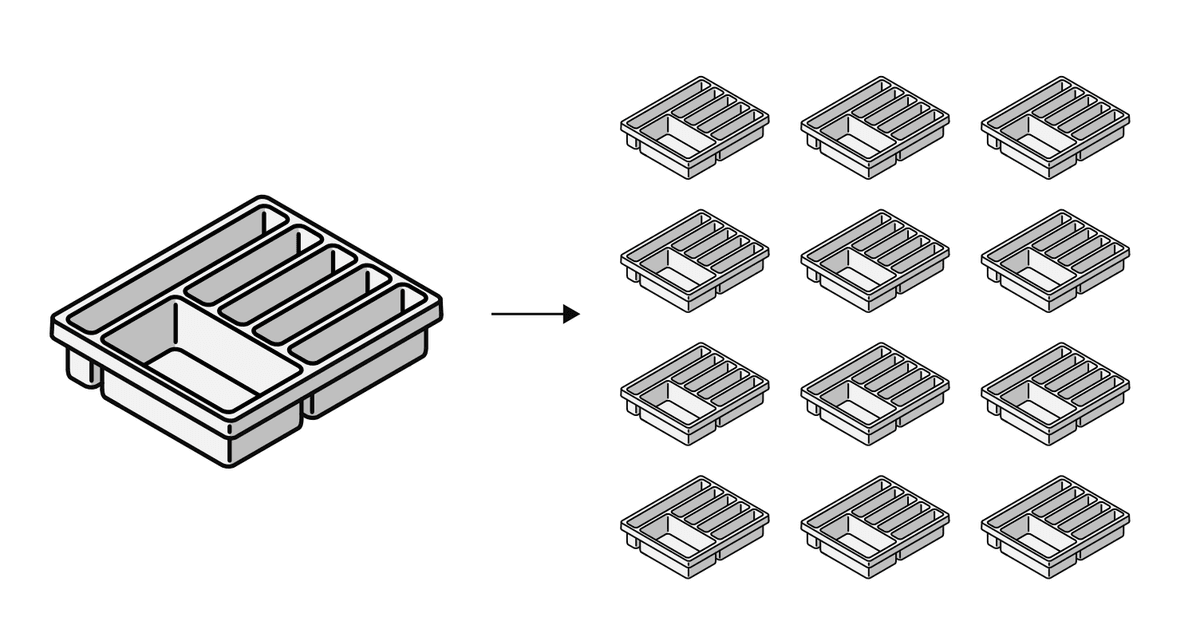
Depending on your timeline, you will receive samples from the appropriate option. There are 4 options available, depending on the purpose of the samples:
Samples from 3D printing tool
Samples from Ureol tool
Samples from partial segment series tool
Samples from series tool
More information on the advantages, disadvantages, and applications of the different samples can be found under Prototypes and our blog article on Rapid Prototyping.
4. We Start Your Series Production
After successful sampling, we start series production. Depending on your material, the chosen tool design, the machine type for production, and the quantity, the lead time is approximately 3-5 weeks from approval/order receipt to delivery of your series.
Conclusion: Quality Assurance in Thermoforming Through Precise Review of Design Data
Design data for the thermoformed part is therefore not only created for the manufacture of the tool but especially for the customer's review of the end product. At this stage, any additional or previously overlooked requirements can be easily identified and incorporated into the design. This ensures an efficient sampling and project process.
formary ensures that a competent contact person is available to you throughout the entire project to clarify questions. Test it yourself now and request your plastic thermoformed part digitally. Configure now.
Frequently Asked Questions about Design Data in Thermoforming
Design data refers to the CAD files or derived dimensioned drawings of the thermoformed part. It contains all information needed for manufacturing, sampling, and series production, such as dimensions, material, radii, draft angles, cavity geometries, and installation situations.
Initial material thickness describes the thickness of the plastic sheet or roll used in thermoforming. It influences the stability, geometry, and formability of the part. Different initial thicknesses can be sampled to achieve the optimal result.
Cavity geometry defines how components are placed in trays or containers. It is important for safe transport, easy removal, and optimal packing density.
The review makes it possible to identify and adjust missing or overlooked requirements at an early stage, making sampling and series production more efficient and error-free.
Further Content
Thermoformed Parts in Practice
Warehouse Inventory: Tips & Tricks for Better Warehouse Organization and Efficiency with Trays
Warehouse inventories cost time, tie up staff, and often disrupt ongoing operations. This is especially true for small parts, serial components, or recurring components, where counting quickly becomes confusing if parts are stored loose in boxes or shelf compartments. Standard trays create a simple yet effective structure here for better warehouse organization. This article shows how trays optimize inventory counts in both the warehouse and production.
Thermoformed Parts in Practice
Tray Labeling: How to Use Labels Effectively for Your Packaging
To ensure that trays can be correctly identified and used, clear labeling is essential. Depending on the application, quantity, and process requirements, different methods can be used, such as permanent engraving or flexible labels. In this article, you will learn which tray labeling methods are available, when each method makes sense, and how labeling can already be incorporated into the tray design using formary’s 3D Tray Generator.
Thermoformed Parts in Practice
Supplier Guide for Plastic Thermoformed Parts – 10 Key Factors That Matter
Choosing the right supplier for plastic thermoformed parts is crucial for the quality, efficiency, and cost-effectiveness of your production. Our 10 tips will show you what to look for when selecting a supplier.
Platform & Features
3 Factors That Accelerate Your Procurement with formary
The three key factors—time, speed, and efficiency—are crucial for success in industrial manufacturing, from inquiry to delivery. That’s why formary has optimized this process, significantly accelerating the procurement of plastic thermoformed parts. Learn more in this article.
Thermoformed Parts in Practice
Rapid Prototyping in Thermoforming – Definition, Benefits & Processes
Rapid prototyping is used in product development to quickly create preliminary models. In thermoforming, rapid prototyping offers numerous advantages for producing high-quality prototypes efficiently and cost-effectively.
Platform & Features
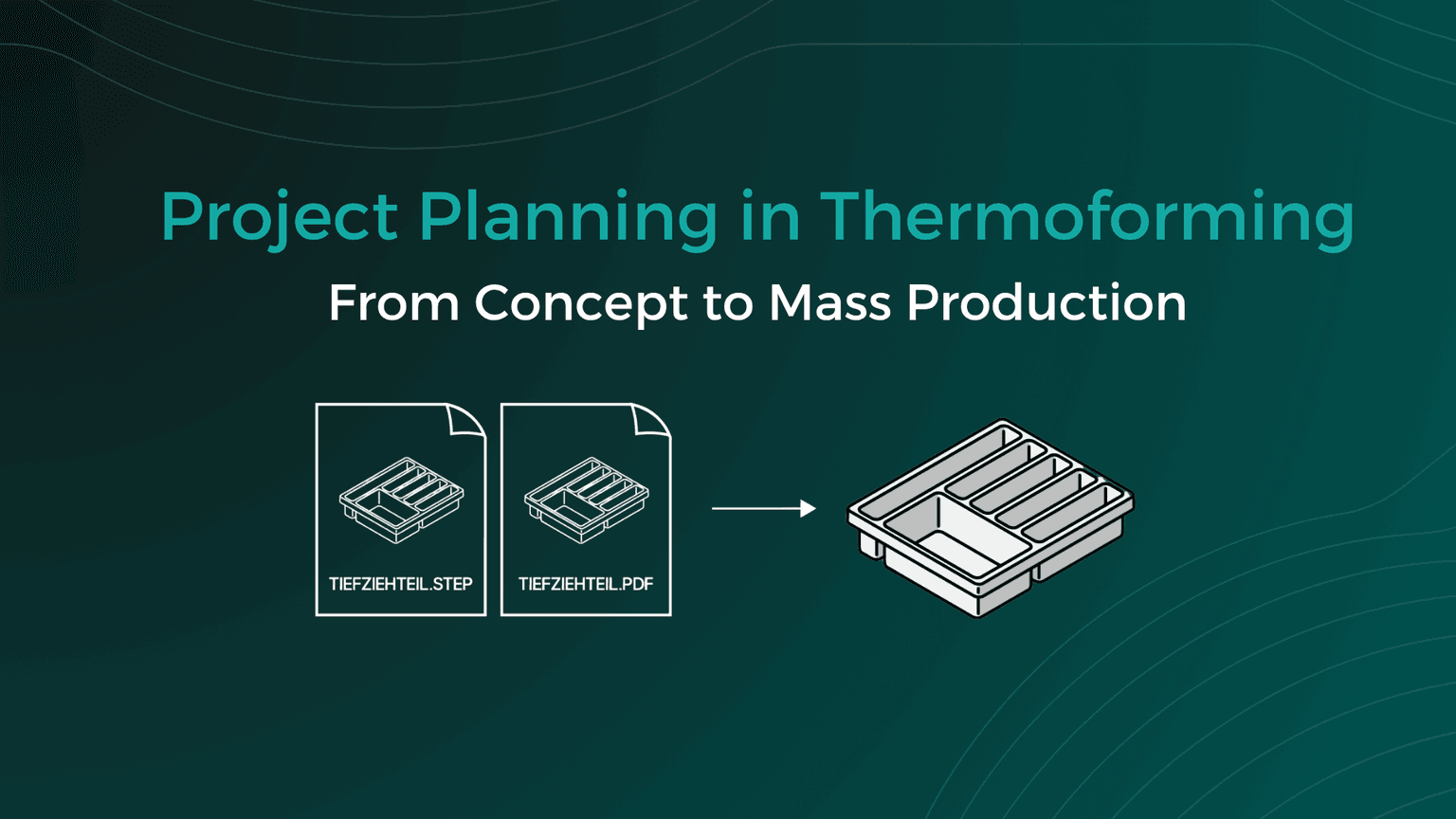
Project Planning in Thermoforming – From Concept to Mass Production
From the initial idea to mass production, various factors must be considered in thermoforming project planning, including material selection, tool manufacturing, and quality control. This article provides a detailed look at how a thermoforming project with formary is executed.
Thermoformed Parts in Practice
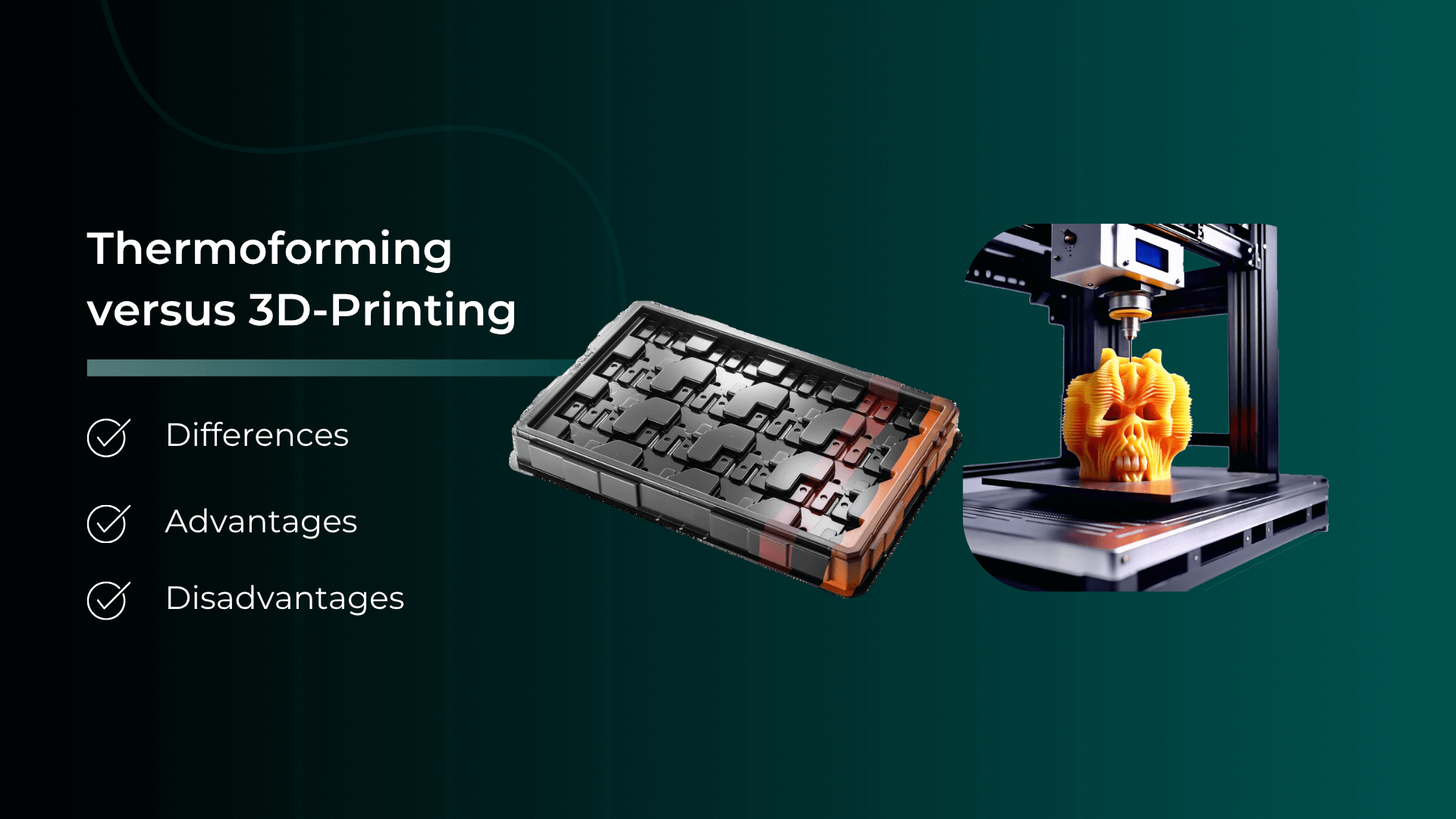
Thermoforming vs. 3D Printing – Advantages, Disadvantages, Differences, and Similarities
Plastic parts are manufactured using various processing methods. In this article, we focus on comparing the processes of plastic thermoforming and 3D printing.
Thermoformed Parts in Practice
Injection Molding vs. Plastic Thermoforming – Advantages, Disadvantages, Differences, and Similarities
In the world of plastic processing, there are various common manufacturing methods used to produce precise plastic components for industrial applications. We compare two of them: Injection Molding and Plastic Thermoforming.
Thermoformed Parts in Practice
Checking CAD Models for Thermoformability: The Designer's Guide
Whether a plastic part is thermoformable is determined in the CAD model. Anyone who discusses geometry, wall thicknesses, and demoldability only after the first sampling pays for this loop with tool modifications, material waste, and lost weeks in the project timeline. This can be avoided during design: with a structured check that evaluates each model along this guide and makes typical sources of error visible early on.