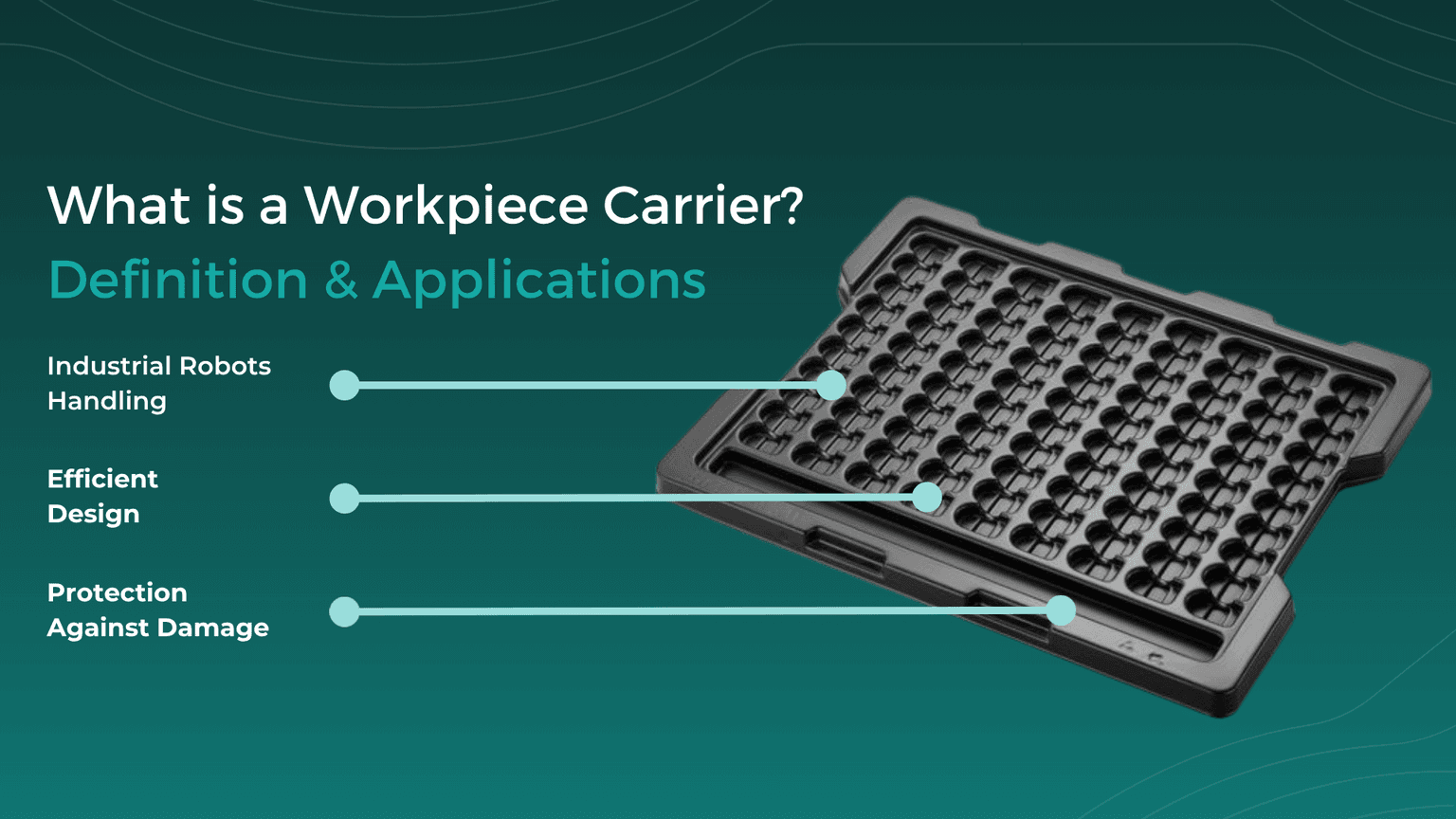
What Is a Workpiece Carrier? Definition & Applications
A constant challenge in the manufacturing industry is efficiently managing material flow throughout all assembly stages and departments. These logistical challenges can be optimally addressed by using product-specific workpiece carriers. Learn more in this article.
Sarah Guaglianone
Updated on August 20, 2026
Share
Workpiece carriers – Key facts at a glance
Workpiece carriers transport, secure and protect workpieces, optimise material flow and enable automation in manufacturing.
Workpiece carriers offer features such as coding, RFID, compatibility with stacking and conveyor systems, and ergonomic handling to improve efficiency.
Plastic versions are lightweight, gentle on delicate parts and, depending on the material thickness, suitable for single-use or durable, reusable applications.
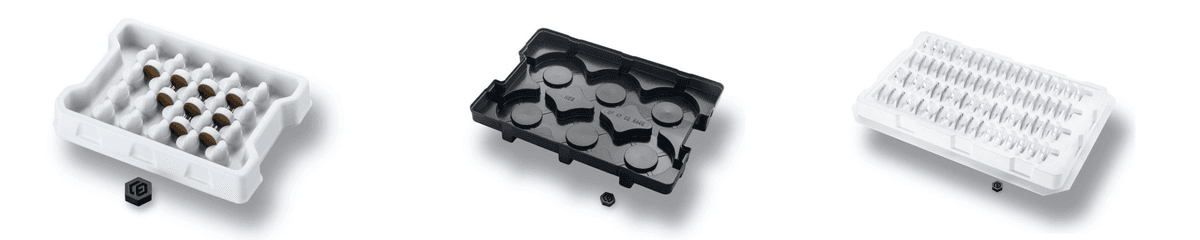
Through formary, companies can have custom plastic workpiece carriers developed and manufactured for transport, storage, and automated production processes. Depending on the application, available options include single-use and reusable trays, ESD versions, SLC-compatible workpiece carriers, and solutions for robotic handling.
A workpiece carrier, also known as a parts carrier, load carrier, tray or workpiece holder, is used to transport, secure and protect workpieces during the manufacturing process. Workpiece carriers are used in various industries, including automotive, electronics, food production and other sectors.
The functions of workpiece carriers explained in more detail:
Fixing and positioning
Workpiece carriers are used to hold the workpieces securely in place and keep them in the desired position. This is particularly important for sensitive parts.
Protection against damage
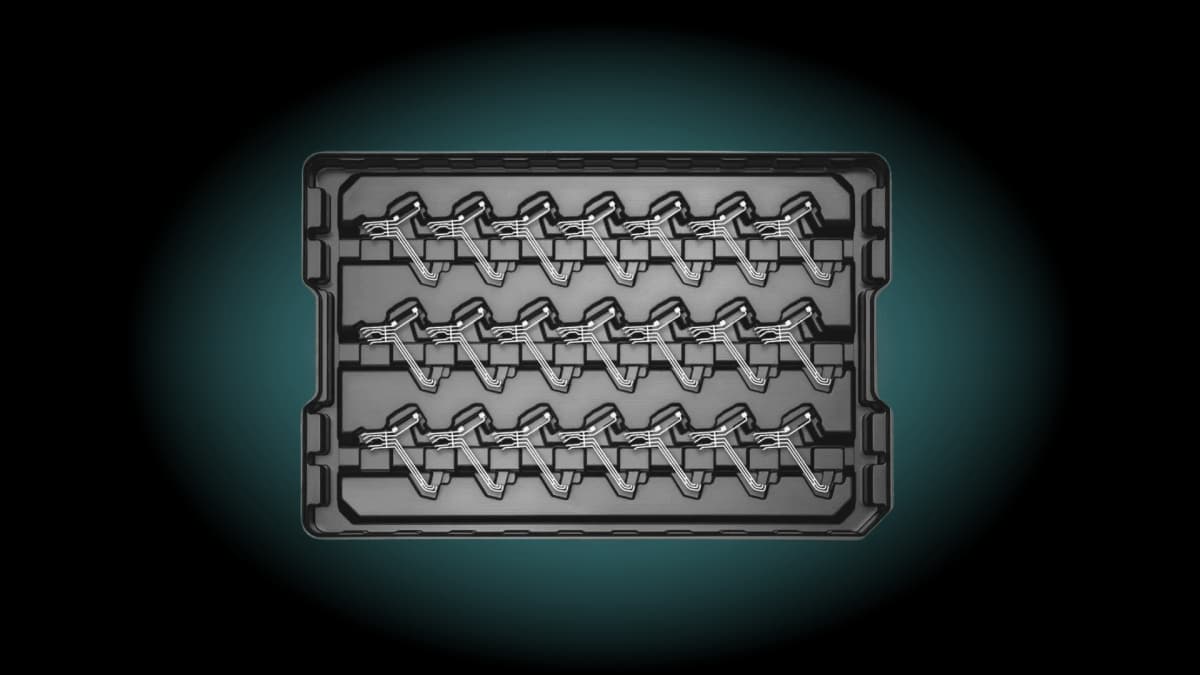
Workpiece carrier transport systems ensure that workpieces are protected during transport and storage. Components can be fixed in such a way that sensitive component areas do not come into contact with the wall. They are also protected from falling out and vibrations during transport by fixings and customised nests.
Automation and efficiency
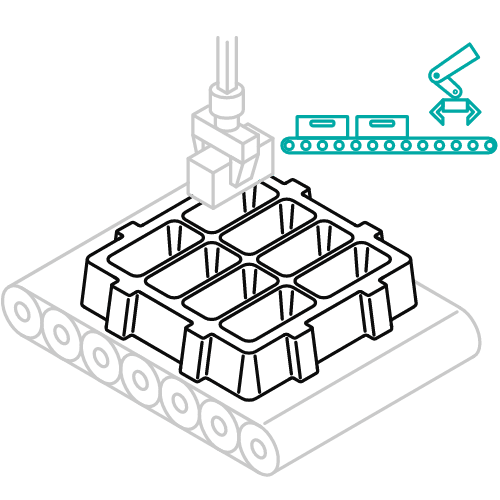
In automated production systems, workpiece carriers enable a smooth material flow. Workpiece carrier systems are often designed so that they can be seamlessly integrated into automated systems and enable robotic handling. You can find more on this topic under "Automation trays."
ℹ️ Ideally, the entire process across the various manufacturing stages of a component is seamlessly covered by a single workpiece carrier system. This enables end-to-end automation of production processes, component cleaning, warehousing and logistics.
The role of workpiece carriers for Industry 4.0
Industry 4.0 requires the consistent automation of production processes to enable cross-technology integration of systems. To ensure that all robots and automation components can optimally control, pick up, process and smoothly transfer components to the next stage of production, consistent production conditions are essential.
Workpiece carriers as the basis for stable processes
These conditions are ensured, amongst other things, by the use of flexible workpiece carriers. They ensure that components can be positioned precisely and transported smoothly, regardless of their size or shape.
Transport along the production line
Workpiece carriers play a key role in this process:
Transport of semi-finished components, assemblies or products from station to station
Adaptation to conveyor systems such as belts, roller conveyors or workpiece conveyors
Integration into the process logic, so that the tray operates seamlessly within the production flow
Workpiece carriers are therefore essential for efficient, digitally controlled manufacturing processes in Industry 4.0.
How do workpiece carriers ensure optimised production and logistics?
Workpiece carriers play a decisive role in the optimisation of manufacturing and logistics processes. Here are some aspects of how they can contribute to this:
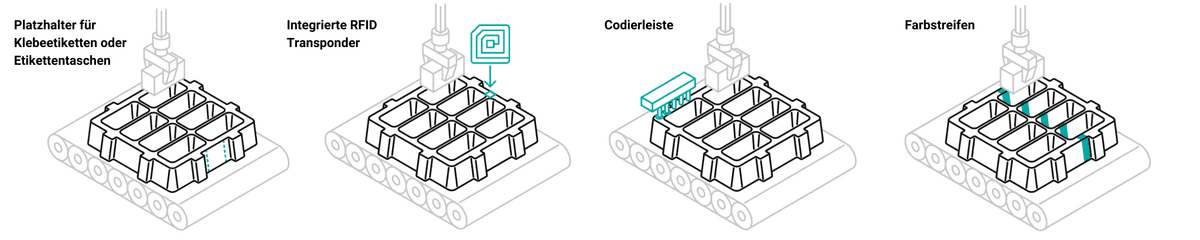
Coding and product recognition
Various electronic and optical methods are available to ensure that machines and systems can recognise both components and the workpiece carrier.
Placeholders for adhesive labels or label pockets
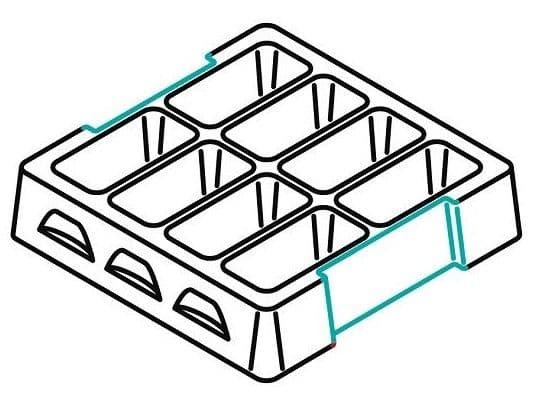
Replaceable or fixed labels are an effective and frequently used method of product labelling. For labels, space can be saved at an early stage on the tray edge and the stacking cams can be designed to fit around them.
Integrated RFID transponders
Electronic devices that transmit data wirelessly via radio frequencies can be integrated into the workpiece carrier. It is possible to provide space for an RFID transponder or alternative tracking devices at an early stage on the edge of the workpiece carrier.
Coding strip
For mechanical testing, BCD coding with moulded studs or milled cuts can be applied to the edge of the part carrier or the frame.
Colour stripes
An additional coloured stripe on the workpiece carrier can be used for visual alignment and orientation. Images and more information on trays with colour stripes can be found on our product pages.
Alignment and positioning
To ensure that the sensor system reliably recognises components and prevents the robot gripper from colliding during loading and unloading, the workpiece carrier offers various solutions.
Gripper and fork recesses
If trays need to be separated individually (with a fork or grippers), recesses or grooves can be provided for dipping.
Recesses for centring cones
Recesses for centring cones can be attached to the edge of the nest to align the workpiece carriers. The centring bar is used to secure the workpiece carrier during loading and unloading or on the conveyor belt.
Poka-Yoke corners
The term "poka-yoke" comes from the Japanese and means "avoid mistakes". Poka-yoke corners are used for visual orientation to avoid errors such as incorrect insertion or alignment of the workpiece holder. For correctly aligned workpiece holder insertion, a chamfer can be made in one of the corners or a coloured stripe can be placed on one side.
Anti-twist protection / stacking protection
An anti-twist device guarantees correct alignment when stacking several workpiece carriers on top of each other by means of mechanical stacking protection. This can also be designed for different tray variants so that the workpiece carriers can only be stacked by type.
Transport
Workpiece carriers also support the transport of components. The transport of components using the trays is ensured by efficient stacking, adaptation to conveyor systems and ergonomic handling.
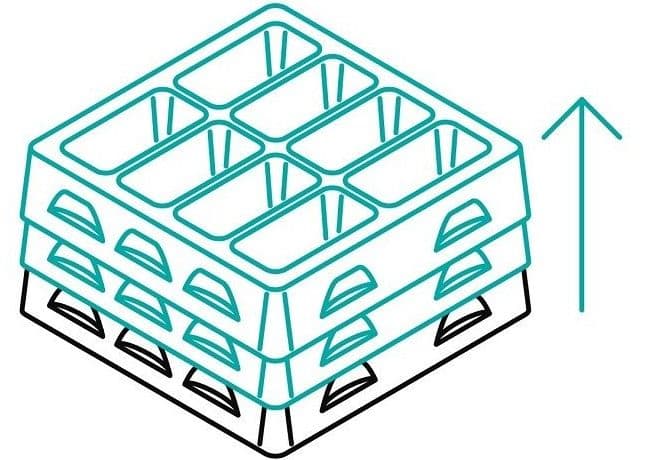
Stacking technology
Workpiece carriers are stackable. They can be stacked on top of each other effortlessly and stably without external aids. Various stacking techniques are available, including undercut or dimple stacking, which can be flexibly adapted to your transport and handling requirements.
It is important to consider the following aspects in the design:
The sensitivity of the parts
The desired number of layers
The maximum height of the packaging unit
The deep-drawn workpiece carriers can be designed so that they can be stacked free-standing on Euro pallets or integrated into cartons or small load carriers. The stacking is adapted to the palletising system used and also includes an anti-twist device for stacking protection. You can find even more information on stacking techniques in our blog.
ℹ️ Palletisers are available in various designs (drawer systems, lift systems, tray stackers). Your workpiece carrier is designed to suit the stages of the production line.
Adaptation to conveyor systems
Conveyor belt systems are used in the form of roller conveyors, belt conveyors and floor conveyors. The underside of your workpiece carrier is designed according to the requirements of your transport system.
Ergonomic handling
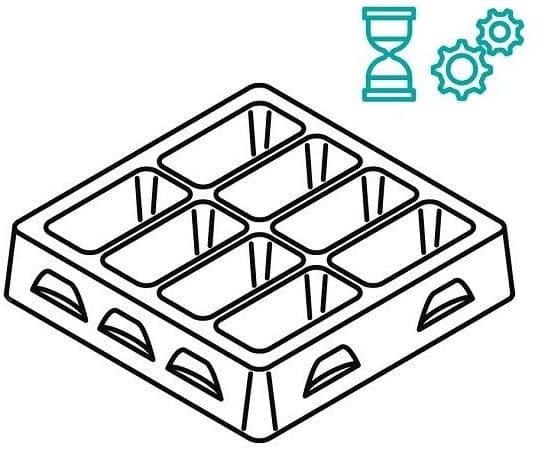
Ergonomically designed recessed grips on the sides of the workpiece carriers facilitate ergonomic loading of the trays in the KLT or outer carton. This means that the trays can be easily gripped, held, carried, removed from the carton or placed back into the carton.
It is advisable to consider the size and position of the handles on the workpiece carrier at an early stage, as this also influences the shape of the nests and the stacking.
ℹ️ In our 3D Tray Generator , you can upload 3D data for your tray and customise properties such as stacking height, dimensions, markings and more.
3D Tray Generator
Why plastic workpiece trays? The advantages
Workpiece carriers can be made of various materials, including plastic or metal. Plastic carriers are lighter and easier to handle than conventional metal cleaning baskets. The plastic material of the workpiece carriers therefore makes handling easier and, due to the plastic properties, promotes gentle handling of the sensitive workpieces.
Wide Range of Materials and Properties
Depending on the area of application, plastic workpiece carriers are usually made of materials such as PET-A, PS or ABS. Plastic trays often have special properties such as
The service life (disposable or reusable, over months or years) of the load carrier influences the design of the workpiece carrier. Thanks to variable material thicknesses, plastic pallets can be designed to be either very stable, durable and resilient for reusable use as returnable packaging.
This is achieved through increased material thicknesses and stabilising elements such as ribbing and struts. Alternatively, plastic workpiece carriers can be designed for single-use in an extremely material-saving and cost-effective way.
Areas of application for plastic workpiece carriers
Find out more about the areas of application for plastic workpiece carriers:
The application scope of workpiece carriers depends on your requirements. Are your components uncomplicated or do you need your trays at short notice and ideally without tooling costs? Then a standard tray is usually worthwhile.
However, if you have components that require precise component fixation and special protection requirements, then an individual workpiece carrier is probably the best choice. In our article Standard Trays vs. Custom Tray Solutions, we show you which option is the best choice depending on your requirements.
Workpiece carriers enable efficient processes - A summary
In the world of manufacturing, workpiece carriers are indispensable aids that ensure the smooth running of production processes. From fixing and positioning to protection against damage, they fulfil various functions to optimise the quality of the end products and increase efficiency.
Do you need workpiece carriers for your components? Then configure your plastic tray now!
Frequently Asked Questions about Workpiece Carriers
Plastic carriers are lightweight and easy to handle and can be optimised for single-use or reusable applications depending on the material thickness.
Related content
Thermoformed Parts in Practice
Warehouse Inventory: Tips & Tricks for Better Warehouse Organization and Efficiency with Trays
Warehouse inventories cost time, tie up staff, and often disrupt ongoing operations. This is especially true for small parts, serial components, or recurring components, where counting quickly becomes confusing if parts are stored loose in boxes or shelf compartments. Standard trays create a simple yet effective structure here for better warehouse organization. This article shows how trays optimize inventory counts in both the warehouse and production.
Thermoformed Parts in Practice
Tray Labeling: How to Use Labels Effectively for Your Packaging
To ensure that trays can be correctly identified and used, clear labeling is essential. Depending on the application, quantity, and process requirements, different methods can be used, such as permanent engraving or flexible labels. In this article, you will learn which tray labeling methods are available, when each method makes sense, and how labeling can already be incorporated into the tray design using formary’s 3D Tray Generator.
Thermoformed Parts in Practice
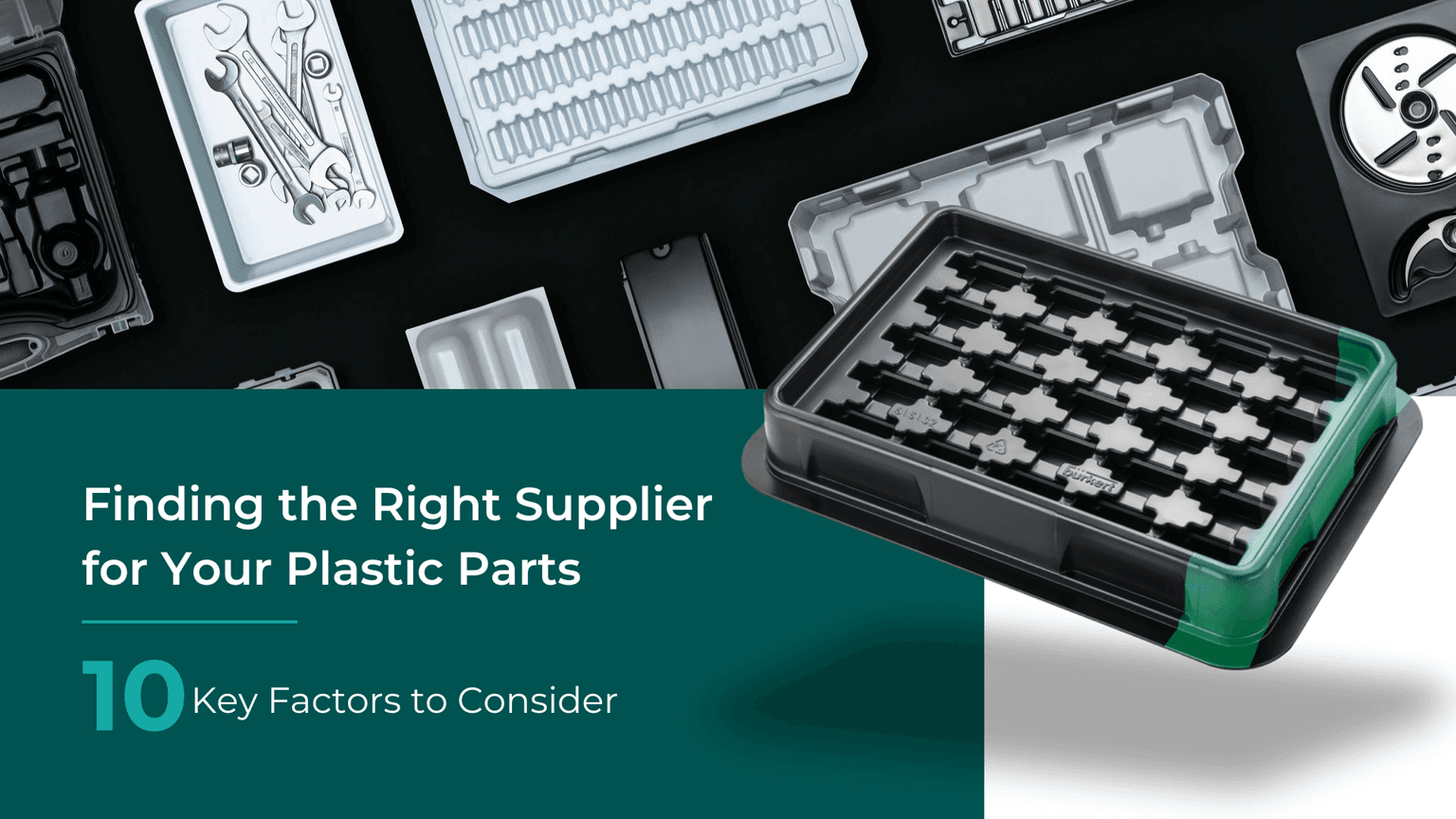
Supplier Guide for Plastic Thermoformed Parts – 10 Key Factors That Matter
Choosing the right supplier for plastic thermoformed parts is crucial for the quality, efficiency, and cost-effectiveness of your production. Our 10 tips will show you what to look for when selecting a supplier.
Platform & Features
3 Factors That Accelerate Your Procurement with formary
The three key factors—time, speed, and efficiency—are crucial for success in industrial manufacturing, from inquiry to delivery. That’s why formary has optimized this process, significantly accelerating the procurement of plastic thermoformed parts. Learn more in this article.
Thermoformed Parts in Practice
Rapid Prototyping in Thermoforming – Definition, Benefits & Processes
Rapid prototyping is used in product development to quickly create preliminary models. In thermoforming, rapid prototyping offers numerous advantages for producing high-quality prototypes efficiently and cost-effectively.
Platform & Features
Project Planning in Thermoforming – From Concept to Mass Production
From the initial idea to mass production, various factors must be considered in thermoforming project planning, including material selection, tool manufacturing, and quality control. This article provides a detailed look at how a thermoforming project with formary is executed.
Thermoformed Parts in Practice
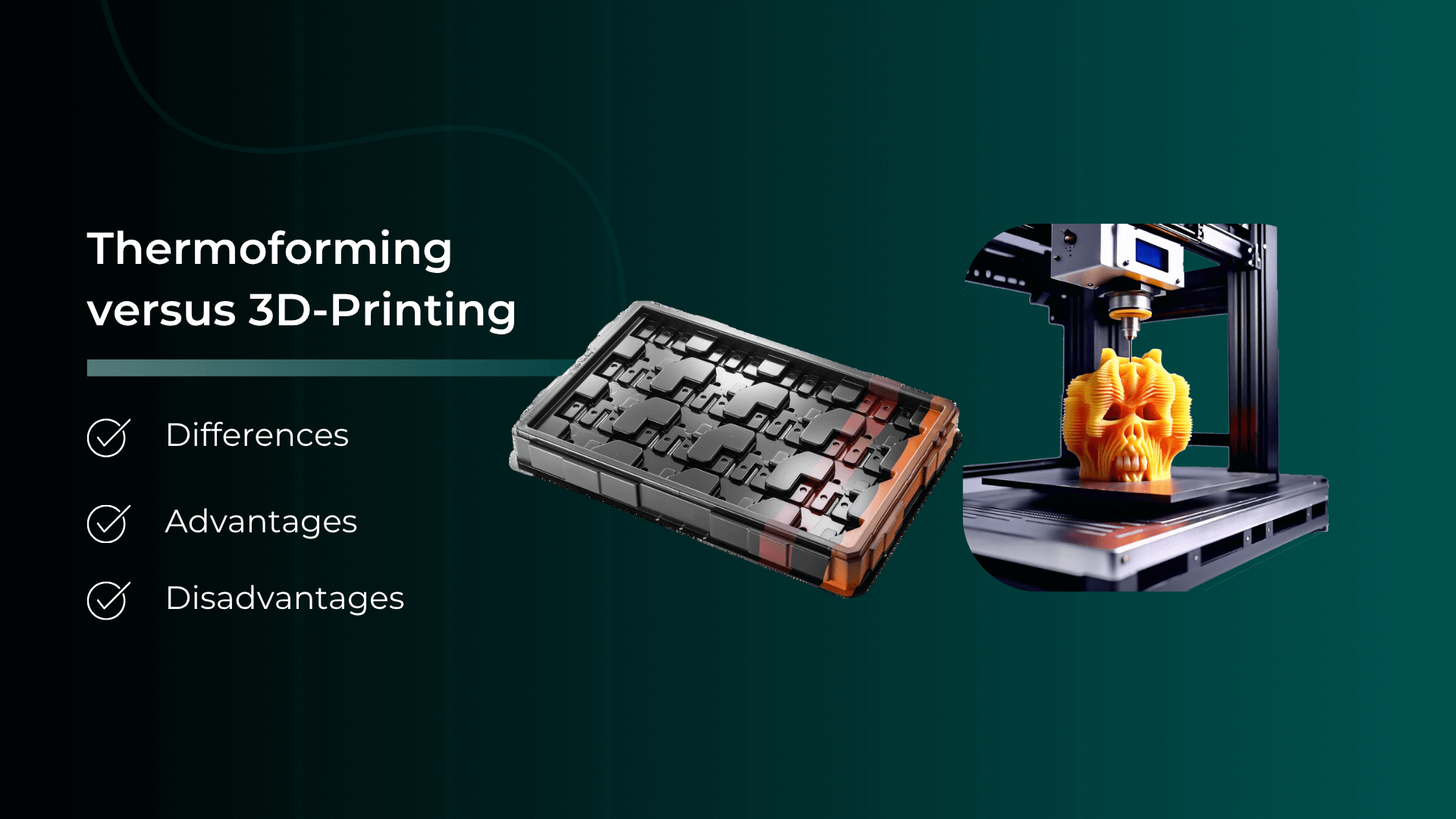
Thermoforming vs. 3D Printing – Advantages, Disadvantages, Differences, and Similarities
Plastic parts are manufactured using various processing methods. In this article, we focus on comparing the processes of plastic thermoforming and 3D printing.
Thermoformed Parts in Practice
Injection Molding vs. Plastic Thermoforming – Advantages, Disadvantages, Differences, and Similarities
In the world of plastic processing, there are various common manufacturing methods used to produce precise plastic components for industrial applications. We compare two of them: Injection Molding and Plastic Thermoforming.
Thermoformed Parts in Practice
Checking CAD Models for Thermoformability: The Designer's Guide
Whether a plastic part is thermoformable is determined in the CAD model. Anyone who discusses geometry, wall thicknesses, and demoldability only after the first sampling pays for this loop with tool modifications, material waste, and lost weeks in the project timeline. This can be avoided during design: with a structured check that evaluates each model along this guide and makes typical sources of error visible early on.