


Plastic Thermoforming: Process, Materials, Applications & Advantages

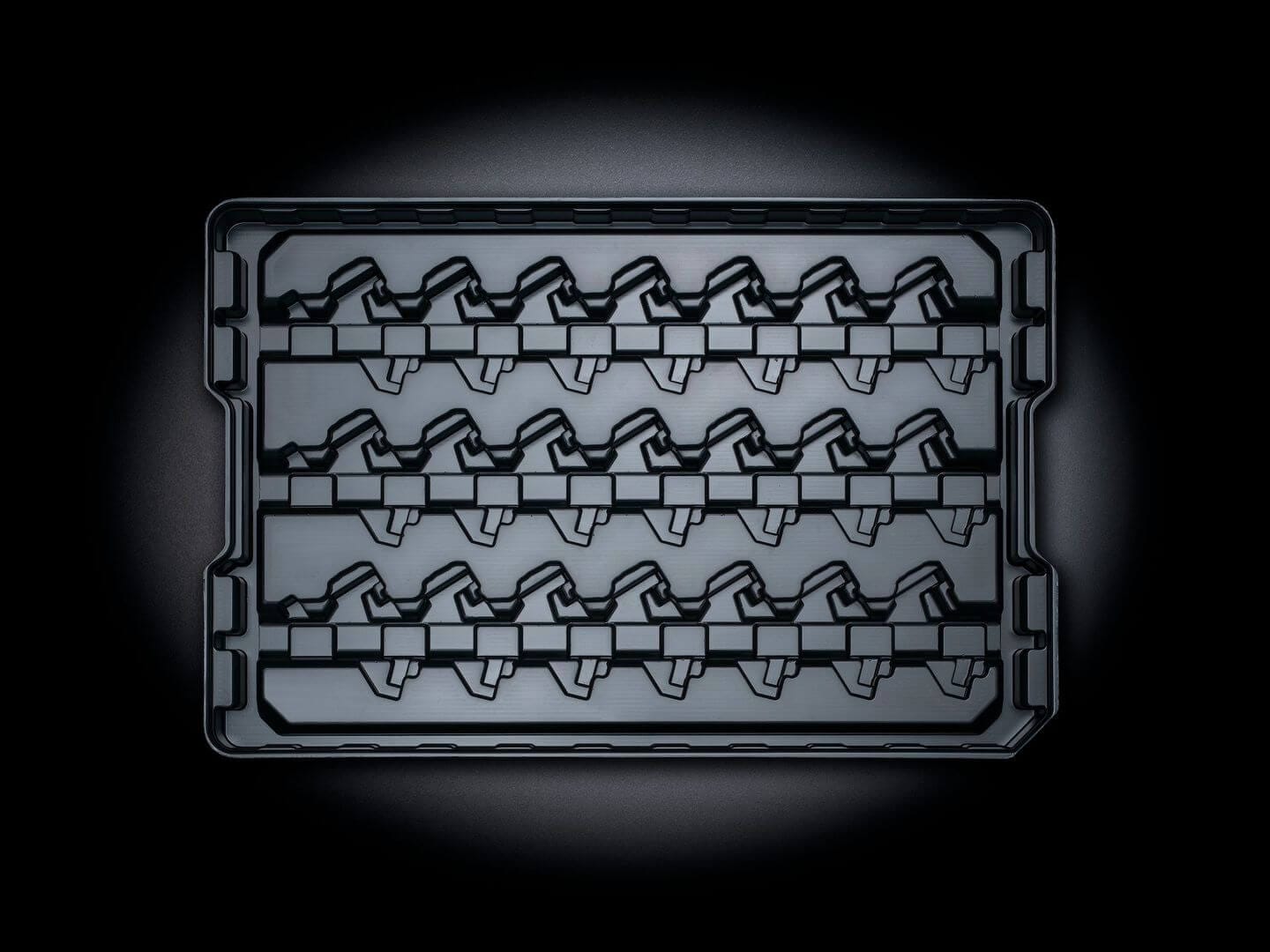
With formary, you can source custom plastic thermoformed parts from a single partner – from prototypes and sample production to small and large-scale series manufacturing. We support a wide range of thermoforming and vacuum forming applications, including thermoformed housings and covers, blisters, inlays, containers, workpiece carriers and load carriers.

What is plastic thermoforming?

Plastic thermoforming is a plastic manufacturing process used to transform thermoplastic sheets or films into three-dimensional parts. The material is heated to a forming temperature, shaped with a mold, cooled, and then trimmed to the final contour.

The process is also known as thermoforming, vacuum forming, vacuum thermoforming, pressure forming or plastic deep drawing. In industrial applications, thermoforming is used for both thin-gauge parts from roll material and thick-gauge parts from sheet material.

In simple terms: plastic thermoforming turns a flat plastic sheet into a shaped plastic component.

Main types of plastic thermoforming

Vacuum forming

Vacuum forming uses negative pressure to pull the heated plastic sheet onto the mold surface. It is one of the most common thermoforming methods and is especially suitable for cost-efficient parts with simple to moderately complex geometries. Typical applications include trays, inlays, covers, containers and protective packaging.

Pressure forming

Pressure forming uses compressed air to press the heated plastic sheet against the mold. This allows more detailed surfaces, sharper contours and improved dimensional accuracy compared to standard vacuum forming. Pressure forming is often used for visible components, housings, covers and technical parts with higher optical or mechanical requirements.

Twin-sheet thermoforming

Twin-sheet thermoforming forms two plastic sheets separately and joins them together during the process. This creates hollow or double-walled parts with increased stiffness and lower weight. Typical applications include pallets, load carriers, housings, ducts and robust transport components.

Sheet-fed thermoforming

Sheet-fed thermoforming uses individual plastic sheets. It is suitable for larger parts, thicker material gauges and components that require stability, size or complex trimming. Typical applications include machine covers, housings, containers, tubs and large industrial components.

Roll-fed thermoforming

Roll-fed thermoforming uses plastic material supplied on rolls. It is typically used for thinner material gauges, high cycle times and efficient production of large quantities. Typical applications include trays, blisters, packaging inserts and smaller technical parts.

Plastic thermoforming in comparison to other manufacturing processes

Thermoforming plastic is unrivaled, especially for medium-sized series with tight lead times. Thermoforming combines fast implementation with cost-efficient tools and a wide variety of materials.

Developments in machine and material technology in recent years have led to plastic thermoforming increasingly replacing other applications and processes:

  • Injection molding: only worthwhile for very large series, high tooling costs.
  • 3D printing: flexible for prototypes, but significantly higher unit costs.
  • Thermoforming: smaller series from approx. 100 pieces possible with low initial investment.

This makes thermoforming the “go-to” process between 3D printing (flexible, expensive) and injection molding (cost-effective for series production, high start-up costs).

Plastic thermoforming vs. injection molding vs. 3D printing

ProcessBest forTooling costUnit costTypical use case
Plastic thermoformingPrototypes, small series, medium series, large partsLow to mediumLow to mediumTrays, housings, covers, inlays, containers
Injection moldingVery high volumes and complex small partsHighVery low at scaleTechnical mass-produced plastic parts
3D printingPrototypes, individual parts, design validationNo tool neededHighSamples, fit checks, prototypes

Advantages of plastic thermoforming

Schnelle Projekt- und Lieferzeiten

Fast project and delivery time

Plastic thermoforming allows small series, including tool manufacturing, to be completed in as little as 2 weeks.

Geringe Werkzeugkosten

Low tooling costs

Compared to injection molding, tools for plastic thermoforming are significantly more affordable.

Stapel_Icon

Small production runs

Plastic thermoforming is ideal for smaller quantities starting from a few hundred units.

Gestrichelte Linien_Icon

Wide material selection

A broad range of plastics, recyclates, color options, material thicknesses, and mechanical properties are available for thermoforming.

Schichten_Icon

Prototyping & samples

Plastic thermoforming offers various options for rapid prototyping or quick production of sample series.

Präzision

High precision

Tolerance dimensions for thermoformed plastic products can meet DIN and ISO standards in many applications.

Produkte im Kunststoff Tiefziehen

formary expertise in plastic thermoforming: Manufacturer, material, tools, machines, conceptualization

Based on your requirements, the optimal thermoformed plastic part is developed and delivered by the specialized thermoformer at formary.

Plastic thermoforming with formary: 5 easy steps

Here’s how the project works with formary to create your custom thermoformed product.

Anwendungsfall_Icon
1. Select product for plastic thermoforming

Choose your custom thermoformed part’s application case using the formary configurator.

Konfiguration_Icon
2. Configure plastic thermoformed part

During the guided process, provide all necessary thermoforming requirements for your plastic part.

Sofort Angebot_Icon
3. Get a quote for plastic thermoformed part

You will receive a quote within 24 hours for your thermoformed part, including tiered pricing and tooling costs.

Ansprechpartner_Icon
4. Technical consultation for plastic thermoforming

An experienced project manager will review your request for thermoformability and suggest optimizations.

Zauberstab_Icon
5. Plastic thermoforming: Network executes order

The matching algorithm assigns your thermoformed part to the ideal thermoformer. The thermoforming process begins immediately.

Source your thermoformed parts digitally. Simple and straightforward.

Receive your Quote within 24 hours

Frequently asked questions about plastic thermoforming

What is a plastic thermoformed part?
How does thermoforming of plastics work?
How long does thermoforming of plastics take?
Thermoforming plastic: What tooling options are available?
Which plastics can be formed well?
Which types of plastics are there?
Which plastic is suitable for thermoforming?
What tolerances apply to plastic thermoforming?
What is vacuum thermoforming?
What is pressure forming?
What are alternatives to plastic thermoforming?
What surface treatments are available in plastic thermoforming?
What cutting methods are available in plastic thermoforming?
Can additional components be attached to plastic thermoformed Parts?

Learn more about plastic thermoforming

Thermoforming vs. Alternatives_Banner
Thermoformed Parts in Practice

Plastic Manufacturing Processes Compared: Thermoforming vs. Injection Molding, 3D Printing, CNC Milling, and Foam

When manufacturing plastic parts, thermoforming is often compared with injection molding, milling, 3D printing, and foam solutions. The decisive factors are speed, cost, design freedom, material requirements, and process reliability. This article highlights the key differences between these processes.
 Design Guidelines for Plastic Thermoformed Parts – Top 13 Tips for Plastic-Optimized Construction
Thermoformed Parts in Practice

Design Guidelines for Plastic Thermoformed Parts – Top 13 Tips for Plastic-Optimized Construction

Plastic thermoforming is shaped by factors like material quality, temperature, pressure, speed, and tool geometry. With the right design principles, you can prevent errors in CAD and production. formary has gathered key tips to help you optimize your thermoformed parts.
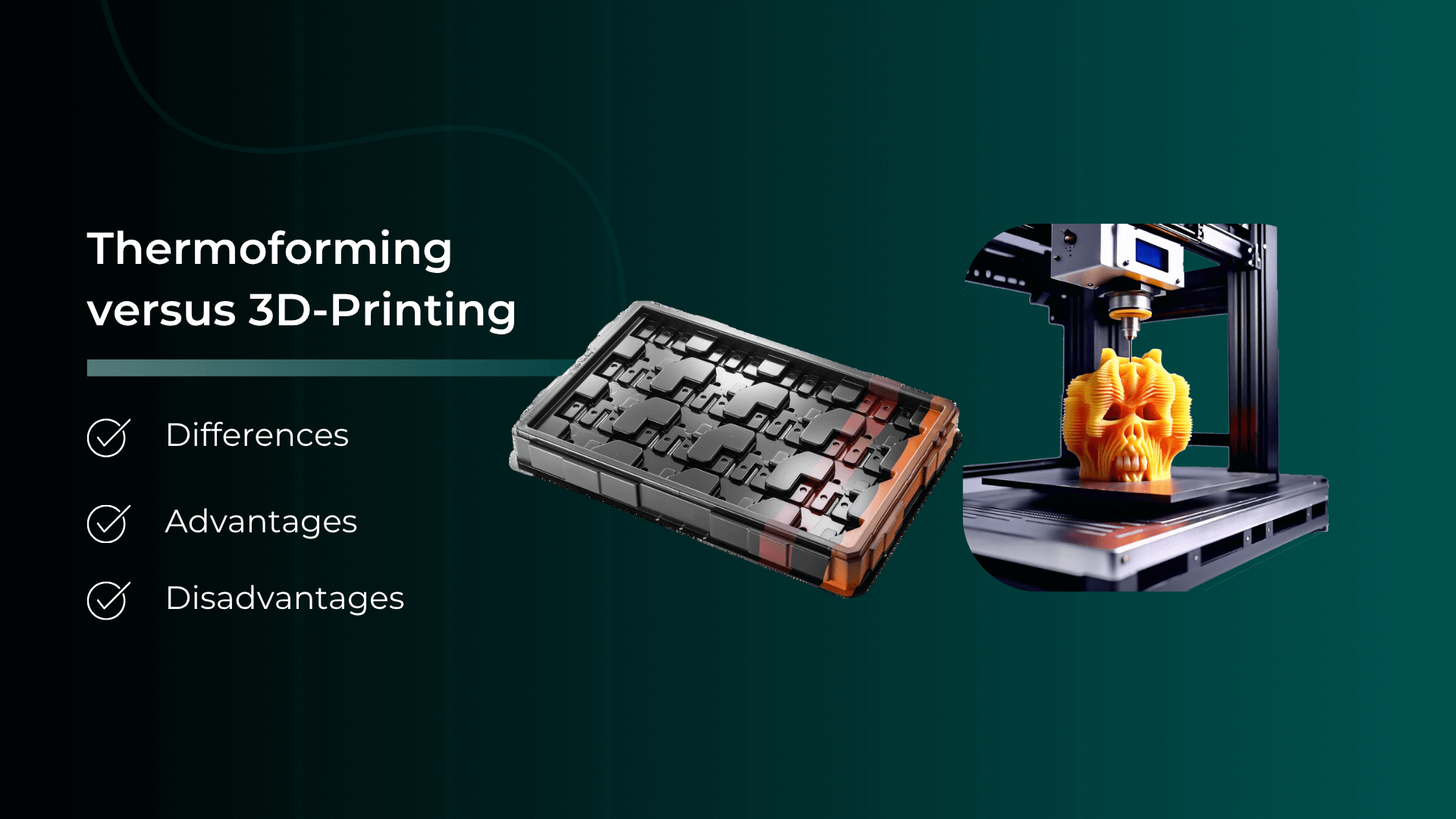
Thermoforming vs 3D-Printing
Thermoformed Parts in Practice

Thermoforming vs. 3D Printing – Advantages, Disadvantages, Differences, and Similarities

Plastic parts are manufactured using various processing methods. In this article, we focus on comparing the processes of plastic thermoforming and 3D printing.
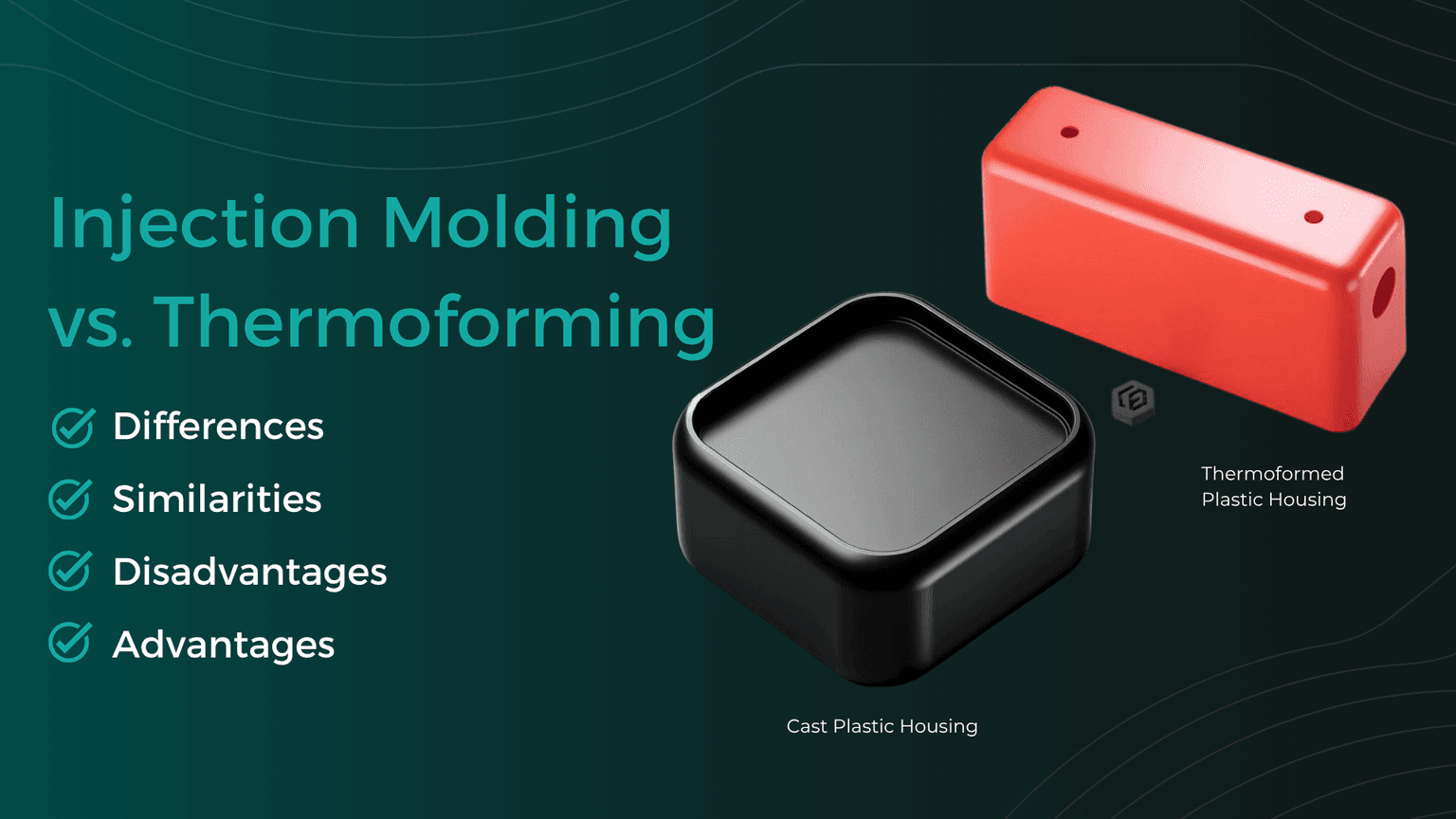
Injection Molding vs. Thermoforming
Thermoformed Parts in Practice

Injection Molding vs. Plastic Thermoforming – Advantages, Disadvantages, Differences, and Similarities

In the world of plastic processing, there are various common manufacturing methods used to produce precise plastic components for industrial applications. We compare two of them: Injection Molding and Plastic Thermoforming.

Thermoformed parts made simple. With formary.

Get your non-binding quote today.

Don't miss out on important tips and news about thermoformed parts.

By submitting your registration, you accept the privacy policy and will receive an email to confirm your subscription.