Plastic Manufacturing Processes Compared: Thermoforming vs. Injection Molding, 3D Printing, CNC Milling, and Foam
When manufacturing plastic parts, thermoforming is often compared with injection molding, milling, 3D printing, and foam solutions. The decisive factors are speed, cost, design freedom, material requirements, and process reliability. This article highlights the key differences between these processes.
Talida Eichhorn
Updated on June 15, 2026
Share
Comparison of plastic manufacturing processes - The most important facts in brief
Plastic manufacturing processes differ primarily in terms of time-to-market, costs, design freedom, robustness, material diversity, and automatability.
Thermoforming is particularly advantageous for small to medium series and offers short project lead times.
Injection molding is worthwhile for large quantities, but incurs high tooling costs.
Milling and 3D printing are suitable for prototyping, but are expensive in series production.
Foam and standard solutions are cost-effective, but technically limited.
What are the most important plastic manufacturing processes?
In plastics engineering, different plastic processes are used depending on the component geometry and quantity.
Process
Category
Typical applications
Thermoforming
Forming
Housings, covers, trays, packaging
Injection molding
Casting
Mass-produced products, precision components
CNC milling
Machining
Precision components, prototypes
3D printing
Additive
Prototypes, small series, complex geometries
Foam solutions
Foaming
Upholstery, simple packaging
In plastics engineering, these processes are primarily differentiated according to the molding method, quantity, precision, and material properties.
ℹ️ In this article, we compare plastic manufacturing processes that are particularly suitable for housings, covers, trays, and functional components. Processes such as extrusion or blow molding are deliberately not covered in depth, as they are primarily used for profiles, films, or hollow bodies without specific geometries.
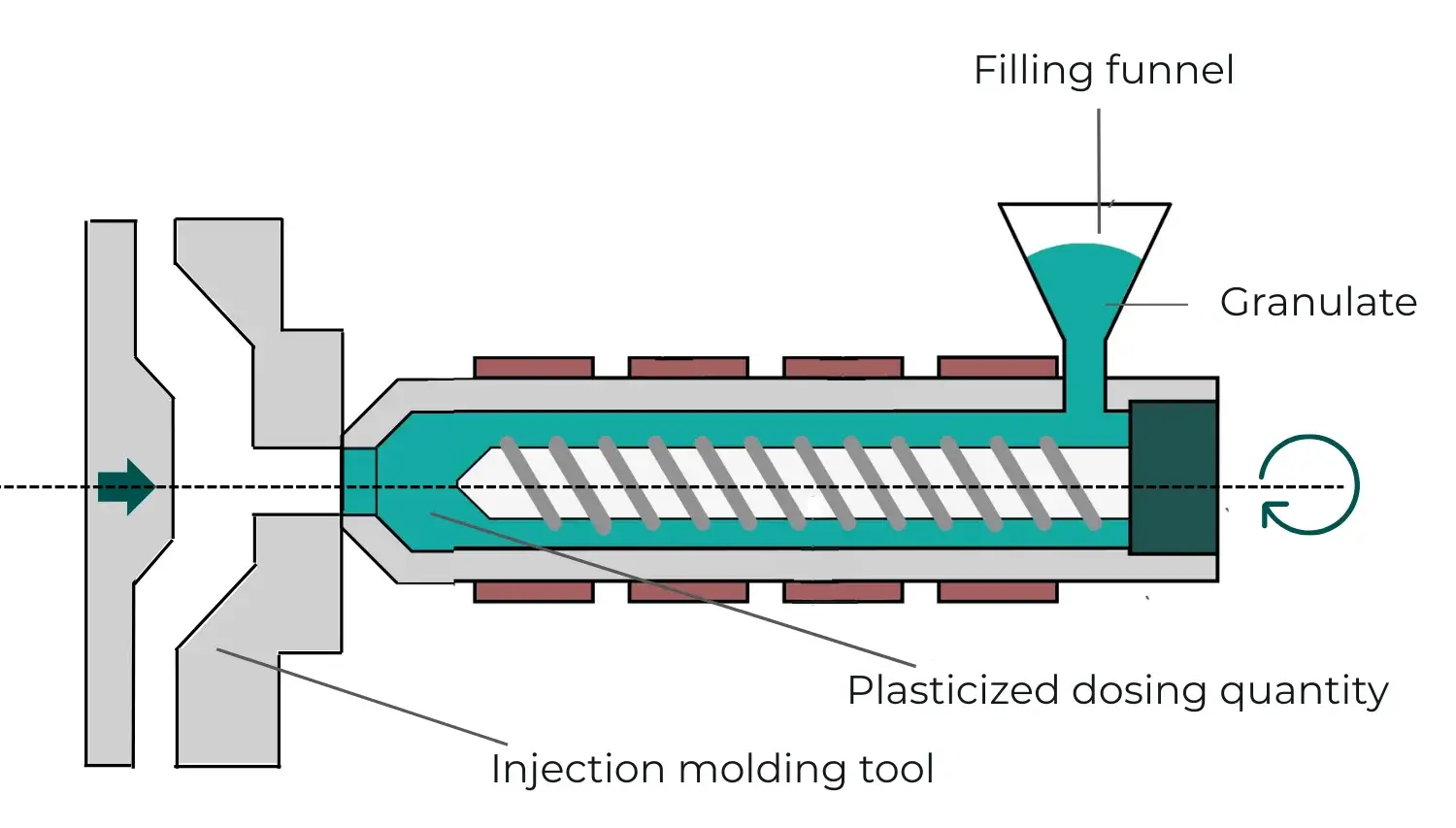
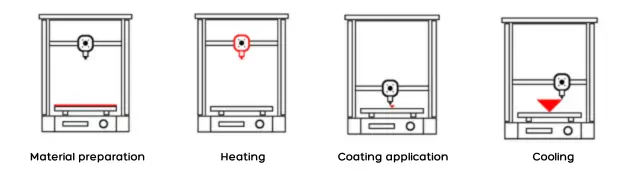
In injection molding, plastic is first melted and then injected under pressure into a closed mold. There, the material solidifies through controlled cooling before the mold is opened and the component is removed.
Milling / 3D printing
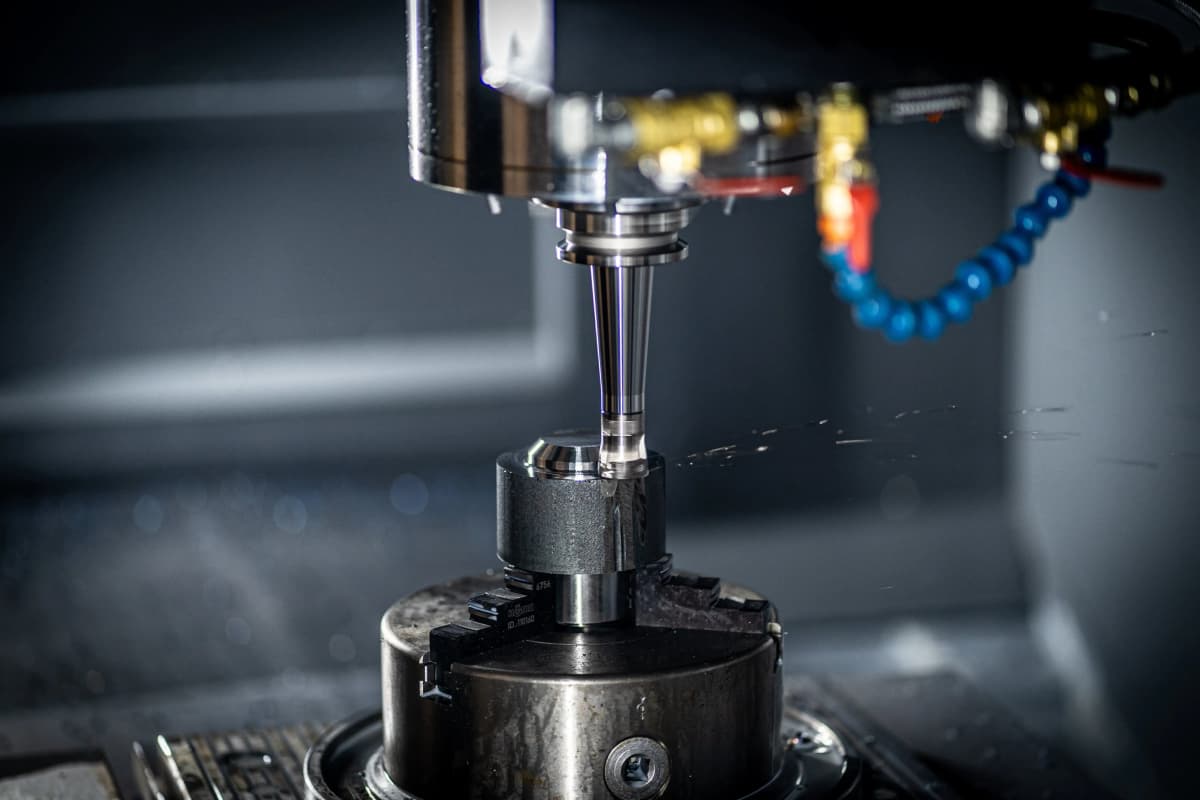
In CNC milling, a component is carved out of a plastic block by a computer-controlled milling head that precisely removes material along predetermined paths.
In 3D printing, also known as additive manufacturing, a component is built up layer by layer from plastic.
Foam and standard solutions
Foam can be produced both chemically and physically. In chemical foaming, typical components such as polyol and isocyanate react with each other, producing CO₂ among other things. This gas causes the mass to foam. In physical foaming, a blowing agent is added which expands or evaporates when heated, thus forming the pore structure.
After foaming, the foam block hardens and can then be cut, punched, or CNC-machined. The foam parts produced in this way are particularly suitable for simple packaging, upholstery elements, or standard solutions.
The top 5 factors to consider when deciding which plastic manufacturing process is best suited to your application
The processes are compared in five categories that are often decisive when it comes to the production of plastic parts:
Time to market
Cost structure (for small and medium series)
Design freedom & modification effort
Mechanical robustness
Material selection
1. Time-to-market
Fast development and production start-ups enable you to respond to market requirements. Especially in dynamic markets, a short time-to-market can be crucial for securing competitive advantages or meeting project deadlines.
Plastic Thermoforming
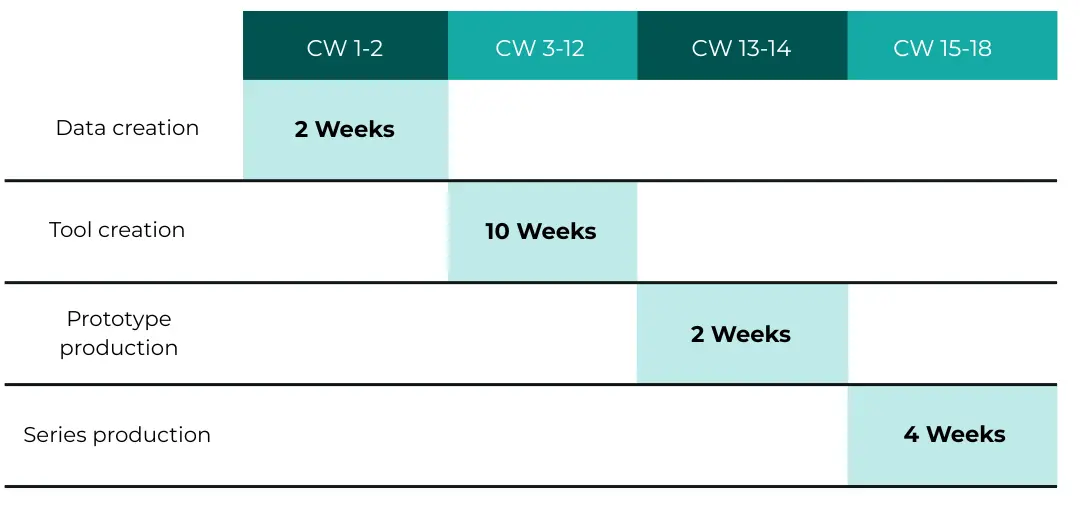
In the best case scenario, a thermoforming project can be delivered in less than 6 weeks. This includes 1-2 weeks for creating the design based on the requirements and data in consultation with the company. Once the design data has been approved, production of the aluminum series tool begins. Depending on the urgency, this can be done in 3 weeks.
As soon as the tool is ready, it is taken to the thermoforming manufacturer and the first samples are drawn from the series tool and material. Once the series samples have been approved, series production begins. Depending on the quantities and provided that the manufacturer has sufficient capacity, (partial) delivery can take place after just two weeks.
Injection molding
In injection molding, the long tooling times of usually six to twelve weeks lead to a significantly delayed start of series production.
Milling / 3D printing
Milling and 3D printing are becoming increasingly complex in series production, which means that production times are longer overall. 3D printing is very fast for smaller quantities or prototypes, as no tools are required. This means there are no lead times. Once the CAD data is available, parts can be manufactured within a few days.
For large series, 3D printing or milling is limited due to slower production speeds, poor scalability, and higher material costs.
Foam / Standard solutions
Foam and standard solutions are ready for immediate use, but often do not offer the precision required for technically demanding applications.
2. Cost structure for small and medium series
In moderate quantities, fixed costs have a direct impact on profitability, as they significantly increase the unit price. Processes with low fixed costs enable more efficient unit costs and reduce the risk of an uneconomical series.
Plastic Thermoforming
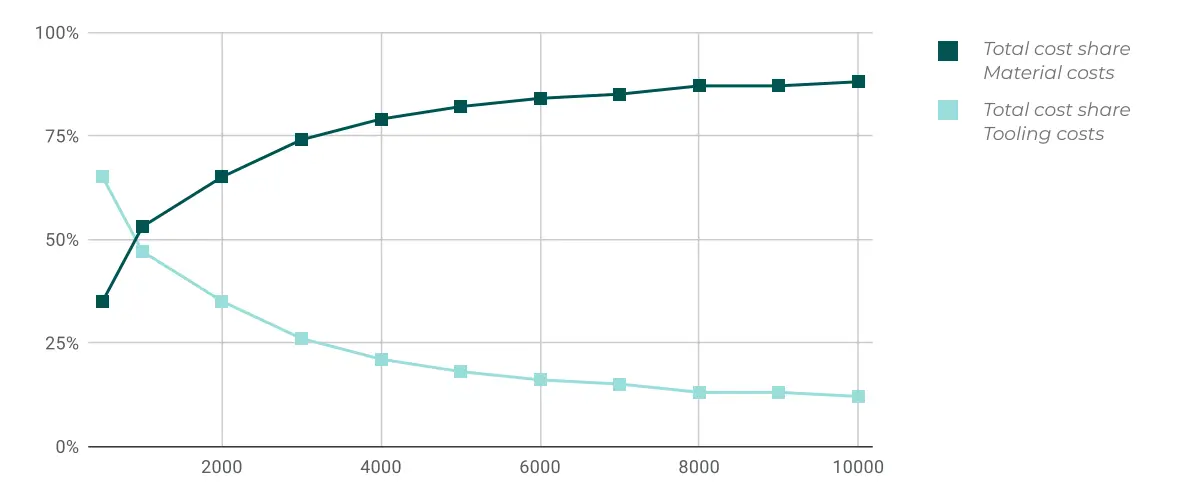
A key cost driver in a thermoforming project is the tooling costs, which represent a one-time investment in the four to five-digit range. These costs are amortized as the number of units increases. Since economies of scale do not apply to the same extent to material costs, the proportion of material costs per thermoformed part increases with increasing quantity and thus becomes the largest cost center.
Compared to other plastic manufacturing processes, thermoforming occupies the “sweet spot” between several hundred and 10,000 parts, as the initial tooling costs are significantly lower than for injection molding and the unit prices are significantly lower than for 3D printing.
Injection molding
Injection molding requires a costly initial investment in the tool, but is more cost-effective in terms of total costs due to low unit prices for quantities of around 10,000 or more. This means that the manufacturing process only pays off for very large series.
Milling / 3D printing
3D printing has no initial tooling costs, but due to consistent production times, there is little scope for economies of scale in terms of quantity. Milling also incurs high unit costs, which quickly makes the process uneconomical for small and medium-sized series.
Foam / standard solutions
Foam solutions and standard solutions are cost-effective, but in many cases do not offer sufficient technical durability.
3. Design freedom & modification effort
A manufacturing process that can respond flexibly to product changes, especially in the development phase, and does not make adjustments expensive or time-consuming reduces development risks. This allows updates and optimizations to be implemented without high additional costs.
Plastic Thermoforming
Deep drawing offers a high degree of flexibility and allows for adjustments, even for special requirements such as ESD or STANAG compliance.
Injection molding
Injection molding allows for design freedom, but changes to the tool often result in considerable effort and high adjustment costs.
Milling / 3D printing
Milling and 3D printing allow for changes. However, milling has geometric limitations, which reduces the scope for design. 3D printing allows for a great deal of creative freedom.
Foam / standard solutions
Foam and standard components offer little scope for customization and are limited to standard shapes.
4. Mechanical robustness
Thermoformed parts such as housings or panels must be resilient in real-world use. An unsuitable process will result in components that deform, break, or are unsafe, which can lead to high follow-up costs in assembly and service.
Plastic Thermoforming
Thanks to adjustable wall thicknesses and the materials used, thermoforming offers high rigidity and excellent mechanical strength.
Injection molding
Injection-molded parts also achieve high strength and are mechanically equivalent to thermoformed parts in terms of robustness.
Milling / 3D printing
3D-printed components have significant limitations in terms of mechanical load capacity.
Foam / standard solutions
Foam solutions also have low mechanical load capacity and are therefore usually unsuitable for functional technical applications.
5. Material selection
Materials determine both functionality and durability. Requirements such as ESD protection, UV resistance, temperature behavior, or chemical resistance are often crucial to a project. Processes with a limited selection of materials can severely restrict the area of application.
Plastic Thermoforming
Thermoforming allows for a wide range of materials, including specialized variants such as ESD-compatible or flame-retardant materials, covering many technical requirements.
Injection molding
Injection molding offers a certain variety of materials, but is limited by process-specific requirements in the selection and combination of plastics.
Milling / 3D printing
The choice of materials for milling and 3D printing is highly dependent on the respective machine, meaning that not all engineering plastics can be used.
Foam / Standard solutions
Foams are difficult to specify and therefore only meet simple material requirements.
Plastic manufacturing processes in tabular comparison:
Advantages
Plastic thermoforming
Injection molding
Milling / 3D printing
Foam / Standard solutions
Time-to-Market
quickly achievable, depending on geometry & tooling
long tooling times (6–12 weeks)
quick for samples, but time-consuming for series production
immediately available, but lower precision
Costs for small/medium series
very efficient, low tooling costs
high fixed costs, only worthwhile for large series
high unit costs
inexpensive, but short service life
Design freedom & adaptability
high flexibility (also for ESD, STANAG, etc.)
high adaptation costs
geometrically limited (milling) / very free (3D printing)
hardly customizable
Mechanical robustness
high rigidity due to wall thickness adjustment
high strength due to compacted plastic melt
limited with 3D printing; CNC robust
low stability
Material selection (e.g., ESD, PC, STANAG)
wide selection, including specialized materials
limited by process-related requirements
depends on machine & process
hardly specifiable
Which plastic manufacturing process is right for my project?
The choice of the appropriate process depends largely on the number of units, the type of component, and the cost requirements. A quick basis for decision-making:
Recommendation of the appropriate plastic process based on number of units
Quantity
Recommended plastic process
Why?
1–20 pieces
3D printing or CNC milling
Maximum flexibility, no tooling costs, ideal for prototypes or functional samples.
20–500 pieces
Thermoforming
Very low tooling costs, fast implementation, economical for small series.
10,000 - 100,000 pieces
Thermoforming or injection molding (to be considered individually)
Thermoforming is most cost-effective for thin-walled, large components; injection molding is useful for high precision/detail requirements.
100,000+ pieces
typically injection molding (or thermoforming with appropriate tools)
High tooling costs are offset by minimal unit costs.
Select the right manufacturing process for your project now
Choosing the right process determines costs, speed, and technical performance. With formary, you not only receive high-quality products, but also support in selecting materials, surfaces, and the optimal process.
On request, we can also check whether a combination of several plastic manufacturing processes makes sense—for example, prototyping using 3D printing and subsequent series production using thermoforming. Start now with your inquiry via the formary configurator and realize your next project quickly and efficiently.
FAQ - Frequently asked questions about manufacturing processes for plastic parts
The most important plastic manufacturing processes include thermoforming, injection molding, CNC milling, 3D printing, and foaming, such as foam solutions. The most suitable process depends on the number of units, geometry, material requirements, and budget.
Thermoforming is more economical for small and medium-sized series because tooling and adjustment costs are significantly lower and projects can be started more quickly.
3D printing: Useful for fast development, prototypes, individual parts, and complex geometries. Typically suitable for 1–100 units. Advantage: no tooling required, very fast, and high design freedom. Disadvantage: slower per part, often visible layers, and limited surface quality or strength.
CNC milling: Useful for precise functional parts, rigid plastics, and small series. Typically suitable for 1–1,000 units. Advantage: high precision, good surfaces, and technical plastics can be used. Disadvantage: material waste and high costs for complex shapes.
Thermoforming: Useful for large, thin-walled parts. Typically suitable for 100–50,000 units. Advantage: cost-effective tooling and economical production of large components. Disadvantage: limited geometric freedom and varying wall thicknesses.
Injection molding: Useful for high volumes and series production. Typically suitable from around 1,000–10,000+ units. Advantage: low unit costs, high quality, and fast series production. Disadvantage: high tooling costs and longer tool manufacturing times.
The usual minimum quantity for thermoformed plastic parts depends heavily on the process, tooling costs, material and required quality:
Prototypes / small series: 3–10 parts. Possible with 3D-printed tools or Ureol tools.
Classic series production: 500–5,000 parts. Many thermoforming companies only calculate economically from this range onwards, especially when aluminum tools are used.
Large series: 10,000+ parts. Automated production with optimized tools and low unit costs.
Cost-effectiveness increases with quantity, as tooling costs are distributed across more parts.
Further Resources
Thermoformed Parts in Practice
Warehouse Inventory: Tips & Tricks for Better Warehouse Organization and Efficiency with Trays
Warehouse inventories cost time, tie up staff, and often disrupt ongoing operations. This is especially true for small parts, serial components, or recurring components, where counting quickly becomes confusing if parts are stored loose in boxes or shelf compartments. Standard trays create a simple yet effective structure here for better warehouse organization. This article shows how trays optimize inventory counts in both the warehouse and production.
Thermoformed Parts in Practice
Tray Labeling: How to Use Labels Effectively for Your Packaging
To ensure that trays can be correctly identified and used, clear labeling is essential. Depending on the application, quantity, and process requirements, different methods can be used, such as permanent engraving or flexible labels. In this article, you will learn which tray labeling methods are available, when each method makes sense, and how labeling can already be incorporated into the tray design using formary’s 3D Tray Generator.
Thermoformed Parts in Practice
Supplier Guide for Plastic Thermoformed Parts – 10 Key Factors That Matter
Choosing the right supplier for plastic thermoformed parts is crucial for the quality, efficiency, and cost-effectiveness of your production. Our 10 tips will show you what to look for when selecting a supplier.
Platform & Features
3 Factors That Accelerate Your Procurement with formary
The three key factors—time, speed, and efficiency—are crucial for success in industrial manufacturing, from inquiry to delivery. That’s why formary has optimized this process, significantly accelerating the procurement of plastic thermoformed parts. Learn more in this article.
Thermoformed Parts in Practice
Rapid Prototyping in Thermoforming – Definition, Benefits & Processes
Rapid prototyping is used in product development to quickly create preliminary models. In thermoforming, rapid prototyping offers numerous advantages for producing high-quality prototypes efficiently and cost-effectively.
Platform & Features
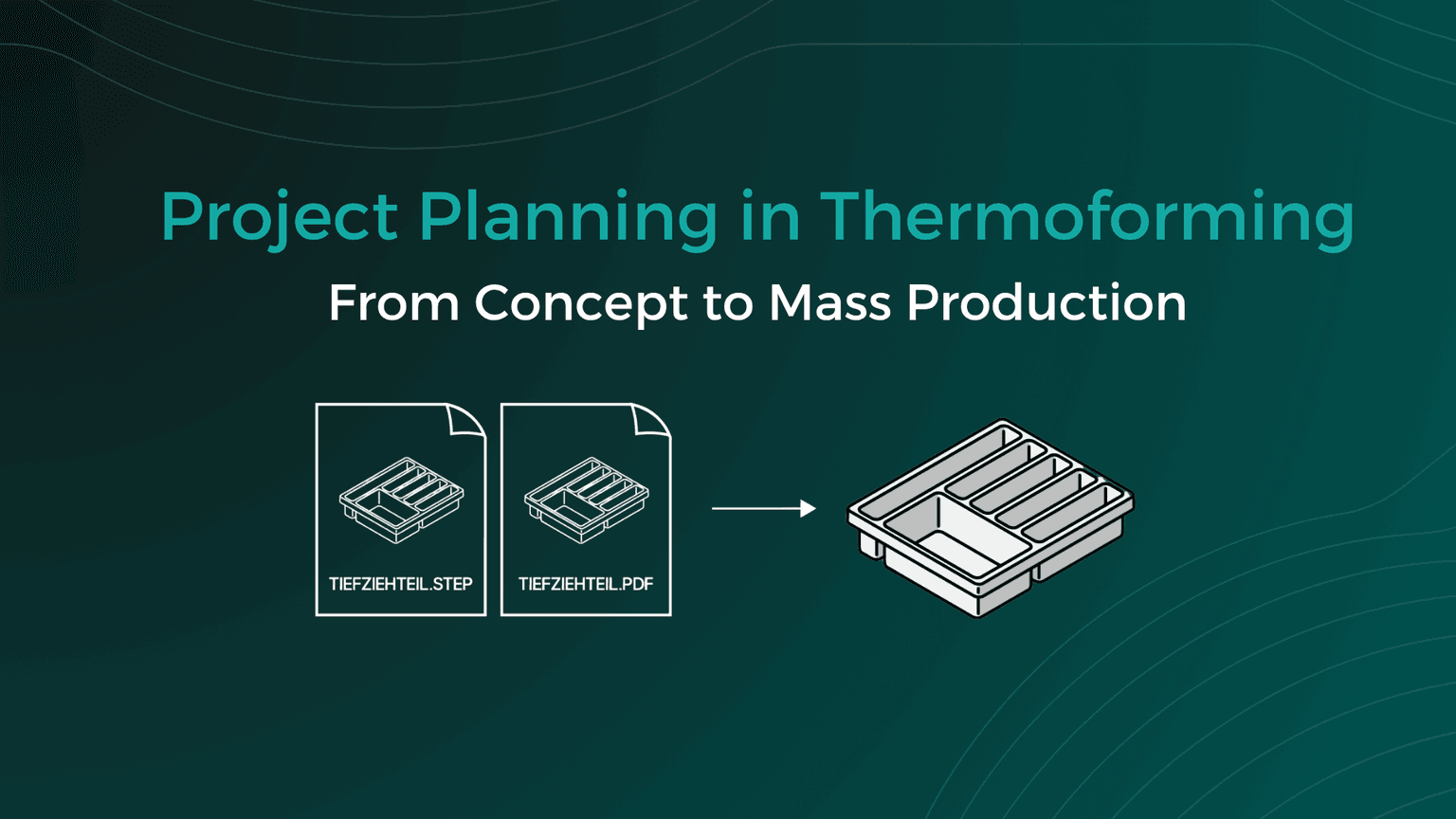
Project Planning in Thermoforming – From Concept to Mass Production
From the initial idea to mass production, various factors must be considered in thermoforming project planning, including material selection, tool manufacturing, and quality control. This article provides a detailed look at how a thermoforming project with formary is executed.
Thermoformed Parts in Practice
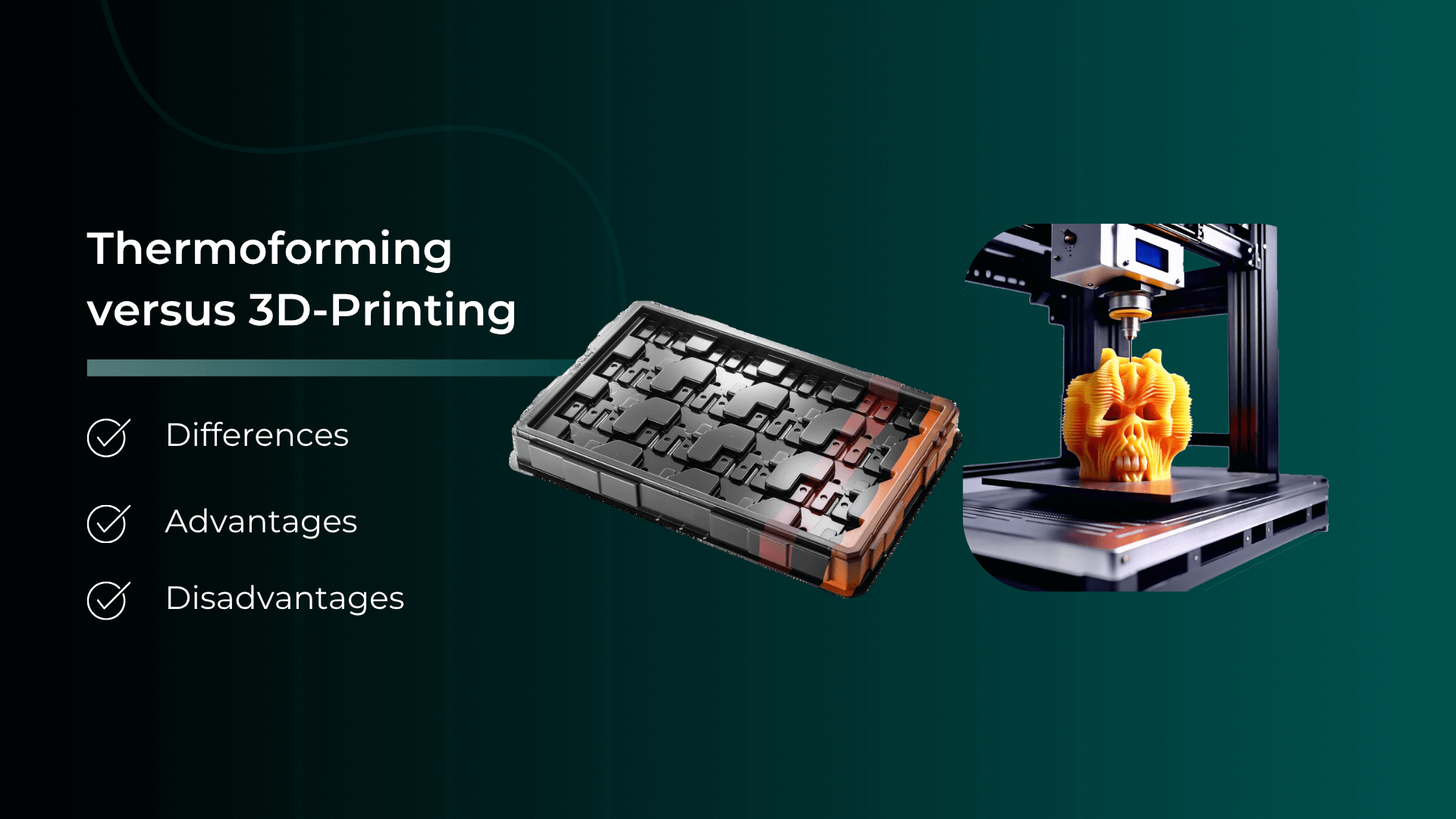
Thermoforming vs. 3D Printing – Advantages, Disadvantages, Differences, and Similarities
Plastic parts are manufactured using various processing methods. In this article, we focus on comparing the processes of plastic thermoforming and 3D printing.
Thermoformed Parts in Practice
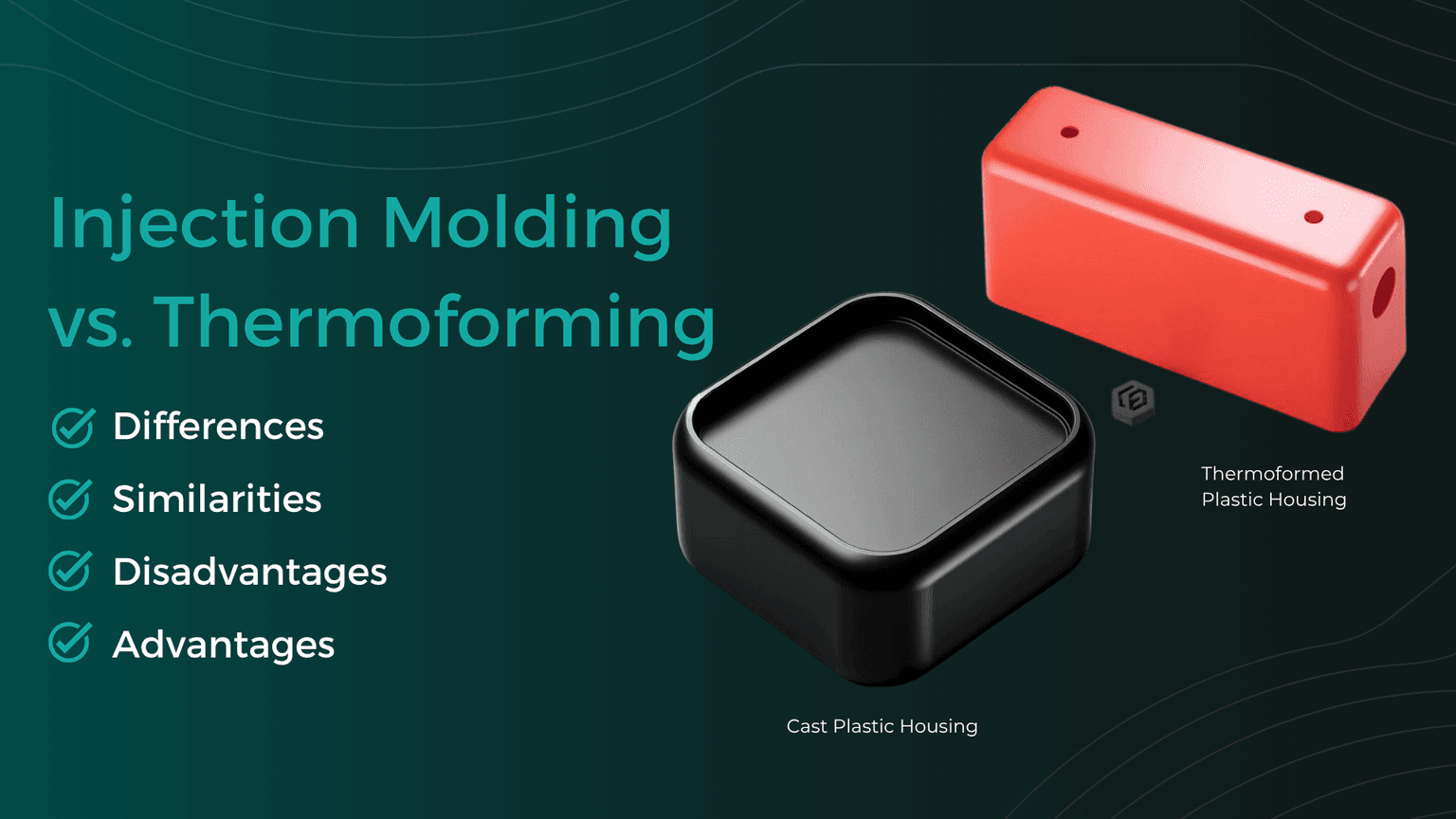
Injection Molding vs. Plastic Thermoforming – Advantages, Disadvantages, Differences, and Similarities
In the world of plastic processing, there are various common manufacturing methods used to produce precise plastic components for industrial applications. We compare two of them: Injection Molding and Plastic Thermoforming.
Thermoformed Parts in Practice
Checking CAD Models for Thermoformability: The Designer's Guide
Whether a plastic part is thermoformable is determined in the CAD model. Anyone who discusses geometry, wall thicknesses, and demoldability only after the first sampling pays for this loop with tool modifications, material waste, and lost weeks in the project timeline. This can be avoided during design: with a structured check that evaluates each model along this guide and makes typical sources of error visible early on.