Twin-Sheet Process: Definition, Advantages, and Applications
The Twin-Sheet process is a thermoforming technique that differs from the Single-Sheet process. In this method, two plastic sheets are heated and shaped simultaneously, enabling the production of hollow and stable components with complex geometries.
Sarah Guaglianone
Updated on June 2, 2026
Share
The Twin-Sheet Process – Key Points at a Glance
In the twin-sheet process, two plastic sheets are heated, shaped and welded simultaneously, resulting in sturdy, hollow components with a double-walled structure.
The process offers numerous advantages, such as high strength combined with low weight, precise shaping, cost-effectiveness, a wide range of materials, and the ability to produce large components or inserts.
Twin-sheet thermoforming is primarily used in the automotive industry, the packaging industry, medical technology, and for consumer goods such as sports and leisure equipment.
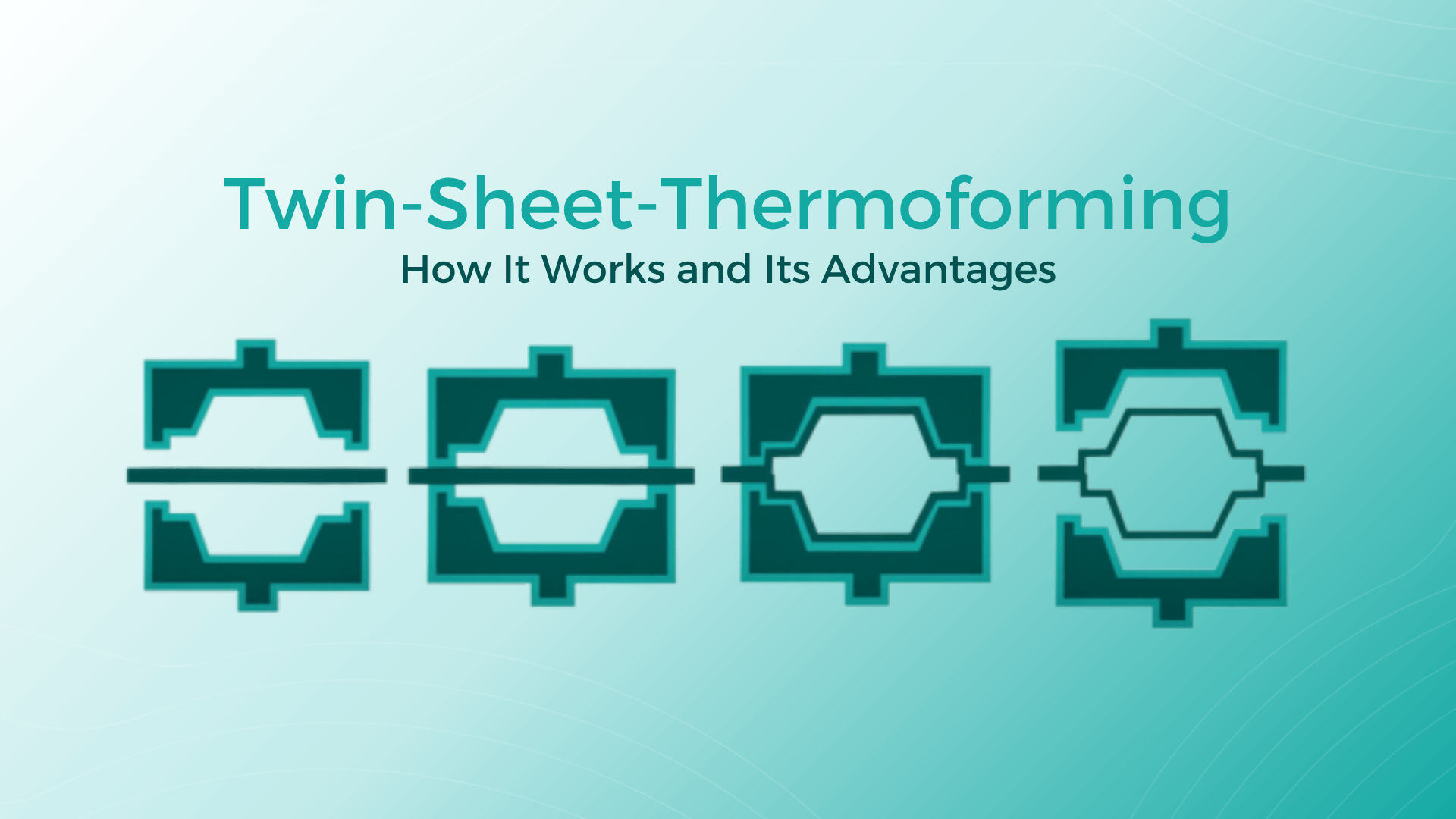
The twin-sheet process, also known as twin-sheet thermoforming, is a further development of plastic thermoforming, which is also known as the single- or mono-sheet process. Whereas in conventional thermoforming a single plastic sheet or roll is formed, in the twin-sheet process two plastic sheets are processed simultaneously to produce a hollow component.
ℹ️ Find out more about the differences between single-sheet thermoforming and twin-sheet thermoforming in this video.
European vs. American version
European version: Both plates are formed at the same time.
US version: The plates are shaped one after the other and then joined together.
Process steps in twin-sheet thermoforming
A crucial step is negative deep drawing:
Both plastic sheets are heated to the thermoplastic range.
The shaping and welding are carried out in a single operation.
The bond is formed solely by temperature and pressure, without the use of any additional adhesives.
The result is a high-strength, stress-free joint that offers flexible design options and excellent stability.
Single-Sheet vs. Twin-Sheet-Thermoforming
Criterion
Single-Sheet (classic thermoforming)
Twin-Sheet (advanced thermoforming)
Material usage
One plastic sheet or film
Two plastic sheets simultaneously
Stability
Stability depends on material thickness
Very high stability through welded double structure
Process steps
Heating and forming one sheet
Simultaneous heating, forming and welding of both sheets
Connection
None, component remains single-layer
Solid, stress-free connection through heat and pressure
Design possibilities
Limited due to single-sided forming
Very flexible, complex geometries also possible
Typical applications
Packaging, blisters, covers, inlays
Hollow bodies, tanks, technical housings, double-wall parts
How does the twin-sheet process work?
The twin-sheet process consists of several steps and can be divided into the following process:
1. Material selection
Two plastic sheets are clamped into the thermoforming machine. The sheets can be made of identical or different materials, depending on the desired properties of the end product, such as strength, UV resistance, or ESD protection. This allows for a high degree of flexibility in the design of the thermoformed parts.
2. Heating
Twin-sheet process: Heating
In the twin-sheet process, both plastic sheets are heated simultaneously until they reach the so-called thermoelastic state, in which they are soft and malleable. It is important that the heating is uniform in order to avoid material stresses and guarantee high-quality shaping. This step is typically carried out in special ovens that are integrated into the thermoforming machine.
3. Shaping
Twin-sheet process: shaping
Once the plastic rolls or sheets have reached the right temperature, they are placed in two separate halves of a mold. Each sheet is pressed into its own cavity, where it is drawn into the desired shape using vacuum or compressed air. This process enables precise shaping and ensures that even complex geometries can be reliably produced.
4. Welding
Twin-sheet process: Welding
While the sheets are still warm and malleable, the two mold halves are pressed together so that the plastic sheets fuse together at the points of contact. This results in a permanent and stable bond that forms a hollow structure. The double wall thickness creates a component with particularly high strength that meets the requirements for structural load-bearing capacity.
5. Cooling and removal of the component
Twin-sheet process: cooling and removal
Once the molded component has cooled, it is removed from the mold and can be used for further processing or direct use.
What are the advantages of the twin-sheet process?
The twin-sheet process offers several significant advantages over other plastic processing methods:
Increased stability: Twin-sheet thermoforming is characterized by high structural strength, which is achieved by the double wall structure of the components. This not only ensures high stability, but also enables weight reduction, as stable and rigid parts can be produced with less material.
High accuracy: Both sides of the molded parts benefit from double-sided mold contact, which increases accuracy. This is reflected in the visually appealing quality of both sides of the component.
Cost-effectiveness: Compared to conventional processes such as blow molding or injection molding, the cost of the deep-drawing toolis often more cost-effective with the twin-sheet process. This is because two sheets are processed simultaneously, which reduces the need for additional processing steps and tools.
Large part dimensions: The process enables the production of very large parts at relatively low tool and part prices, which further increases cost-effectiveness.
Inserts and insert parts: The twin-sheet process allows inserts to be inserted directly into the cavity of the component. This means that complex shapes and integrated functional elements such as reinforcements or mounting points can be easily integrated into the component.
Material diversity: It is possible to combine different materials and colors on the inside and outside of the parts. A mix of new and recycledmaterials is also possible.
Fast implementation times: Even larger components can be produced quickly, which shortens production times.
In which industries is the twin-sheet process used?
The twin-sheet process is characterized by its versatility and is of great interest in numerous industries.
Automotive
In the automotive sector, twin-sheet thermoforming is often used to manufacture air ducts, door panels, covers for luggage compartments, and other interior trim. These applications benefit from the high strength and ability to efficiently produce complex geometries.
Packaging
Another key sector is the packaging industry, where the twin-sheet process is used to produce sturdy, reusable thermoformed containers and pallets. These are used, for example, as food packaging, ESD packaging and many other packaging solutions.
The process also plays a central role in the manufacture of consumer goods such as leisure and sports equipment. For example, caravan covers, kayaks, and other leisure equipment are produced using the twin-sheet process, enabling manufacturers to create high-performance yet lightweight products.
Twin-sheet thermoforming – a summary
The twin-sheet process is a powerful and flexible technology that offers numerous advantages in both mass production and special applications. Thanks to its ability to combine complex geometries with high structural strength and low weight, twin-sheet thermoforming is used in a wide range of industries.
Would you like to know whether single-sheet thermoforming or the twin-sheet process is more suitable for your application? Then contact us and we will be happy to help you.
Frequently Asked Questions About Twin-Sheet Thermoforming
The twin-sheet process is an advancement of thermoforming in which two plastic sheets are heated, formed, and welded simultaneously to create a hollow body. In contrast, the single-sheet process involves processing only one sheet.
First, two plastic sheets are selected and heated until they are malleable. They are then pressed into mold halves, shaped into the desired form, welded together, and removed after cooling.
Das Twin-Sheet-Verfahren bietet erhöhte Stabilität durch doppelte Wandstärken, hohe Genauigkeit, Wirtschaftlichkeit, große Teiledimensionen, die Möglichkeit von Inserts, Materialvielfalt und schnelle Realisationszeiten.
The high strength results from welding the two plastic sheets together while they are still warm and malleable, creating a stable, hollow structure with double the wall thickness.
Related content
Thermoformed Parts in Practice
Warehouse Inventory: Tips & Tricks for Better Warehouse Organization and Efficiency with Trays
Warehouse inventories cost time, tie up staff, and often disrupt ongoing operations. This is especially true for small parts, serial components, or recurring components, where counting quickly becomes confusing if parts are stored loose in boxes or shelf compartments. Standard trays create a simple yet effective structure here for better warehouse organization. This article shows how trays optimize inventory counts in both the warehouse and production.
Thermoformed Parts in Practice
Tray Labeling: How to Use Labels Effectively for Your Packaging
To ensure that trays can be correctly identified and used, clear labeling is essential. Depending on the application, quantity, and process requirements, different methods can be used, such as permanent engraving or flexible labels. In this article, you will learn which tray labeling methods are available, when each method makes sense, and how labeling can already be incorporated into the tray design using formary’s 3D Tray Generator.
Thermoformed Parts in Practice
Supplier Guide for Plastic Thermoformed Parts – 10 Key Factors That Matter
Choosing the right supplier for plastic thermoformed parts is crucial for the quality, efficiency, and cost-effectiveness of your production. Our 10 tips will show you what to look for when selecting a supplier.
Platform & Features
3 Factors That Accelerate Your Procurement with formary
The three key factors—time, speed, and efficiency—are crucial for success in industrial manufacturing, from inquiry to delivery. That’s why formary has optimized this process, significantly accelerating the procurement of plastic thermoformed parts. Learn more in this article.
Thermoformed Parts in Practice
Rapid Prototyping in Thermoforming – Definition, Benefits & Processes
Rapid prototyping is used in product development to quickly create preliminary models. In thermoforming, rapid prototyping offers numerous advantages for producing high-quality prototypes efficiently and cost-effectively.
Platform & Features
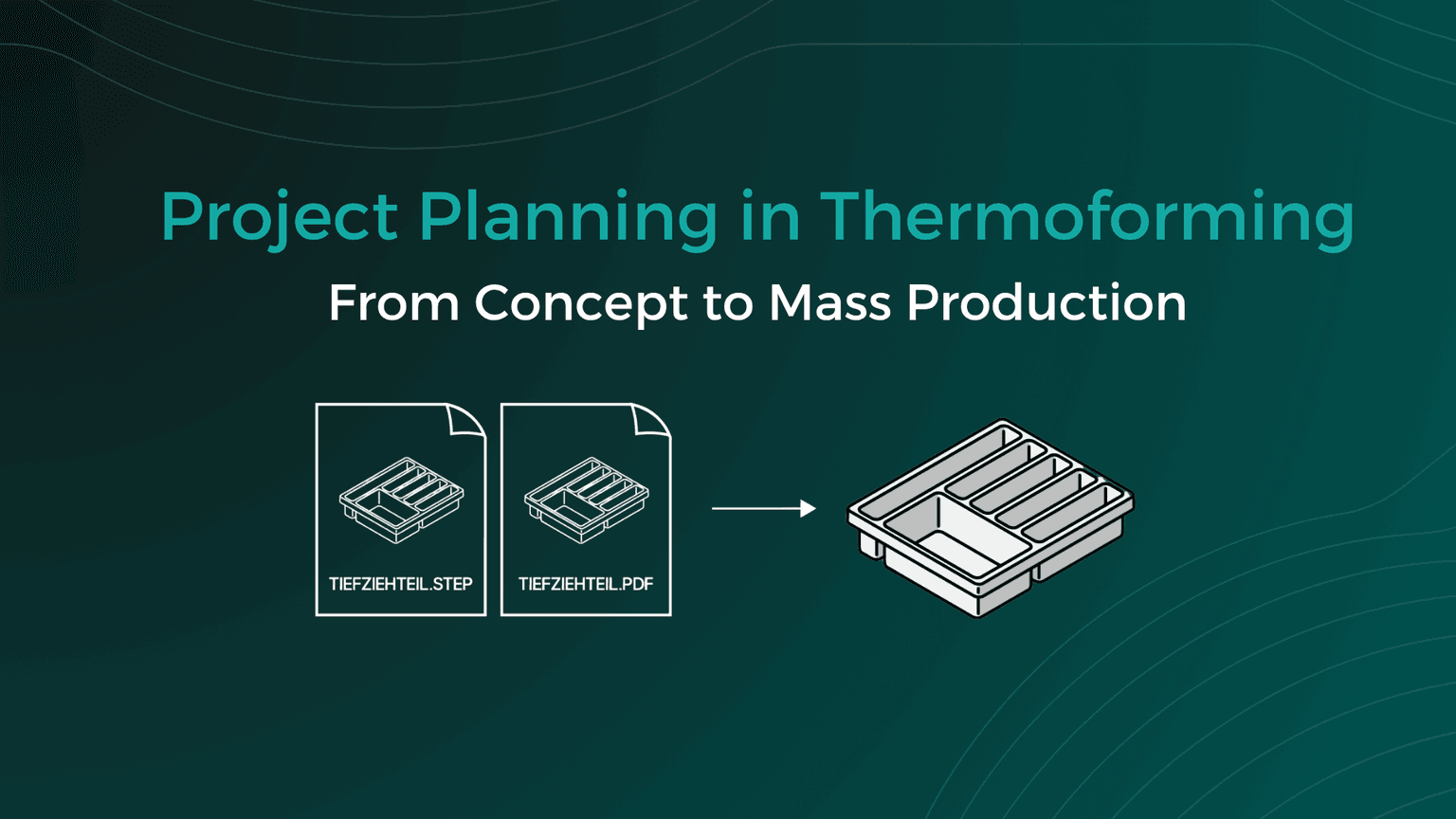
Project Planning in Thermoforming – From Concept to Mass Production
From the initial idea to mass production, various factors must be considered in thermoforming project planning, including material selection, tool manufacturing, and quality control. This article provides a detailed look at how a thermoforming project with formary is executed.
Thermoformed Parts in Practice
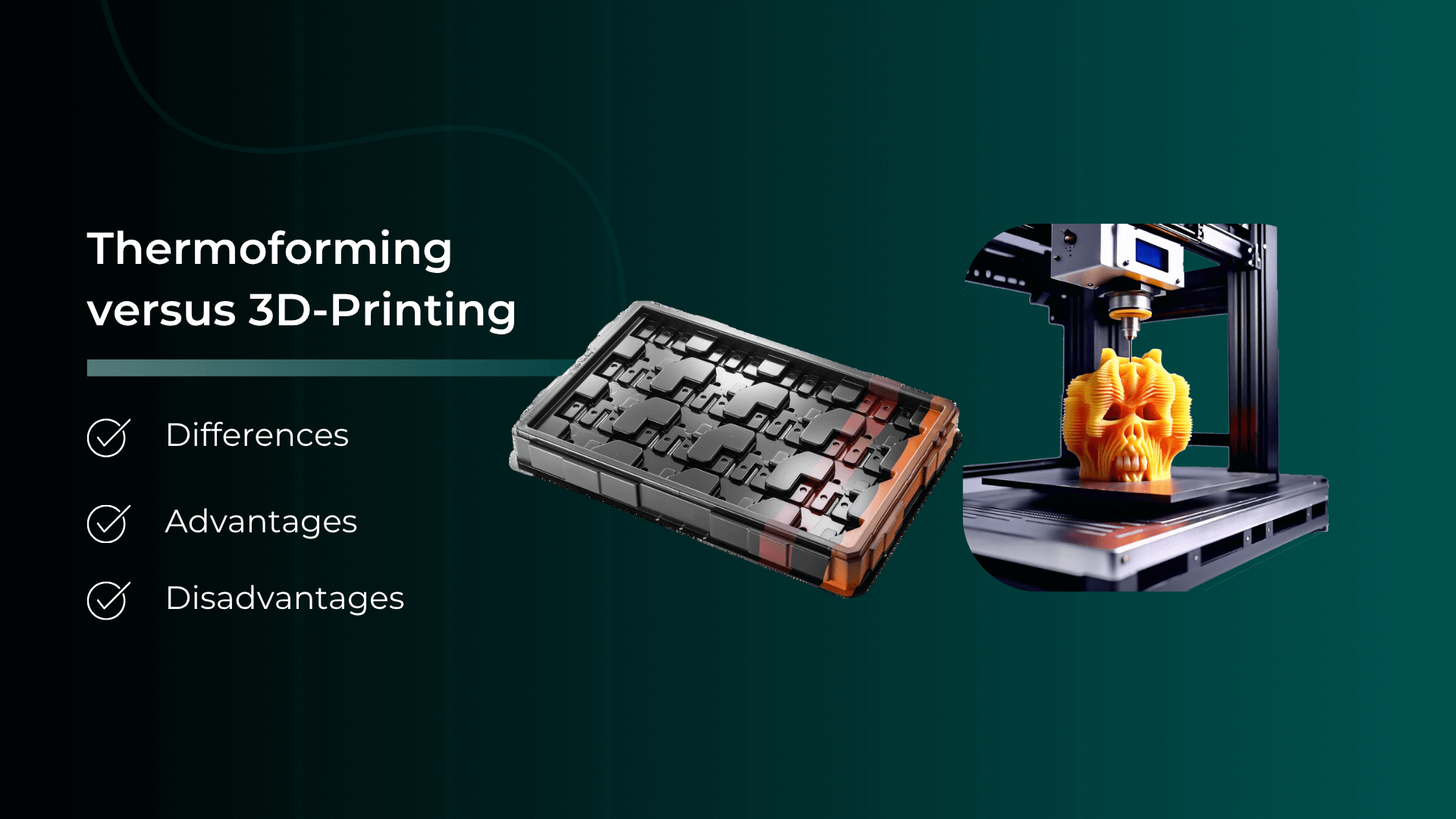
Thermoforming vs. 3D Printing – Advantages, Disadvantages, Differences, and Similarities
Plastic parts are manufactured using various processing methods. In this article, we focus on comparing the processes of plastic thermoforming and 3D printing.
Thermoformed Parts in Practice
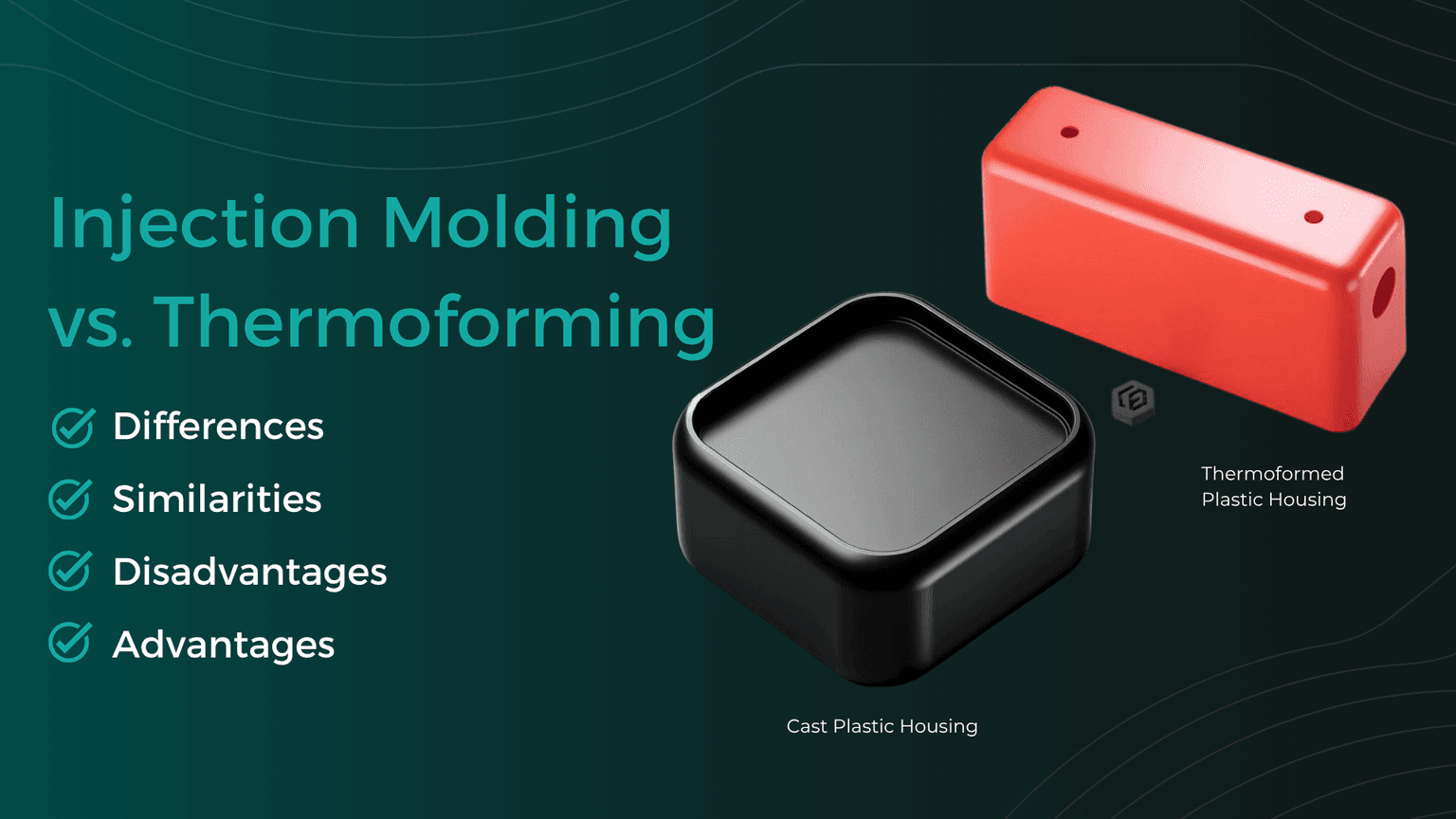
Injection Molding vs. Plastic Thermoforming – Advantages, Disadvantages, Differences, and Similarities
In the world of plastic processing, there are various common manufacturing methods used to produce precise plastic components for industrial applications. We compare two of them: Injection Molding and Plastic Thermoforming.
Thermoformed Parts in Practice
Checking CAD Models for Thermoformability: The Designer's Guide
Whether a plastic part is thermoformable is determined in the CAD model. Anyone who discusses geometry, wall thicknesses, and demoldability only after the first sampling pays for this loop with tool modifications, material waste, and lost weeks in the project timeline. This can be avoided during design: with a structured check that evaluates each model along this guide and makes typical sources of error visible early on.