Thermoformed Plastic Parts in Use – Detailed Applications
Thermoformed plastic parts play a crucial role in almost every industry, from manufacturing and mechanical engineering to medicine and food production. In this article, we take a closer look at the various applications of thermoformed plastic parts across different industries.
Amin Lakhal
Updated on August 26, 2026
Share
Applications of thermoformed parts – Key points at a glance
Thermoformed parts are produced by deep-drawing plastic sheets and enable the cost-effective manufacture of customised moulds for many industries.
Material properties such as ESD protection, food safety or UV resistance make thermoformed components suitable for a wide range of applications, e.g. in the medical, electronics or packaging sectors.
The applications range from transport trays and enclosures to protective covers, inserts and trays in the industrial, logistics and consumer goods sectors.
As an experienced digital manufacturer of thermoformed parts, formary supports you every step of the way, from design through to series production.
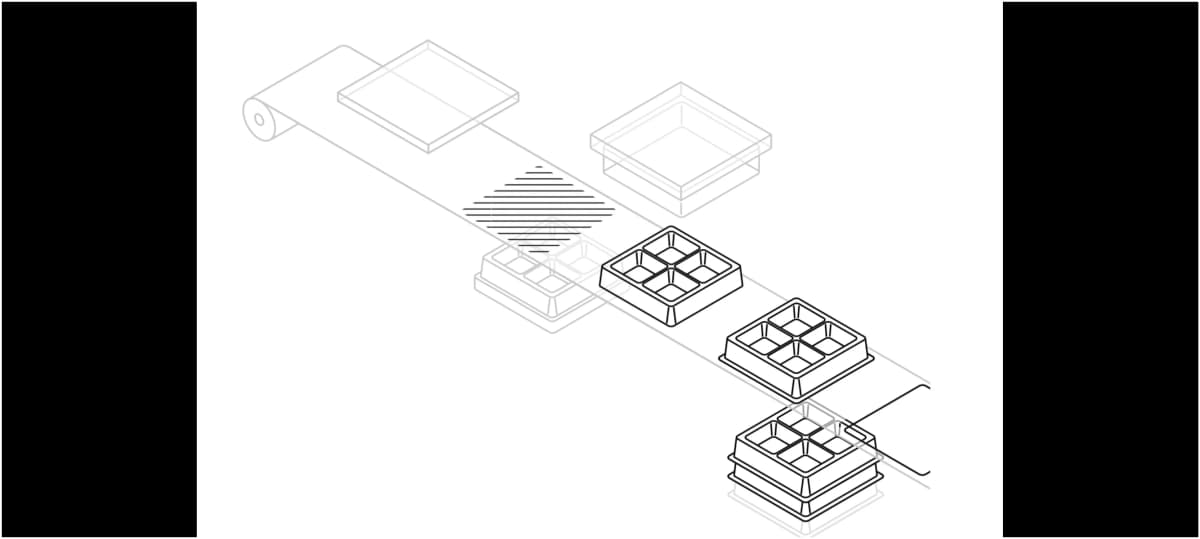
Thermoformed parts, also known as deep-drawn plastic parts, are three-dimensional products produced by plastic deep drawing (plastic thermoforming). In plastic deep drawing, a semi-finished product is heated and drawn into a deep-drawing die using vacuum or pressure. This results in bespoke products for packaging, logistics, mechanical engineering or medical technology.
cost-effective for small to medium-sized production runs
Technical thermoformed parts are primarily used when components need to meet functional requirements such as ESD protection, UV resistance or high dimensional stability.
Properties of Thermoformed Plastic Parts
Thermoformed plastic components are highly versatile, as they can be adapted to specific industries through different material configurations. Depending on the material, thermoformed components offer specific properties that are crucial in sectors such as medical and electronics :
ESD protection for sensitive electronic components
Cleanroom hygiene and sterility for medical technology and the pharmaceutical industry
Plastic thermoformed parts therefore meet both functional and aesthetic requirements. If you’d like to know how plastic differs from metal, read our article Plastic vs. Metal: A Comparison.
Can Thermoforming also be Used to Produce High-Quality Visible Plastic Parts?
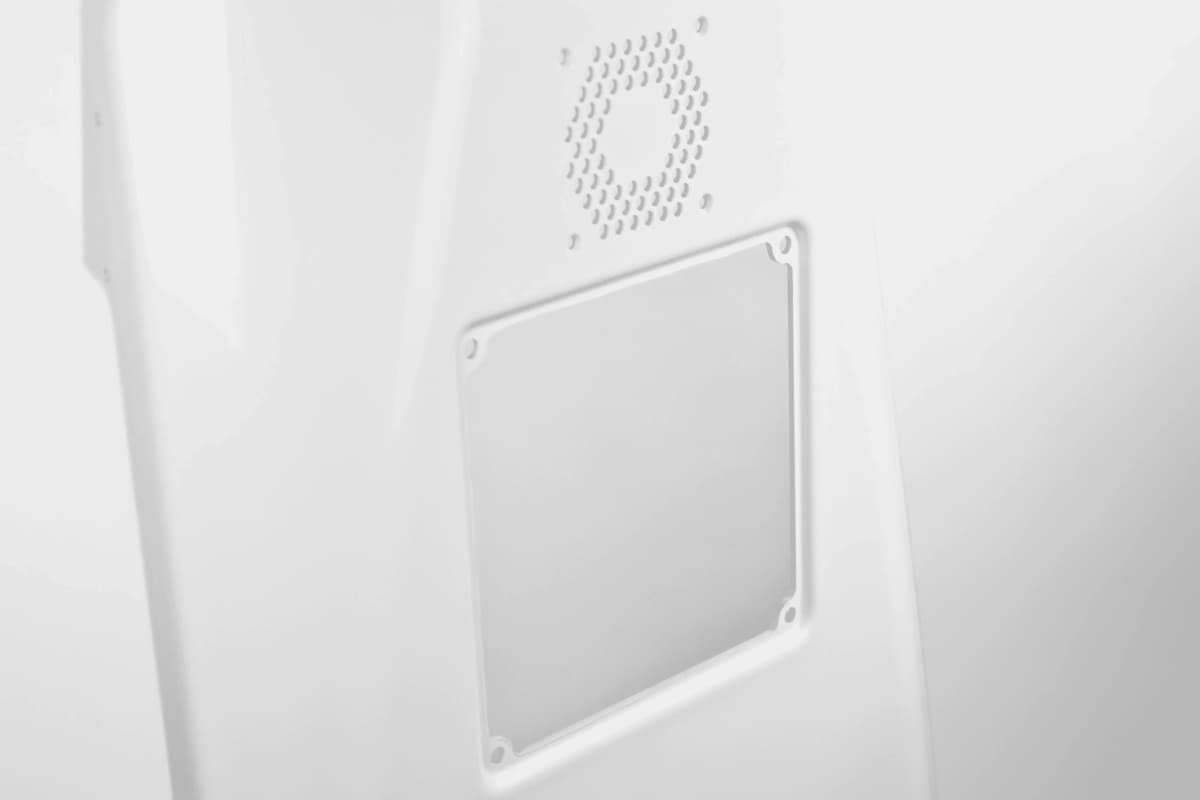
Thermoforming is suitable not only for simple trays and packaging, but also for high-quality visible parts such as plastic housings, machine covers, equipment enclosures, or design components. Depending on the application, thermoformed visible parts can be produced with smooth, matte, high-gloss, grained, or textured surfaces, custom colors, paint finishes, and printing.
Example of a high-quality visible part for a humanoid robot
Typical high-quality visible parts produced using thermoforming include:
Can a thermoformed part look like an injection-molded part?
With the right choice of material, tooling, and process design, thermoformed plastic parts can achieve a very high-quality visible surface. Compared with injection molding, the main limitations are very small details, integrated complex functional features, and very tight tolerances.
The advantage of thermoforming, however, is particularly evident for large-surface-area components and small to medium production runs, as tooling costs are typically lower.
Applications for Thermoformed Plastic Parts
Thermoformed parts are used in a wide range of industries. We have divided the main applications into five categories.
Transport and storage
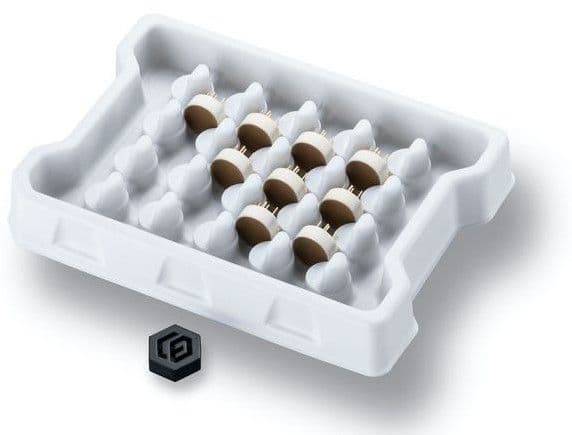
Thermoformed parts for transport and storage are used across all sectors of industry. Typical applications include:
ℹ️ Are you planning a transport tray? Use the 3D data of your component to create an initial tray design with our 3D Tray Generator.
Automation and Production
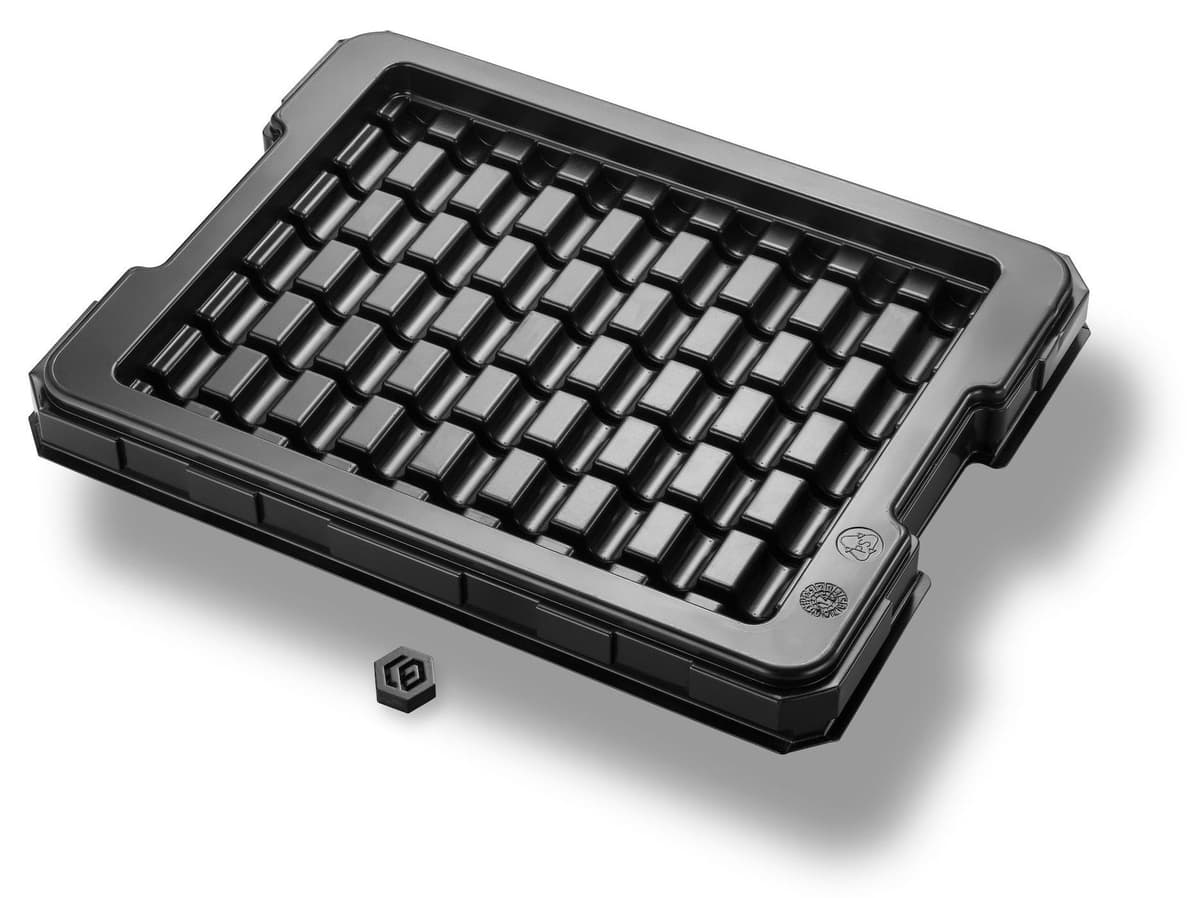
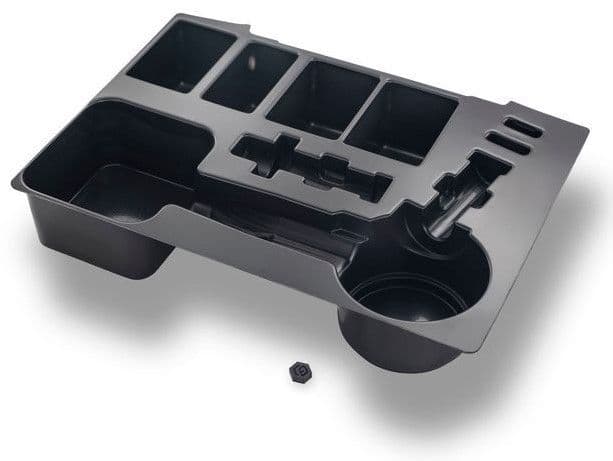
Automation trays are used in production lines. They feature precisely fitted mould cavities and optimised stacking methods, enabling robots to automatically grip and handle the components. A tray can pass through various production stages, which makes processes more efficient.
When using thermoformed parts for automation and production, you therefore benefit from:
high-precision positioning
Stackability
Process integration
low damage rate
Thermoformed deep-drawn trays are therefore particularly suitable for production lines handling a variety of product variants. Read more in our article → Automating production with plastic trays.
are used. Plastic inlays are generally scratch-resistant and resistant to cleaning agents. Thermoformed inlays can be visually adapted to your corporate identity guidelines to present a high-quality product with the desired distinguishing features.
Covers & Housings
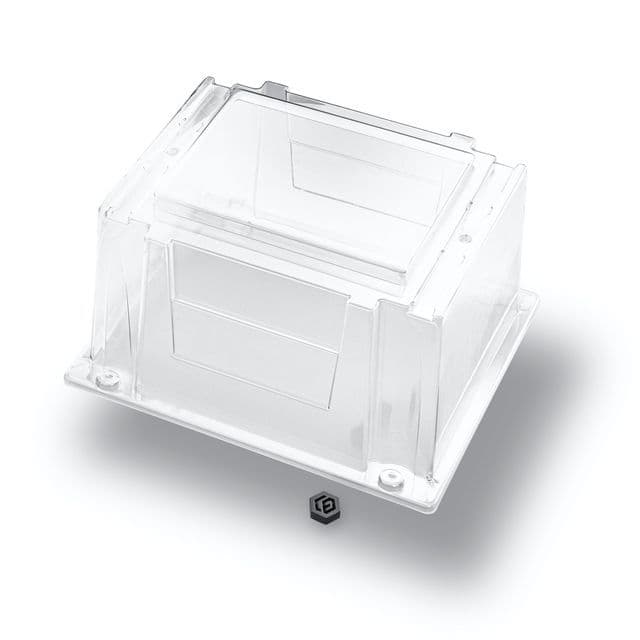
Thermoformed parts in the form of plastic covers protect sensitive equipment, machinery or other key components. They keep out dust, moisture and mechanical stress whilst ensuring a clean appearance.
ℹ️ Do you already have a CAD file for your thermoformed cover? With our Thermoforming Check, you can check within 60 seconds whether your data is suitable for thermoforming.
The key factors here are dimensional stability, recessed grips and a precise fit, which enable the safe handling of the components to be transported and stored.
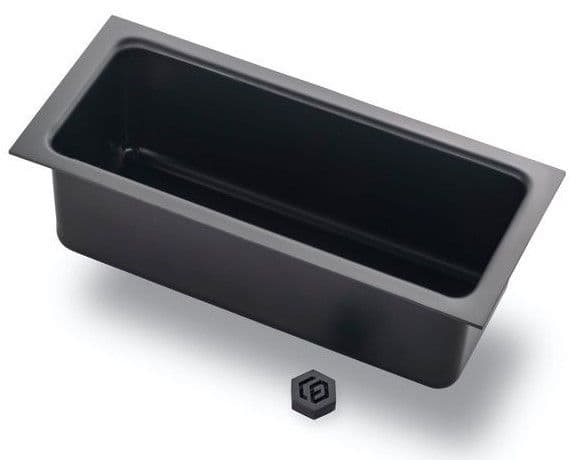
Black plastic container
Material requirements for thermoformed parts in the form of deep-drawn containers
ABS and ASA are the materials most commonly used for thermoformed containers intended for outdoor use, as these materials are UV-resistant.
Conclusion – Thermoformed Plastic Parts Offer Endless Possibilities
Thermoformed parts offer a flexible and cost-effective solution for a wide range of industrial applications. Whether transport trays, machine casings, housings or containers, thermoformed plastic parts provide functional, lightweight and cost-effective components.
As an experienced digital manufacturer of thermoformed parts, formary supports you every step of the way, from design through to series production.
Frequently Asked Questions About Plastic Thermoformed Parts
Plastic thermoformed parts are produced by thermoforming plastic sheets or rolls. In this process, the semi-finished products are heated and drawn into a mold, creating custom shapes for packaging, enclosures, or transport solutions.
Depending on the material, they offer specific properties such as ESD protection, food safety, cleanroom compatibility, or UV resistance. This makes them versatile for use in industries such as electronics, medicine, and the food industry.
Thermoformed parts are used in transportation and storage, in automation as inlays and inserts, as covers and housings, and as trays and containers. They serve both as functional components and as packaging solutions.
Thermoformed parts can be customized, are lightweight, durable, and cost-effective to manufacture. They also allow for the precise positioning of components, thereby contributing to safety, efficiency, and process optimization.
Yes. Plastic thermoforming is not limited to trays or packaging. The process can also be used to manufacture high-quality visible parts such as equipment housings, machine covers, panels, or design components. The visual quality and surface appearance are influenced by factors such as the material, tooling, forming process, and post-processing. Depending on the application, smooth, textured, matte, high-gloss, transparent, painted, or printed surfaces are possible.
Related content
Thermoformed Parts in Practice
Warehouse Inventory: Tips & Tricks for Better Warehouse Organization and Efficiency with Trays
Warehouse inventories cost time, tie up staff, and often disrupt ongoing operations. This is especially true for small parts, serial components, or recurring components, where counting quickly becomes confusing if parts are stored loose in boxes or shelf compartments. Standard trays create a simple yet effective structure here for better warehouse organization. This article shows how trays optimize inventory counts in both the warehouse and production.
Thermoformed Parts in Practice
Tray Labeling: How to Use Labels Effectively for Your Packaging
To ensure that trays can be correctly identified and used, clear labeling is essential. Depending on the application, quantity, and process requirements, different methods can be used, such as permanent engraving or flexible labels. In this article, you will learn which tray labeling methods are available, when each method makes sense, and how labeling can already be incorporated into the tray design using formary’s 3D Tray Generator.
Thermoformed Parts in Practice
Supplier Guide for Plastic Thermoformed Parts – 10 Key Factors That Matter
Choosing the right supplier for plastic thermoformed parts is crucial for the quality, efficiency, and cost-effectiveness of your production. Our 10 tips will show you what to look for when selecting a supplier.
Platform & Features
3 Factors That Accelerate Your Procurement with formary
The three key factors—time, speed, and efficiency—are crucial for success in industrial manufacturing, from inquiry to delivery. That’s why formary has optimized this process, significantly accelerating the procurement of plastic thermoformed parts. Learn more in this article.
Thermoformed Parts in Practice
Rapid Prototyping in Thermoforming – Definition, Benefits & Processes
Rapid prototyping is used in product development to quickly create preliminary models. In thermoforming, rapid prototyping offers numerous advantages for producing high-quality prototypes efficiently and cost-effectively.
Platform & Features
Project Planning in Thermoforming – From Concept to Mass Production
From the initial idea to mass production, various factors must be considered in thermoforming project planning, including material selection, tool manufacturing, and quality control. This article provides a detailed look at how a thermoforming project with formary is executed.
Thermoformed Parts in Practice
Thermoforming vs. 3D Printing – Advantages, Disadvantages, Differences, and Similarities
Plastic parts are manufactured using various processing methods. In this article, we focus on comparing the processes of plastic thermoforming and 3D printing.
Thermoformed Parts in Practice
Injection Molding vs. Plastic Thermoforming – Advantages, Disadvantages, Differences, and Similarities
In the world of plastic processing, there are various common manufacturing methods used to produce precise plastic components for industrial applications. We compare two of them: Injection Molding and Plastic Thermoforming.
Thermoformed Parts in Practice
Checking CAD Models for Thermoformability: The Designer's Guide
Whether a plastic part is thermoformable is determined in the CAD model. Anyone who discusses geometry, wall thicknesses, and demoldability only after the first sampling pays for this loop with tool modifications, material waste, and lost weeks in the project timeline. This can be avoided during design: with a structured check that evaluates each model along this guide and makes typical sources of error visible early on.