In 2026, B2B platforms are evolving from pure procurement tools into central control elements of industrial value creation. This shift is especially pronounced in plastics processing, a field characterized by complex materials, highly variant components, and demanding quality requirements.
Sarah Guaglianone
Updated on July 2, 2026
Share
B2B Platforms in Plastics Processing 2026 – Key Takeaways
By 2026, B2B platforms will prevail that seamlessly connect RFQ (Request for Quotation), engineering, quality, and delivery capability into one end-to-end process.
Successful B2B platforms in Germany do not position themselves as pure marketplaces but as 100% responsible partners.
Manufacturing platforms become the operational backbone between purchasing, engineering, and production.
For plastic components in Germany, what counts is: clear responsibility, reproducible quality, and reliable delivery schedules.
What Are Digital B2B Platforms in an Industrial Context?
In an industrial context, a B2B platform is not a “portal with a list of suppliers,” but rather a process system that standardizes interaction and transactions between multiple parties: inquiry, technical clarification, quotation, order placement, quality assurance, logistics, and documentation.
Types of B2B Platforms
Marketplace platforms: connect suppliers and buyers, with responsibility usually remaining with the two parties.
Intermediary platforms: coordinate processes; responsibility and liability are deliberately limited.
Managed manufacturing platforms: projects, quality, and schedules are centrally managed digitally. Production takes place within a partner network — responsibility lies with the platform operator.
Especially for thermoformed plastic parts, functional trays,housings, or serial components, model 3 is decisive. formary deliberately positions itself as the responsible contractual partner for both customer and manufacturer, not as a pure order broker.
Overview: Comparison of Three Platform Models
Model
Characteristics
Risk
Marketplace
Contact brokerage, minimal process governance
High variance, unclear quality
Intermediary
Process coordination, limited liability
Responsibility remains fragmented
Managed manufacturing platform
Central project, quality, and schedule ownership
Higher demands on the platform
Smart Manufacturing: What Do B2B Platforms Actually Deliver in 2026?
Data-driven platforms act as the operational backbone for:
higher production utilization
better planning reliability
faster responsiveness
fewer media discontinuities
Digital platforms consolidate these effects from inquiry and design through to production.
1) Process APIs Between Purchasing, Engineering & Manufacturing
B2B buyers still work across countless channels (email, phone calls, approval PDFs, Excel bills of materials, etc.), resulting in a poor purchasing experience. This is precisely why platforms in 2026 become the connective process interface between purchasing, engineering, and production. Digital configurators, structured RFQs, and consistent documentation replace fragmented email, Excel, and PDF processes, enabling an end-to-end, media-break-free flow from inquiry to implementation.
2) Decision Capability Instead of Price Comparison
Competition is increasingly no longer decided by the lowest price, but by the best data-based decision foundation. Platforms do not merely provide supplier prices; they make technical and economic implications transparent, for example through DfM analyses or alternative materials and processes. This makes it clear early on which option best balances cost, risk, and feasibility.
3) Standardized Quality Management
In 2026, quality is systematically embedded in the process. B2B platforms establish defined approval steps, versioned data states, and traceable decision paths. Supplier audits are standardized and centrally handled by the platform provider.
4) Traceability as the Default
Traceability evolves from an optional feature to a standard. Manufacturing platforms ensure that CAD versions, approvals, tool status, and relevant quality information are clearly linked. Transparency across the entire lifecycle becomes the norm.
5) Central Customer Portal
Instead of scattered communication, the customer portal becomes the central workspace. Project status, changes, approvals, and communication are bundled in one place.
6) Digital Engineering Tools
Early concepts, layouts, and technical evaluations accelerate decisions and reduce costly and time-intensive iteration loops.
7) Responsibility Instead of Mediation
By 2026, platform performance is increasingly judged by responsibility. Rather than simple mediation, platforms assume the role of a digital manufacturer across the entire lifecycle — from technical clarification and quality assurance to scheduling and serial production.
How Does formary Implement These Requirements as a B2B Manufacturing Platform?
formary implements these general requirements specifically for plastics processing and positions itself not as a marketplace, but as the responsible single point of contact between purchasing, engineering, and manufacturing.
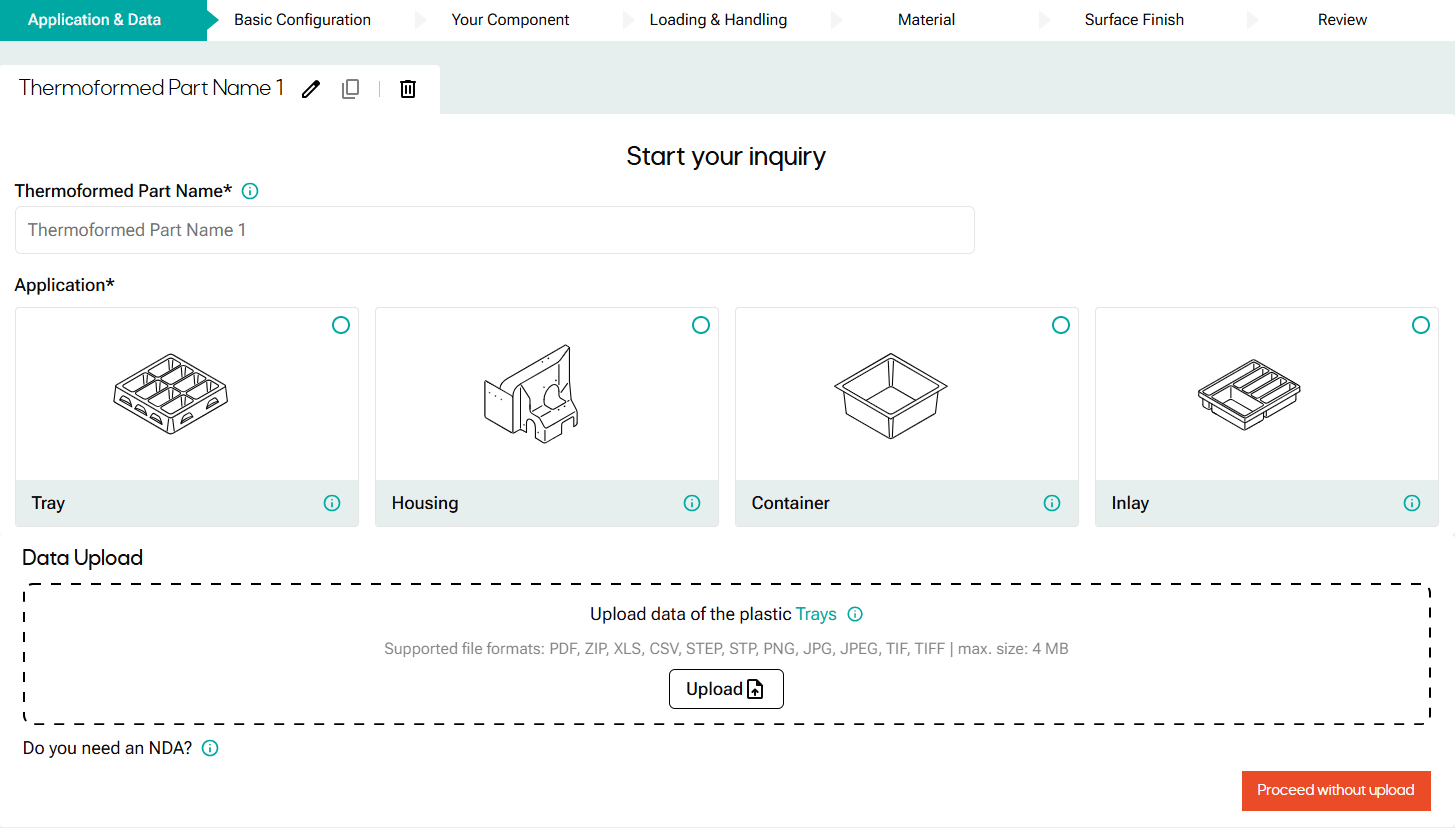
At formary, projects start with a structured inquiry using the configurator, which is specifically designed for thermoformed plastic parts, trays, housings, inlays, and containers. Among other things, the following are captured:
3D and 2D data
dimensions
planned quantities and annual volumes
functional requirements
aesthetic requirements
specific plastic requirements (fire resistance, chemical resistance, etc.)
The goal is a robust technical and economic decision basis.
DfM & Engineering as an Integrated Process
formary integrates manufacturing-oriented design early on through a DfM analysis. This technical clarification takes place before quotation and is documented so that decisions remain traceable.
With the 3D Tray Generator, tray concepts can be created by uploading component data, enabling companies to start internal planning at an early stage.
Quotation Logic with Technical Safeguards
Quotations at formary are based on structured costing models that consider, among other factors:
After order placement, all relevant data states are centrally consolidated in the formary customer portal. The customer portal provides full transparency regarding:
status tracking
specification changes
direct communication with the project manager
fast approvals
This establishes the foundation for traceability, reproducible quality, and long-term serial production.
End-to-End Responsibility in Project Planning
Within project planning, formary assumes full responsibility for:
technical clarification
quality assurance
schedule and capacity planning
Manufacturing partners are integrated into the network, but overall project responsibility remains centrally managed.
Opportunities and Risks of Online Manufacturing Platforms
Opportunities
reduced time-to-market
improved planning reliability
greater transparency
lower coordination costs
Risks
unclear responsibility
missing DfM validation
quality responsibility shifted to partners without a system
lack of traceability
The decisive factor is not platform size, but process quality.
Decision Support: Platform Checklist 2026
Criterion
Good Answer in 2026
Warning Sign
Technical clarification
DfM review, clear specification logic
“Just send a drawing”
Quotation quality
Transparent pricing logic, documented assumptions
Price without parameters or assumptions
Quality
Defined inspection and approval processes, traceable documentation
Quality “handled by partner” without a system
Delivery capability
Reliable capacity and schedule commitments
Non-binding lead times
Data & evidence
Exportable documentation bundles, traceability
PDFs via email, no versioning
Responsibility
Single point of contact
“We only mediate”
Platform Economy in Germany 2026 – Conclusion
In 2026, B2B platforms in plastics processing will primarily do one thing: standardize execution — technically, operationally, qualitatively, and data-driven. Platforms like formary already demonstrate what this future looks like today:
one system instead of many isolated solutions
smart manufacturing instead of fragmented processes
decision capability instead of pure quotation handling
formary is not a marketplace, but a managed digital manufacturing platform — with a clear focus on manufacturing-oriented design, reliable quotations, and reproducible quality for thermoformed plastic components.
FAQ – Frequently Asked Questions About B2B Platforms
RFQ stands for Request for Quotation. It is a standardized inquiry that invites suppliers to submit a concrete quotation for a clearly defined product or service.
Look at project governance: Is there a clear single point of contact, defined approvals, documented DfM decisions, and a standardized complaint process? If quotations and quality lie entirely with partners and the platform cannot demonstrate its own processes, it is usually pure mediation.
The biggest time savings come from structured RFQs, fast technical clarification through DfM, and rapid concept development. These reduce follow-up questions, iteration loops, and friction between engineering and purchasing — exactly where days are often lost in practice.
The biggest risk is not price, but unclear responsibility. If no one owns technical corrections, partner coordination, and communication when deviations occur, costs and lead times escalate quickly. Clarify before starting: Who decides in DfM conflicts? Who bears schedule risk? Who is responsible for quality?
Further Resources
Thermoformed Parts in Practice
Warehouse Inventory: Tips & Tricks for Better Warehouse Organization and Efficiency with Trays
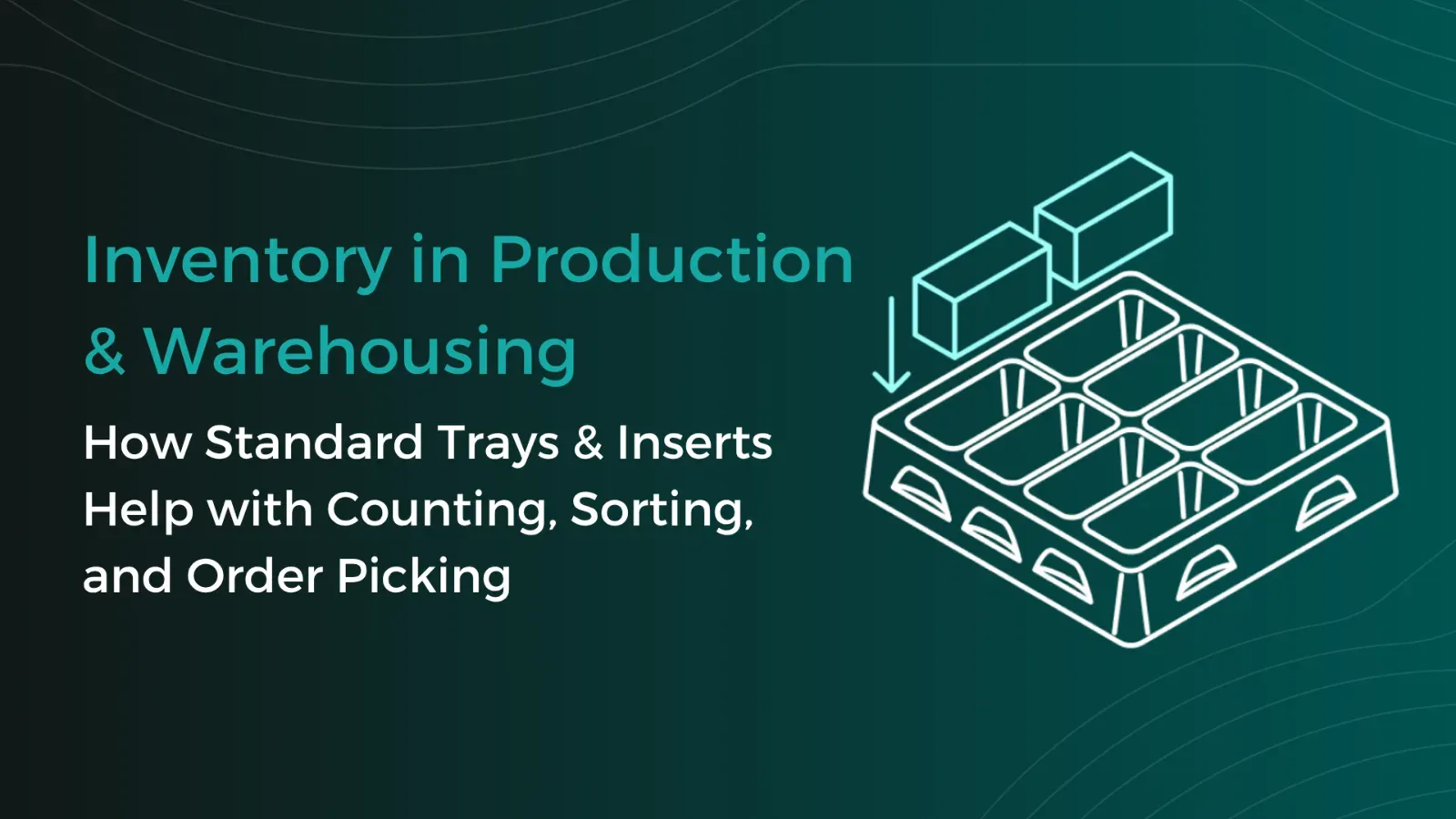
Warehouse inventories cost time, tie up staff, and often disrupt ongoing operations. This is especially true for small parts, serial components, or recurring components, where counting quickly becomes confusing if parts are stored loose in boxes or shelf compartments. Standard trays create a simple yet effective structure here for better warehouse organization. This article shows how trays optimize inventory counts in both the warehouse and production.
Thermoformed Parts in Practice
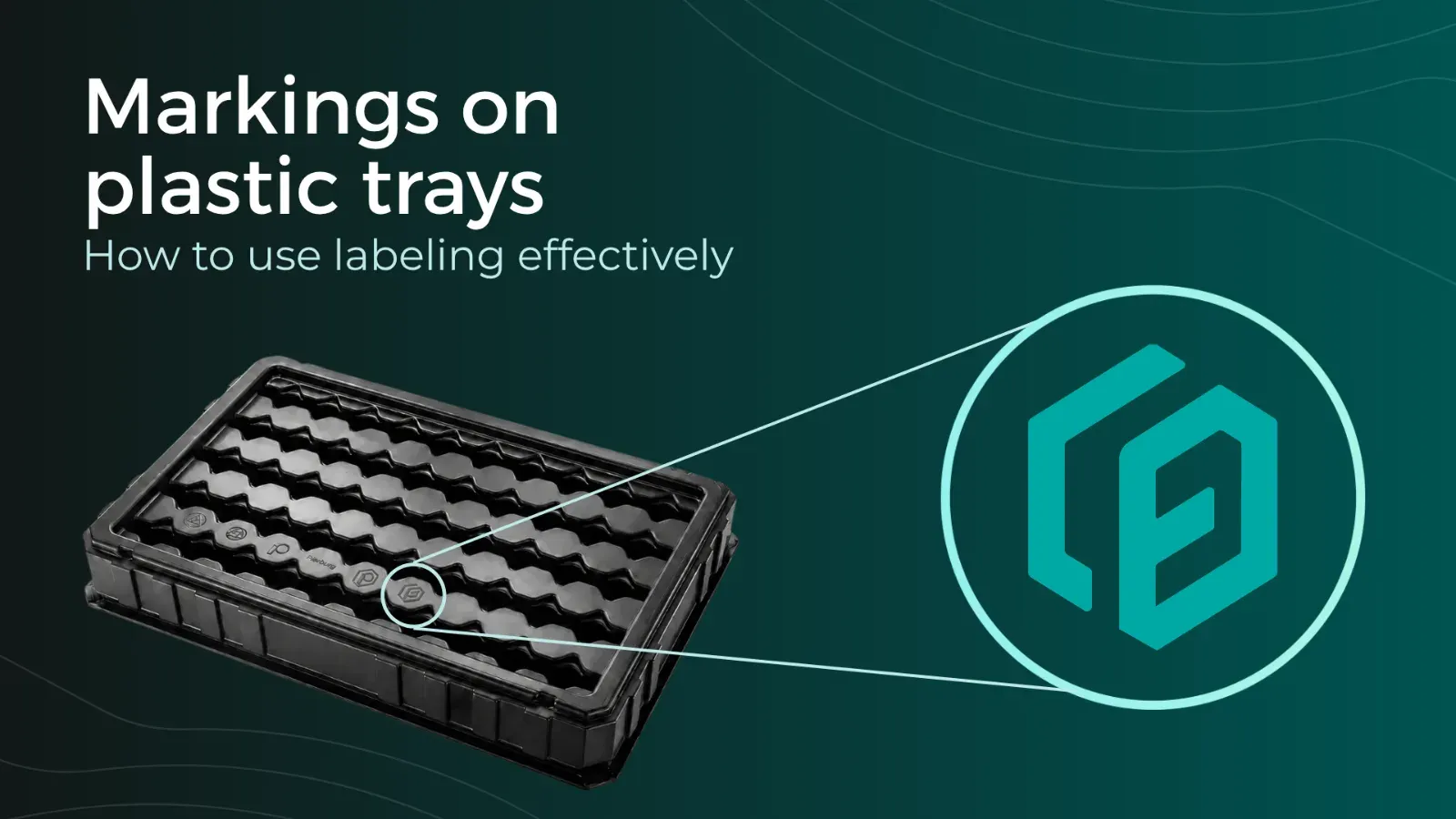
Tray Labeling: How to Use Labels Effectively for Your Packaging
To ensure that trays can be correctly identified and used, clear labeling is essential. Depending on the application, quantity, and process requirements, different methods can be used, such as permanent engraving or flexible labels. In this article, you will learn which tray labeling methods are available, when each method makes sense, and how labeling can already be incorporated into the tray design using formary’s 3D Tray Generator.
Thermoformed Parts in Practice
Supplier Guide for Plastic Thermoformed Parts – 10 Key Factors That Matter
Choosing the right supplier for plastic thermoformed parts is crucial for the quality, efficiency, and cost-effectiveness of your production. Our 10 tips will show you what to look for when selecting a supplier.
Platform & Features
3 Factors That Accelerate Your Procurement with formary
The three key factors—time, speed, and efficiency—are crucial for success in industrial manufacturing, from inquiry to delivery. That’s why formary has optimized this process, significantly accelerating the procurement of plastic thermoformed parts. Learn more in this article.
Thermoformed Parts in Practice
Rapid Prototyping in Thermoforming – Definition, Benefits & Processes
Rapid prototyping is used in product development to quickly create preliminary models. In thermoforming, rapid prototyping offers numerous advantages for producing high-quality prototypes efficiently and cost-effectively.
Platform & Features
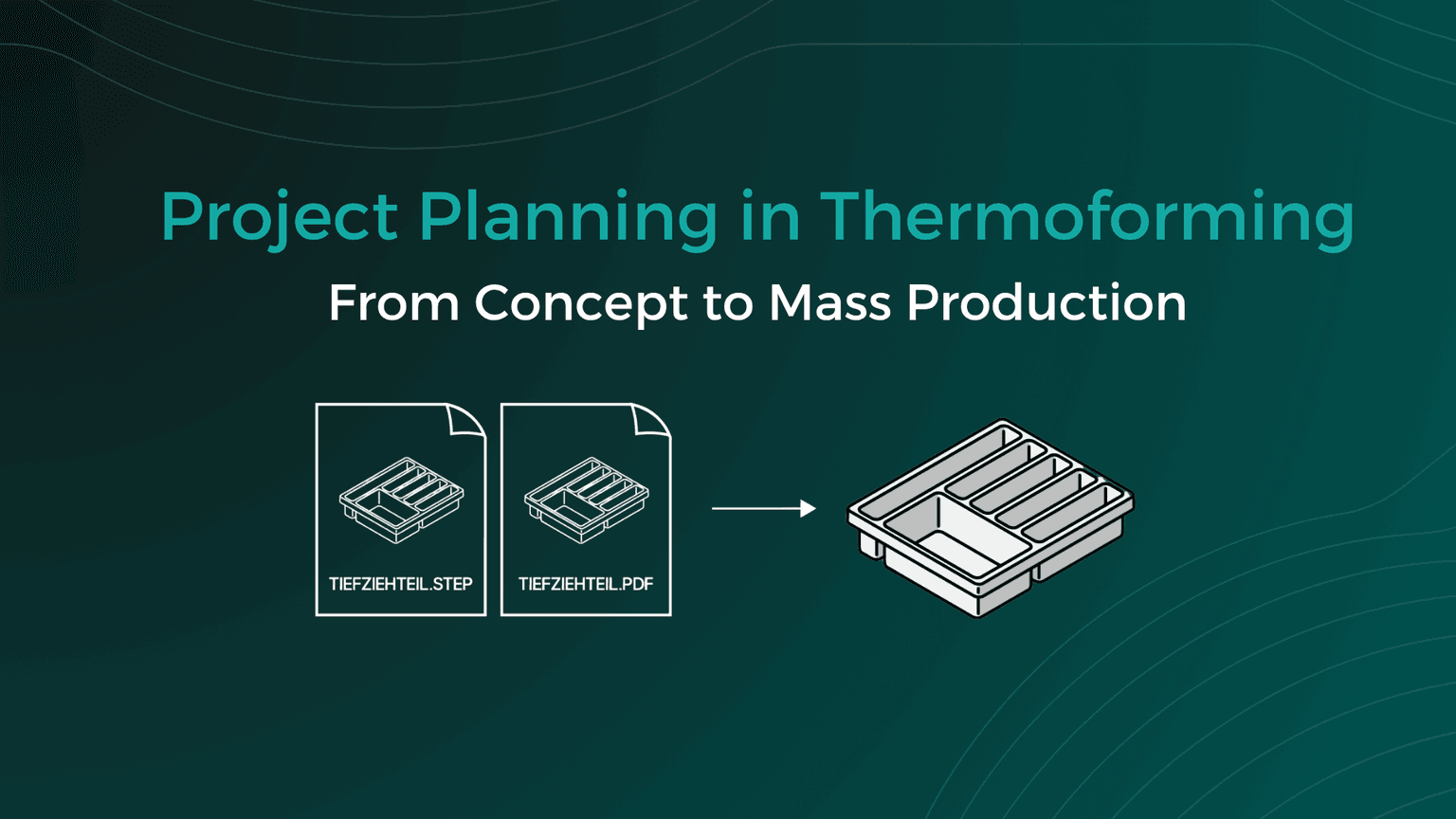
Project Planning in Thermoforming – From Concept to Mass Production
From the initial idea to mass production, various factors must be considered in thermoforming project planning, including material selection, tool manufacturing, and quality control. This article provides a detailed look at how a thermoforming project with formary is executed.
Thermoformed Parts in Practice
Thermoforming vs. 3D Printing – Advantages, Disadvantages, Differences, and Similarities
Plastic parts are manufactured using various processing methods. In this article, we focus on comparing the processes of plastic thermoforming and 3D printing.
Thermoformed Parts in Practice
Injection Molding vs. Plastic Thermoforming – Advantages, Disadvantages, Differences, and Similarities
In the world of plastic processing, there are various common manufacturing methods used to produce precise plastic components for industrial applications. We compare two of them: Injection Molding and Plastic Thermoforming.
Thermoformed Parts in Practice
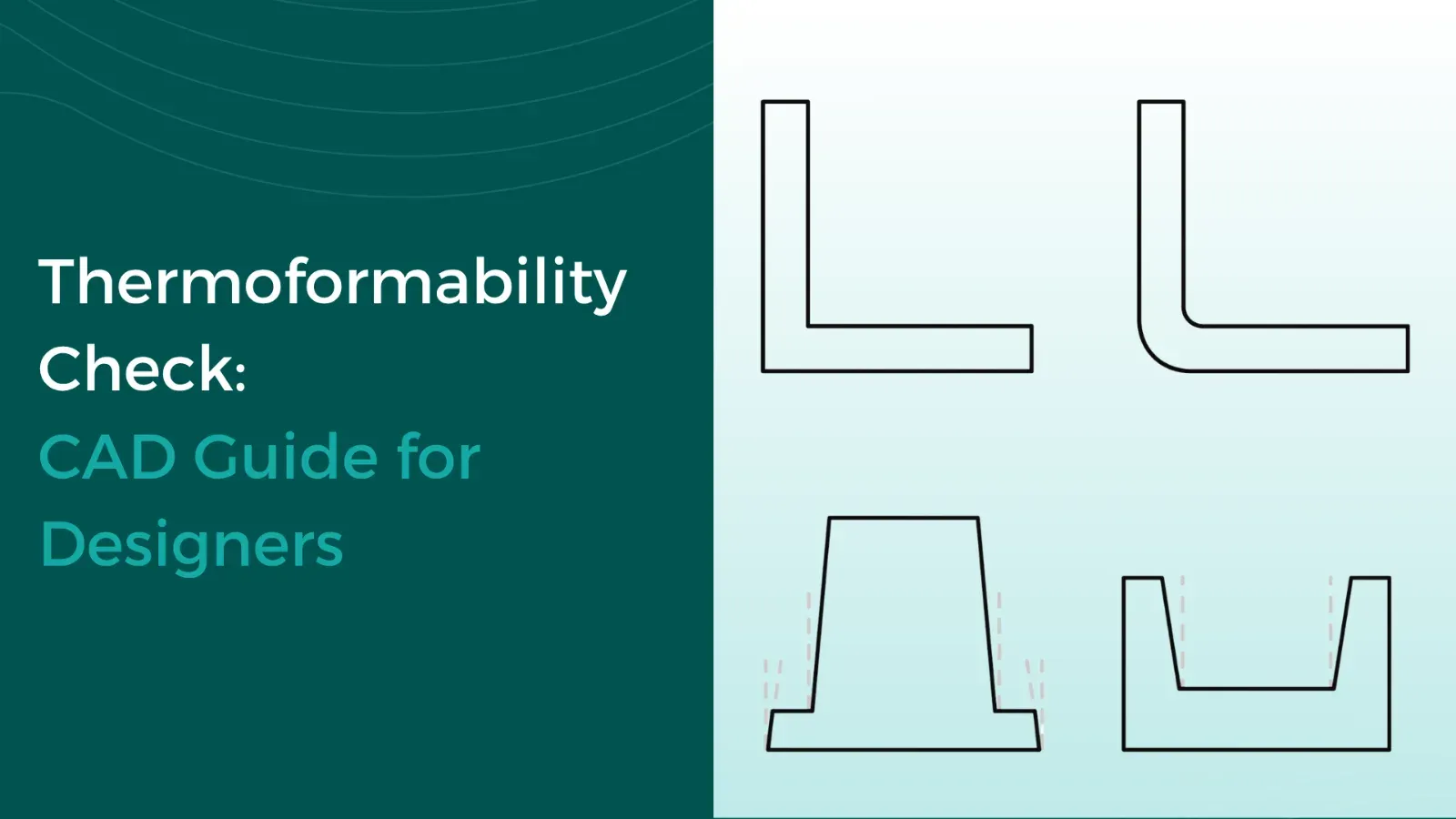
Checking CAD Models for Thermoformability: The Designer's Guide
Whether a plastic part is thermoformable is determined in the CAD model. Anyone who discusses geometry, wall thicknesses, and demoldability only after the first sampling pays for this loop with tool modifications, material waste, and lost weeks in the project timeline. This can be avoided during design: with a structured check that evaluates each model along this guide and makes typical sources of error visible early on.