Painting Plastic – What to Consider When Coating Thermoplastics
Painting thermoformed plastic parts is an option not only to enhance their aesthetic appeal but also to improve their durability and resistance. In this blog post, we will explore the key aspects to consider when painting thermoformed plastic parts.
Sarah Guaglianone
Updated on June 3, 2026
Share
Painting plastic - The essentials in brief
Aesthetics and protection: Painting not only gives plastic parts a visually high-quality surface with special effects (e.g. high gloss, metallic), but also a protective layer against environmental influences such as UV radiation and chemicals.
Flexibility compared to colored material: Painting is often preferred over using colored semi-finished products to avoid minimum order quantities that occur during the extrusion of special color tones. It is also the only method to realize multi-colored designs on a single component.
Importance of preparation: A successful and durable paint finish depends crucially on proper surface pretreatment, as plastics naturally have lower adhesion for paints. For this purpose, special 2K-PUR paints and cleaning processes such as CO₂ or plasma cleaning are used.
What advantages does painting plastic offer for thermoformed parts?
Thermoformed parts can either be manufactured from already colored semi-finished products or painted afterwards. The latter offers a number of advantages that go beyond pure coloring.
1. Painting plastic for aesthetics and brand identity
Painting your plastic thermoformed parts strengthens brand identity and improves aesthetics. This surface finishing makes your product appear directly higher quality.
Painting options
High gloss
Metallic effects
Matting or structured paint finish
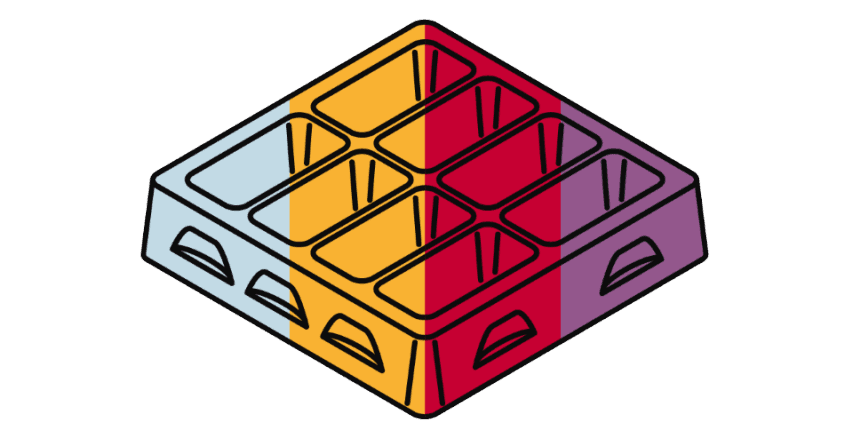
Furthermore, full-surface or partial coloring, different colors or color gradients in all RAL color tones is also possible.
ℹ️ To customize your plastic thermoformed part with your CI or other important core information, you can also print on it. More on this under printing on plastic parts.
2. Painting plastic for protection against environmental influences
The paint coating forms a protective layer that protects thermoformed parts from environmental influences such as UV radiation, moisture and chemicals. Painting plastic thus contributes to a longer service life of the parts and increases the throughput cycles of your process chain.
3. Painting plastic for improved cleaning and care
Painted plastic thermoformed parts are easier to clean and maintain. The smooth surface prevents dirt from settling and facilitates maintenance. You can find out how to clean your trays in the article cleaning trays.
Why paint plastic instead of colored semi-finished products for plastic parts?
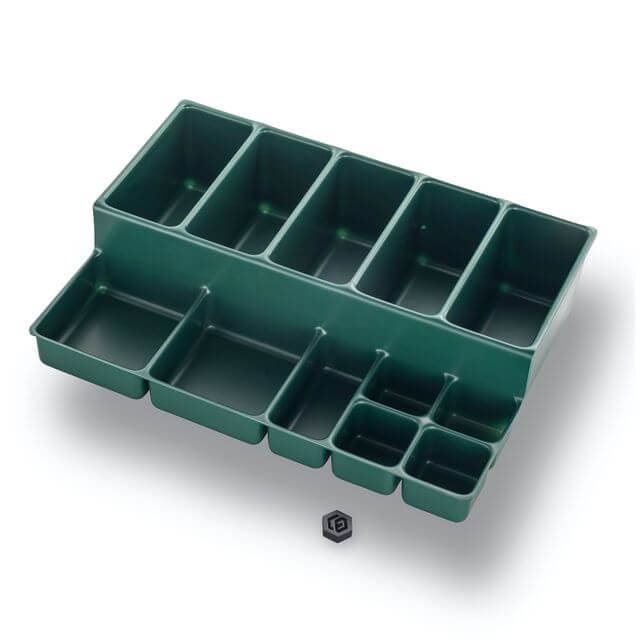
As mentioned above, coloring can also be achieved by procuring an appropriate semi-finished product, i.e. the thermoforming film or sheet, which is already colored in the desired RAL tone. However, different circumstances and requirements may favor plastic painting afterwards to achieve the desired surface finish. In these cases, the procurement of a colored semi-finished product is usually avoided and painting of the thermoformed parts is used:
Plastic housing in orange
Minimum order quantities (MOQ)
Special (RAL) color tones are extruded customer-specifically. Based on the requirements and the specific production run, most material manufacturers require minimum order quantities of the material, which are often too high to commission an extrusion of the semi-finished product for a specific product or order.
Multi-colored parts
If a thermoformed part is desired to be multi-colored, this cannot be solved by a colored, extruded semi-finished product. By default, only the application of individual color stripes for product identification is an option here. For more complex coloring, painting plastic is chosen as a solution, among others.
Which Plastics Can Be Painted?
Not all plastics can be painted equally well, as they have lower paint adhesion. 2K-PUR paints (polyurethane paints), which are specially developed for plastics, are well suited. Below you can see an overview of the paintability of plastics.
More information about materials and their properties can be found in the webinar thermoplastic plastics.
By playing the video, you agree that your data will be transmitted to YouTube and that you have read the Privacy Policy.
What you should do before painting plastic
To improve the adhesion of paints on plastics, special pretreatments are often carried out. This can include, for example, the use of adhesion promoters, primers or other chemical treatments to increase the surface energy from a chemical perspective and improve adhesion. It is important to consider the compatibility between the plastic material and the selected paint system to ensure successful plastic painting. There are several methods for pretreatment, which are explained in more detail below.
Surface cleaning
Painting plastic requires a carefully cleaned surface that is free from contamination. This can be pretreated in various ways with the following cleaning methods:
CO₂ cleaning
The plastic part is cleaned using compressed carbon dioxide. The CO₂ is used in a blasting process to remove contaminants.
Steam cleaning
In steam cleaning, plastic parts are cleaned with hot steam. This environmentally friendly cleaning process leaves no residue on the parts.
Flame treatment
Flame treatment manages to remove contaminants through targeted application of heat. This method leaves no residue and contributes to effective surface cleaning.
Low-pressure plasma system
In low-pressure plasma systems, plastic parts are cleaned by applying ionized gas. The generated plasma interacts with the surfaces, effectively removing contaminants without leaving residue.
Painting processes for thermoplastics
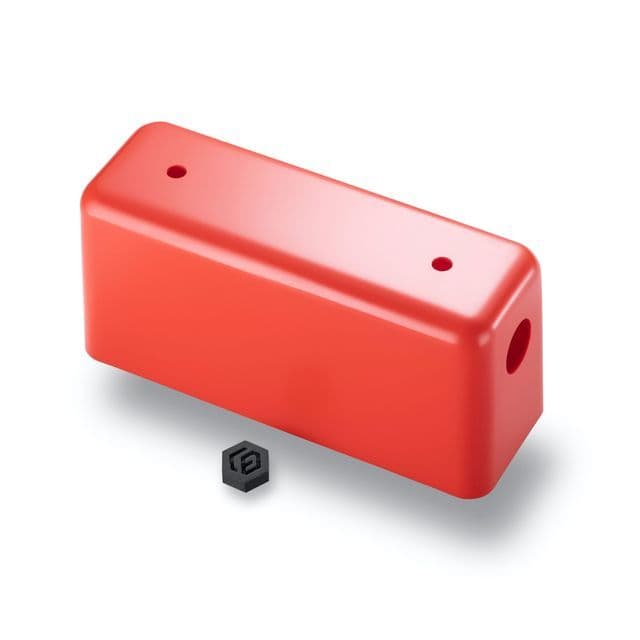
After thorough cleaning of the plastic parts, the decision follows: Should the painting be done manually or automatically? Today, masking-free painting processes are frequently used. These enable precise coating without the need to laboriously cover certain areas. The choice of process depends on volume, component geometry and process requirements. In overview:
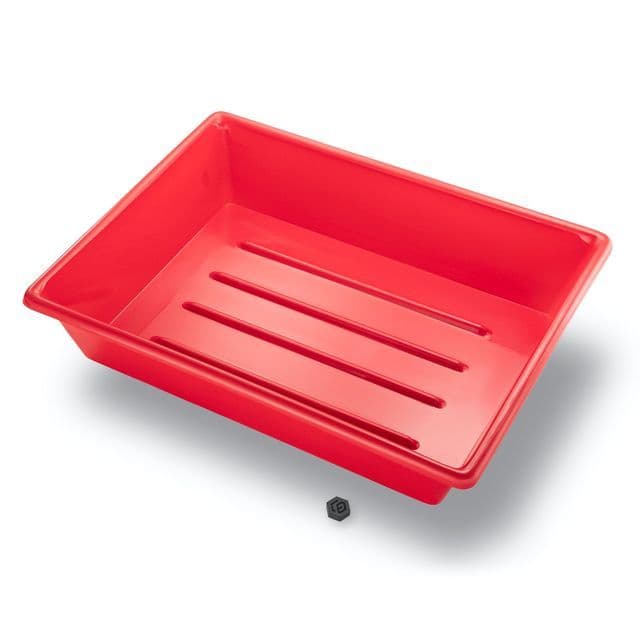
Red plastic container
Robot-based painting
Industrial robots perform precise painting movements and can take into account complex geometries of the plastic parts, ensuring uniform and reliable painting without masking.
Automated painting lines
Conveyor belts or automated transport systems guide the plastic parts through the painting process, enabling continuous and efficient series painting.
Spray painting
Here, the paint is applied to the surface of the plastic parts in the form of fine droplets using compressed air or electrostatics to ensure uniform distribution of the paint material.
Dip painting
The plastic parts are dipped into a paint tank, resulting in uniform painting. After the dipping process, the excess is dripped or blown off.
Drying phase after painting
After each process, drying follows to harden the surface. This creates a resistant, durable and visually high-quality paint finish.
Application areas of painted plastic parts
Painted thermoplastics are used in many industries:
Painting plastic for your thermoformed parts - A conclusion
Plastic painting of thermoformed parts offers numerous advantages in terms of aesthetics, protection and care. By considering the material properties and suitable painting techniques, high-quality results can be achieved. However, this only works with the right preparation. Questions about the optimal coloring of your thermoformed part? Feel free to contact us by email or call directly Tel:+4971919525170.
Plastics such as PE and PP have low surface energy, which means that paints adhere poorly to them. These specific thermoplastics require special pretreatments to enable durable painting.
Colored semi-finished products have a continuous, uniform color that is already created during the extrusion of the material. Painted parts receive their color only after the thermoforming process through an applied paint layer. Painting allows more design freedom, such as multi-coloring or special effects.
Due to the low adhesion of plastics, mainly 2K-PUR paints (two-component polyurethane paints) are used. These paints are specially developed for plastics and offer high resistance.
Warehouse Inventory: Tips & Tricks for Better Warehouse Organization and Efficiency with Trays
Warehouse inventories cost time, tie up staff, and often disrupt ongoing operations. This is especially true for small parts, serial components, or recurring components, where counting quickly becomes confusing if parts are stored loose in boxes or shelf compartments. Standard trays create a simple yet effective structure here for better warehouse organization. This article shows how trays optimize inventory counts in both the warehouse and production.
Thermoformed Parts in Practice
Tray Labeling: How to Use Labels Effectively for Your Packaging
To ensure that trays can be correctly identified and used, clear labeling is essential. Depending on the application, quantity, and process requirements, different methods can be used, such as permanent engraving or flexible labels. In this article, you will learn which tray labeling methods are available, when each method makes sense, and how labeling can already be incorporated into the tray design using formary’s 3D Tray Generator.
Thermoformed Parts in Practice
Supplier Guide for Plastic Thermoformed Parts – 10 Key Factors That Matter
Choosing the right supplier for plastic thermoformed parts is crucial for the quality, efficiency, and cost-effectiveness of your production. Our 10 tips will show you what to look for when selecting a supplier.
Platform & Features
3 Factors That Accelerate Your Procurement with formary
The three key factors—time, speed, and efficiency—are crucial for success in industrial manufacturing, from inquiry to delivery. That’s why formary has optimized this process, significantly accelerating the procurement of plastic thermoformed parts. Learn more in this article.
Thermoformed Parts in Practice
Rapid Prototyping in Thermoforming – Definition, Benefits & Processes
Rapid prototyping is used in product development to quickly create preliminary models. In thermoforming, rapid prototyping offers numerous advantages for producing high-quality prototypes efficiently and cost-effectively.
Platform & Features
Project Planning in Thermoforming – From Concept to Mass Production
From the initial idea to mass production, various factors must be considered in thermoforming project planning, including material selection, tool manufacturing, and quality control. This article provides a detailed look at how a thermoforming project with formary is executed.
Thermoformed Parts in Practice
Thermoforming vs. 3D Printing – Advantages, Disadvantages, Differences, and Similarities
Plastic parts are manufactured using various processing methods. In this article, we focus on comparing the processes of plastic thermoforming and 3D printing.
Thermoformed Parts in Practice
Injection Molding vs. Plastic Thermoforming – Advantages, Disadvantages, Differences, and Similarities
In the world of plastic processing, there are various common manufacturing methods used to produce precise plastic components for industrial applications. We compare two of them: Injection Molding and Plastic Thermoforming.
Thermoformed Parts in Practice
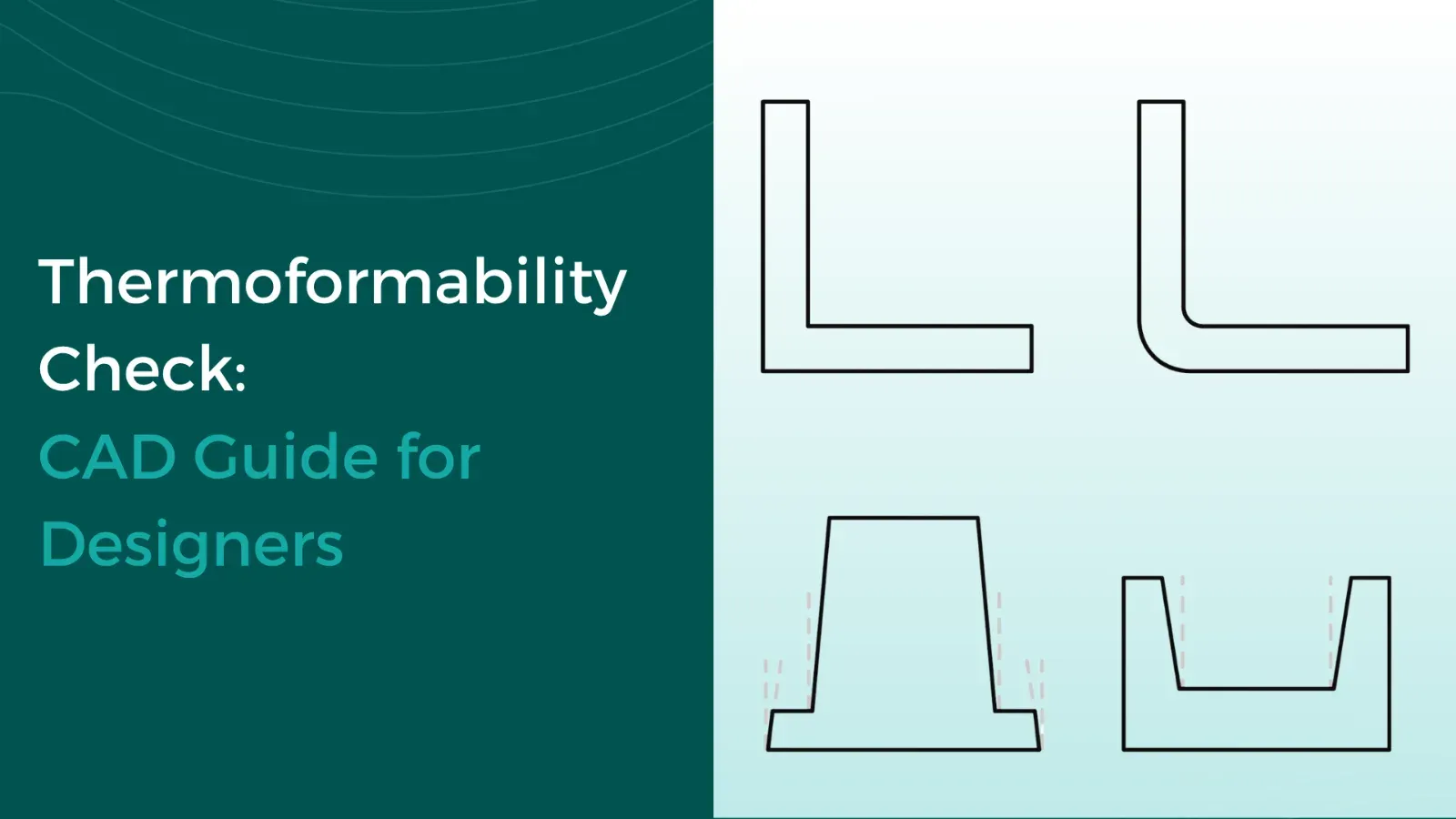
Checking CAD Models for Thermoformability: The Designer's Guide
Whether a plastic part is thermoformable is determined in the CAD model. Anyone who discusses geometry, wall thicknesses, and demoldability only after the first sampling pays for this loop with tool modifications, material waste, and lost weeks in the project timeline. This can be avoided during design: with a structured check that evaluates each model along this guide and makes typical sources of error visible early on.