Replacing Aluminium with Plastic: When Is It Worth It?
Aluminium is the standard material in many technical applications. And for good reason: the material offers high strength, corrosion resistance and is well established across numerous industries. Nevertheless, in certain cases, it is worth considering a material change. This is particularly true when weight, electrical insulation, corrosion behaviour, costs or functional integration play a central role.
The key point is this: aluminium cannot simply be replaced 1:1 with plastic. This article explains when thermoformed plastic parts can be a suitable alternative to aluminium, where the limitations lie and which factors are decisive in the evaluation.
Simon Andreß
Updated on July 2, 2026
Share
Replacing Aluminium with Plastic – Key Takeaways
Plastic can offer significant weight advantages compared to aluminium.
Substitution is particularly worthwhile for housings, covers, load carriers, trays and technical packaging solutions.
The decisive factors are component geometry, mechanical load, temperature, production volume, operating environment and desired additional functions.
Thermoformed plastic parts can enable corrosion protection, electrical insulation and functional integration without additional coating or assembly.
Aluminium often remains the better choice for very high temperatures, safety-relevant load-bearing structures or extreme point loads.
A technical DfM assessment is useful because aluminium components usually cannot be transferred to plastic without design changes.
→ Are you considering switching to thermoformed plastic? Contact us! We will be happy to advise you.
When Is It Worth Switching from Aluminium to Plastic?
Switching from aluminium to plastic is particularly worthwhile when the component is not just “manufactured differently”, but can also be functionally improved. Typical reasons include:
lower weight
easier assembly
electrical insulation
corrosion resistance
or lower total costs in series production.
Substitution is especially relevant for components that have previously been made from aluminium but do not have to meet permanently extreme mechanical or thermal requirements. Examples include:
For these applications, thermoformed plastic parts can be an economical and technical alternative, especially when the component is required in medium to higher quantities.
What Advantages Does Plastic Have over Aluminium?
Plastic differs fundamentally from aluminium in several material properties. Depending on the application, these differences can become a decisive advantage.
Weight Reduction
Plastic is significantly lighter than aluminium. Depending on the material, wall thickness and component geometry, weight advantages can be achieved without compromising the function of the component. This can reduce transport costs, simplify handling and improve energy efficiency in mobile applications.
Especially for trays, housings or covers, every gram saved has an impact across the entire series.
Corrosion Resistance
Plastic does not corrode in the traditional sense. In humid, salty or chemically demanding environments, this can be a major advantage. Aluminium is generally corrosion-resistant, but depending on the medium and operating environment, it may require additional surface treatments such as anodising, coating or painting.
For components that regularly come into contact with moisture, cleaning agents or chemical substances, plastic can reduce the effort required for surface treatment and maintenance.
Electrical Insulation
Plastic is naturally electrically insulating. This is particularly important for battery housings, electronic components or workpiece carriers for sensitive parts. Aluminium is conductive and, in such cases, often requires additional insulation measures, coatings or inserts. Plastic can reduce process steps while improving the function of the component.
Functional Integration
With thermoformed plastic parts, certain functions can be integrated directly into the geometry. These include, for example:
holders
contours
positioning aids
sealing surfaces
stacking geometries
grip recesses
guide elements
labelling or marking areas
This can reduce the number of additional components, while assembly effort and post-processing can also be reduced depending on the application. Complex clips, hinges or snap-fit connections depend more strongly on the specific process and geometry and should be technically evaluated.
ℹ️ You can find more information on the fundamental differences between plastic and metal in our blog article Plastic vs. Metal.
Use of Recycled Materials
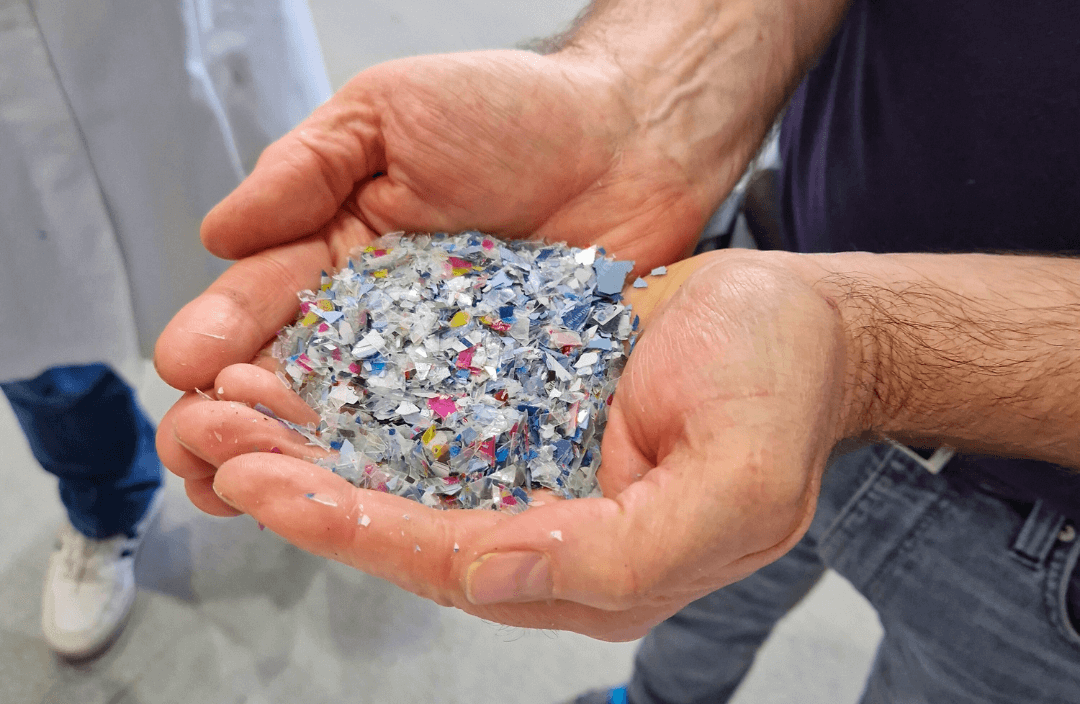
Another advantage can be the use of recycled plastics. High-quality recycled materials made from ABS, PP or PET can be used in many technical applications, provided the mechanical, thermal and optical requirements are met.
An application-specific evaluation is important here. Recycled material is not automatically suitable for every component. However, if the requirements are met, the use of recycled plastic can reduce costs and improve the sustainability balance.
When Is Aluminium the Better Choice?
Plastic is not the better solution for every application. Aluminium remains a sensible choice when particularly high mechanical, thermal or safety-relevant requirements apply.
Aluminium is often better suited when:
permanently high operating temperatures occur
maximum stiffness is required in very limited installation space
load-bearing or safety-relevant structures are involved
extreme point loads act without any tolerance for deformation
very tight tolerances are required
only individual parts or very small batches are needed without tool investment
electrical conductivity is explicitly required
For continuous temperatures above the range of many standard plastics, it must be carefully checked whether a suitable engineering plastic is available. High-temperature plastics can expand the application range, but they are usually significantly more expensive and not economical for every thermoforming project.
What Does Material Substitution from Aluminium to Plastic Mean?
Material substitution does not simply mean producing an aluminium part from a different material. In many cases, the component is rethought entirely. Aluminium parts are often produced by milling, punching, bending, welding or assembling several individual parts. Plastic parts, on the other hand, can be manufactured by thermoforming, injection moulding, 3D printing or machining plastic, depending on the application.
In plastic thermoforming, a thermoplastic sheet or film is heated and formed over a tool. This produces components with adapted wall thicknesses, radii, draft angles and process-compatible geometry. Switching to plastic is therefore always also a change in design logic.
The goal is not to copy aluminium exactly. The goal is to create a plastic component that fulfils the same function and ideally offers additional benefits.
What Does It Cost to Switch from Aluminium to Plastic?
The costs of a material change depend heavily on component geometry, production volume, material, tooling effort and post-processing. A general statement would therefore not be reliable. However, typical cost drivers can be compared.
Comparison of Aluminium and Thermformed Plastic
Cost Factor
Aluminium
Thermoformed Plastic
Material costs
often medium to high
low to medium depending on the plastic
Tooling costs
depends on punching, bending or milling fixtures
often comparatively moderate
Post-processing
often milling, drilling, coating, assembly
punching, milling, surface treatments depending on the component
Assembly effort
often higher when several individual parts are involved
can decrease through integrated functions
Cost-effectiveness
often suitable for individual parts or small batches
often attractive from medium production volumes upwards
Adjustments
complex depending on the process
often easy to implement with thermoforming tools
Thermoforming is particularly interesting when a component is required in series production and the tooling costs can be amortised across multiple parts. For very small quantities, aluminium may remain more economical because there are no or only low tooling costs.
For medium and higher production volumes, plastic can offer advantages because material costs, component weight, assembly effort and post-processing can be reduced. The decisive factor is always the total cost analysis, not just the unit price.
Which Costs Should Be Evaluated?
For a reliable assessment, the following points should be considered:
tooling costs
material costs
unit costs
post-processing
assembly effort
weight and transport costs
coating or surface treatment
inspection effort
adjustment costs in the event of changes
service life and reusability
Only the combination of these factors shows whether plastic is more economically viable than aluminium.
Which Plastics Are Suitable Alternatives to Aluminium?
Material selection depends on the requirements of the component. The most relevant factors are mechanical load, temperature, chemical resistance, fire protection, electrical properties, appearance and recyclability.
What Should You Consider When Replacing Metal with Plastic?
A common mistake in substitution is trying to manufacture an existing aluminium component from plastic without changing the design. This often leads to problems with stability, demoulding, wall thickness or assembly. Plastic behaves differently from aluminium. The following points must therefore be evaluated from a design perspective:
wall thicknesses
radii
draft angles
material distribution
stiffness
fastening points
temperature behaviour
tolerances
post-processing
stackability or assembly capability
Design for Manufacturing is therefore an important step. It evaluates whether geometry, material and manufacturing process are compatible. This allows technical risks to be identified early and unnecessary revision loops to be avoided.
Practical Example: Plastic Battery Housing Instead of Aluminium
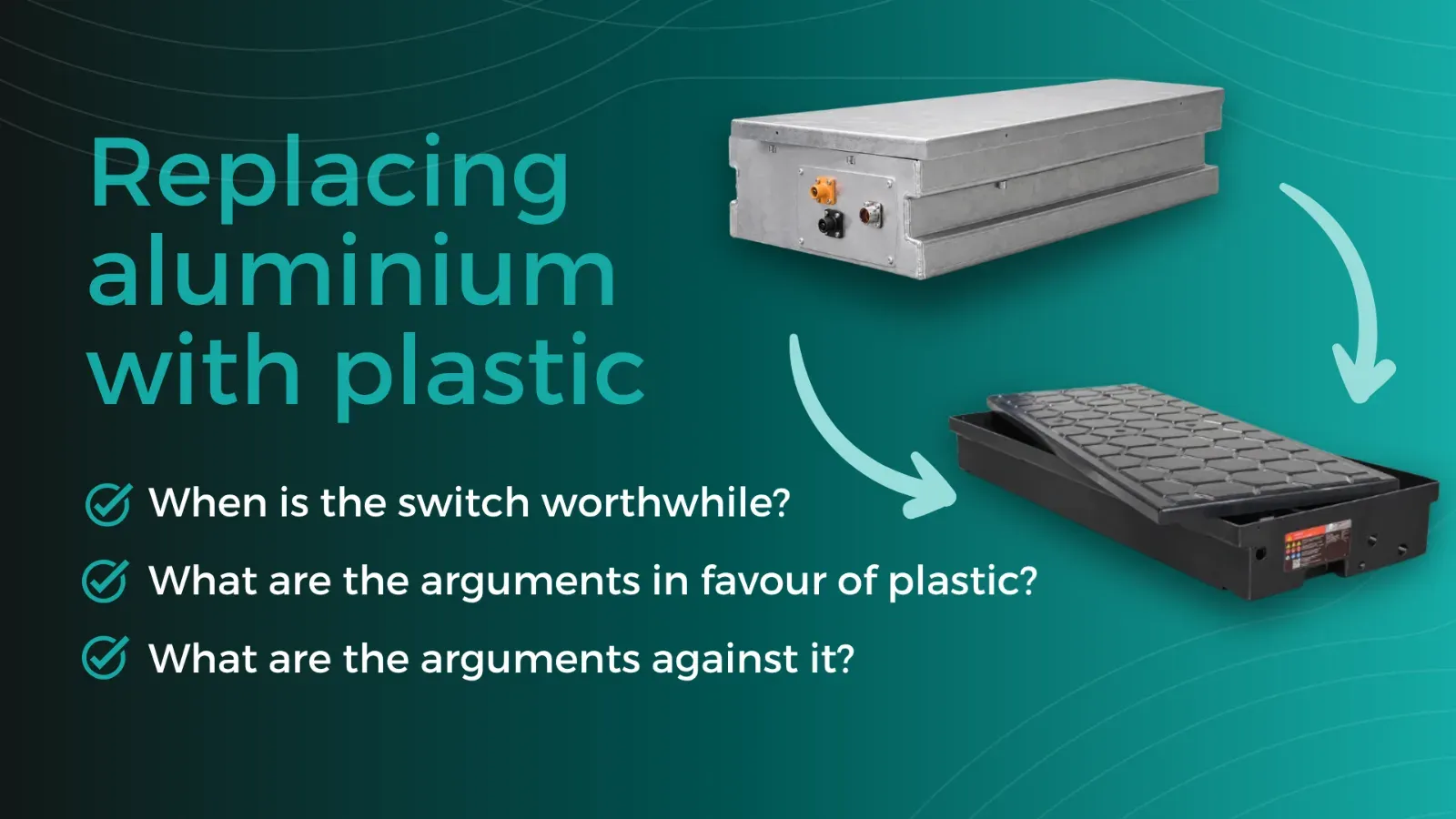
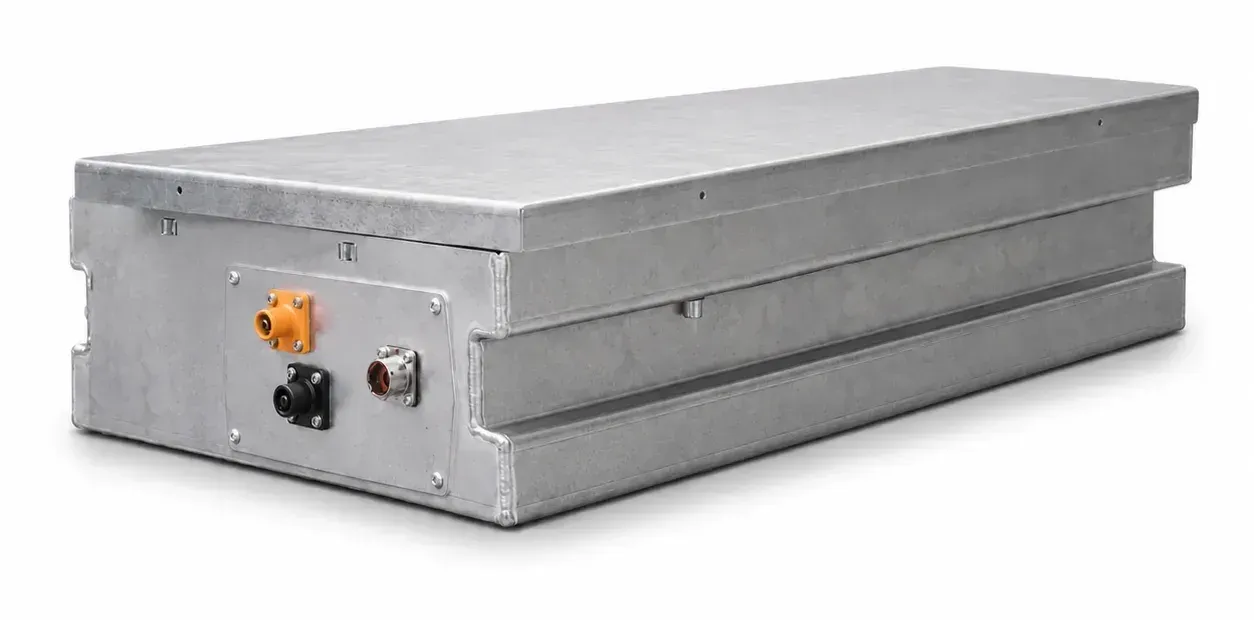
Energy storage manufacturer NAEXT replaced heavy aluminium battery housings with thermoformed plastic solutions made from recycled ABS. The material change resulted in weight reduction, better electrical insulation and lower total costs. The cover and lower section were produced in a combination tool, which reduced tooling costs and shortened delivery time.
By playing the video, you agree that your data will be transmitted to YouTube and that you have read the Privacy Policy.
Decision Guide: When Is It Worth Switching from Aluminium to Plastic?
The following overview provides an initial assessment of whether plastic can be a suitable alternative to aluminium.
Criterion
Plastic can be suitable if …
Aluminium remains suitable if …
Weight
the component needs to become lighter
weight is not relevant
Temperature
the application is within the range of suitable plastics
permanently very high temperatures occur
Mechanics
surface loads and adapted geometries are possible
extreme point loads or high stiffness are required
Electrical properties
electrical insulation is needed
electrical conductivity is desired
Corrosion
moisture, salts or chemicals are relevant
aluminium is sufficiently protected by its surface
Quantity
medium to higher production volumes are planned
individual parts or very small batches are required
Costs
assembly, weight and post-processing can be reduced
tooling costs cannot be amortised
Sustainability
recycled material can be used
an established aluminium recycling loop exists
Design
the component may be adapted to the process
the existing geometry must remain unchanged
This table does not replace a technical evaluation, but it provides initial guidance. Especially for functional components, early assessment based on CAD data or technical drawings is worthwhile.
Conclusion: Replacing Aluminium with Plastic Is a Technical and Economic Decision
Switching from aluminium to plastic can be worthwhile when weight, electrical insulation, corrosion behaviour, functional integration or costs play an important role. Thermoformed plastic parts in particular offer interesting possibilities for housings, covers, trays, inlays and technical packaging solutions.
At the same time, plastic is not automatically the better choice. For very high temperatures, safety-relevant load-bearing structures, extreme point loads or very small quantities, aluminium may still be the more suitable option.
The decisive factor is a technical assessment of the specific component. Material, geometry, manufacturing process and production volume must be aligned. If these factors are evaluated early, an aluminium component can become a plastic solution that is economical, functional and suitable for production.
Have your project technically reviewed. formary evaluates whether a thermoformed plastic part is a suitable alternative to your aluminium component.
Aluminium is heavier, conductive and susceptible to corrosion without coating. Plastic is lighter, electrically insulating and corrosion-resistant. For housings used in electronics or energy storage systems, plastic often offers functional advantages such as better insulation, lower weight and easier assembly through integrated functions.
No. Not every aluminium component is suitable for a plastic solution. Critical factors include very high temperatures, load-bearing safety functions, extreme point loads or very tight tolerances. A technical evaluation shows whether substitution makes sense.
Plastic is often worthwhile for medium to higher production volumes, when tooling costs can be amortised and assembly, post-processing or weight can be reduced. For individual parts or very small quantities, aluminium can remain more economical.
Commonly used plastics include ABS, PP, PC, PET and PETG. The selection depends on mechanical load, temperature, chemical resistance, electrical properties and optical requirements. Recycled materials can also be suitable if the requirements are met.
For the evaluation, formary requires information on component geometry, planned production volume, mechanical requirements and operating environment. Ideally, a CAD model or technical drawing should be provided. Information on temperatures, chemical resistance or electrical requirements also helps with material selection and process planning.
The duration depends on component complexity, tooling effort, material and approval process. An early DfM analysis can help reduce technical risks and avoid revision loops.
That depends on the specific component and the entire life cycle. Aluminium is highly recyclable, but the production of primary aluminium is energy-intensive. Plastic can offer advantages if recycled material is used, weight is reduced and the component is used or reused over a long period.
Further Resources
Thermoformed Parts in Practice
Warehouse Inventory: Tips & Tricks for Better Warehouse Organization and Efficiency with Trays
Warehouse inventories cost time, tie up staff, and often disrupt ongoing operations. This is especially true for small parts, serial components, or recurring components, where counting quickly becomes confusing if parts are stored loose in boxes or shelf compartments. Standard trays create a simple yet effective structure here for better warehouse organization. This article shows how trays optimize inventory counts in both the warehouse and production.
Thermoformed Parts in Practice
Tray Labeling: How to Use Labels Effectively for Your Packaging
To ensure that trays can be correctly identified and used, clear labeling is essential. Depending on the application, quantity, and process requirements, different methods can be used, such as permanent engraving or flexible labels. In this article, you will learn which tray labeling methods are available, when each method makes sense, and how labeling can already be incorporated into the tray design using formary’s 3D Tray Generator.
Thermoformed Parts in Practice
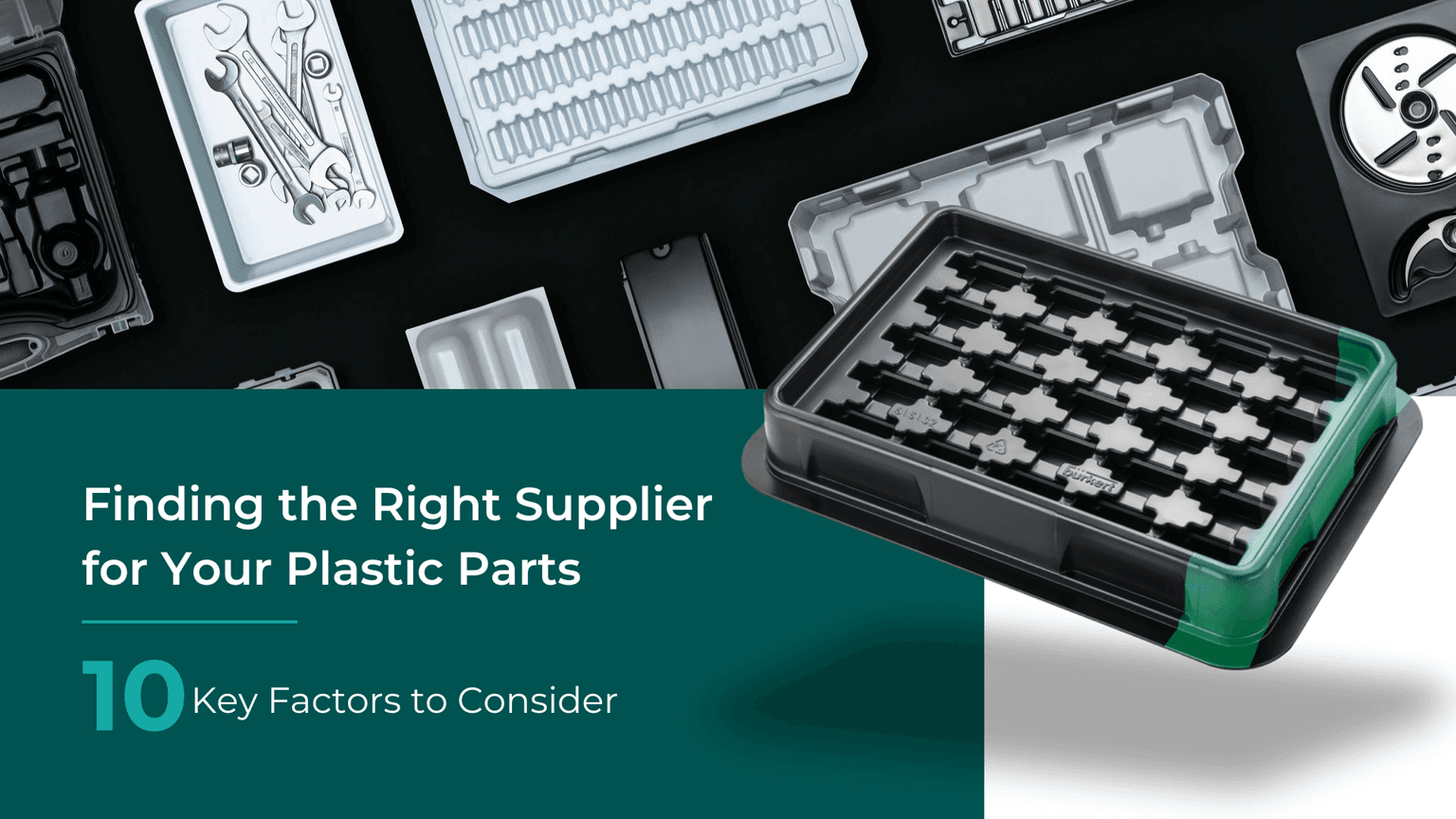
Supplier Guide for Plastic Thermoformed Parts – 10 Key Factors That Matter
Choosing the right supplier for plastic thermoformed parts is crucial for the quality, efficiency, and cost-effectiveness of your production. Our 10 tips will show you what to look for when selecting a supplier.
Platform & Features
3 Factors That Accelerate Your Procurement with formary
The three key factors—time, speed, and efficiency—are crucial for success in industrial manufacturing, from inquiry to delivery. That’s why formary has optimized this process, significantly accelerating the procurement of plastic thermoformed parts. Learn more in this article.
Thermoformed Parts in Practice
Rapid Prototyping in Thermoforming – Definition, Benefits & Processes
Rapid prototyping is used in product development to quickly create preliminary models. In thermoforming, rapid prototyping offers numerous advantages for producing high-quality prototypes efficiently and cost-effectively.
Platform & Features
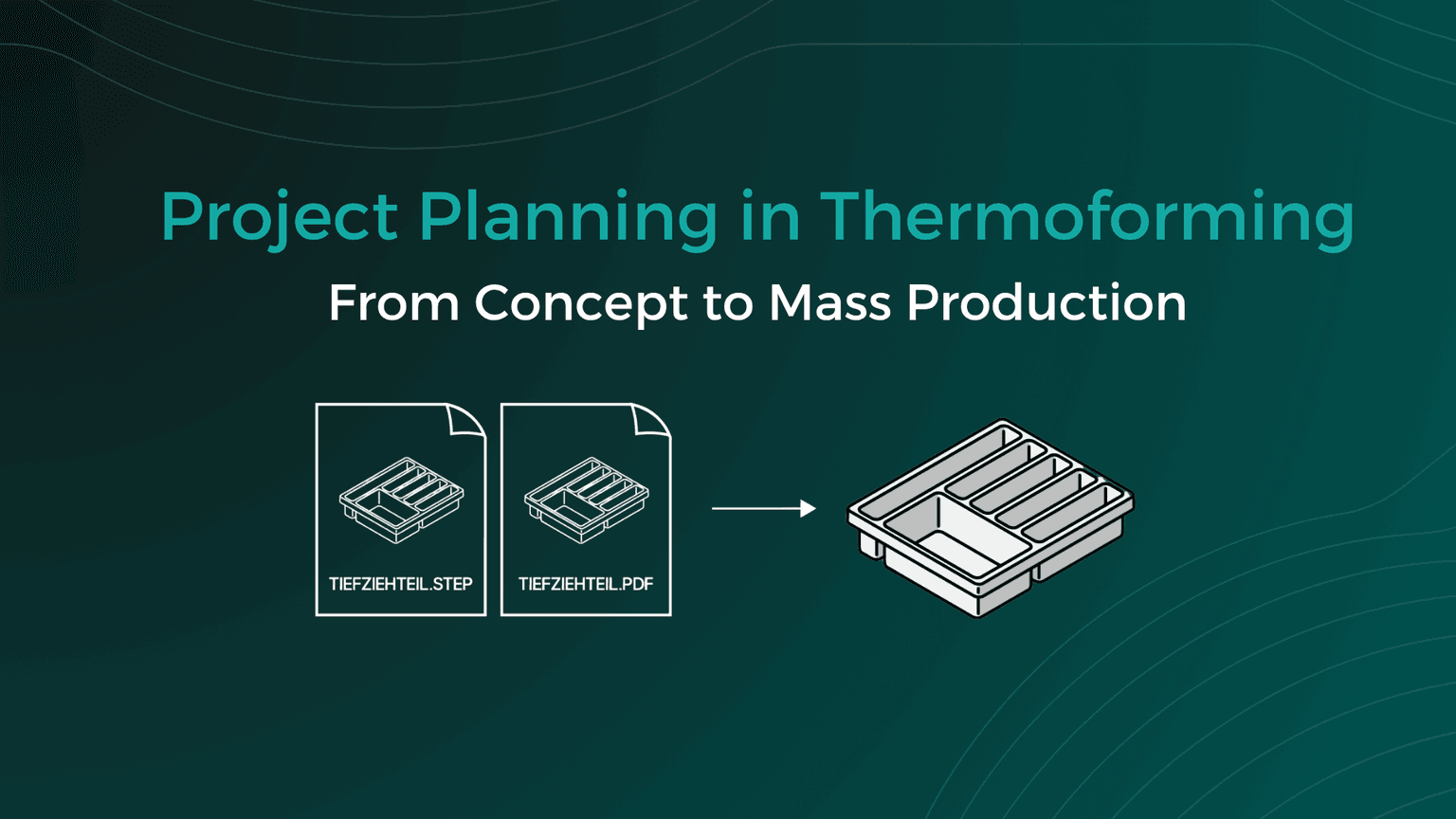
Project Planning in Thermoforming – From Concept to Mass Production
From the initial idea to mass production, various factors must be considered in thermoforming project planning, including material selection, tool manufacturing, and quality control. This article provides a detailed look at how a thermoforming project with formary is executed.
Thermoformed Parts in Practice
Thermoforming vs. 3D Printing – Advantages, Disadvantages, Differences, and Similarities
Plastic parts are manufactured using various processing methods. In this article, we focus on comparing the processes of plastic thermoforming and 3D printing.
Thermoformed Parts in Practice
Injection Molding vs. Plastic Thermoforming – Advantages, Disadvantages, Differences, and Similarities
In the world of plastic processing, there are various common manufacturing methods used to produce precise plastic components for industrial applications. We compare two of them: Injection Molding and Plastic Thermoforming.
Thermoformed Parts in Practice
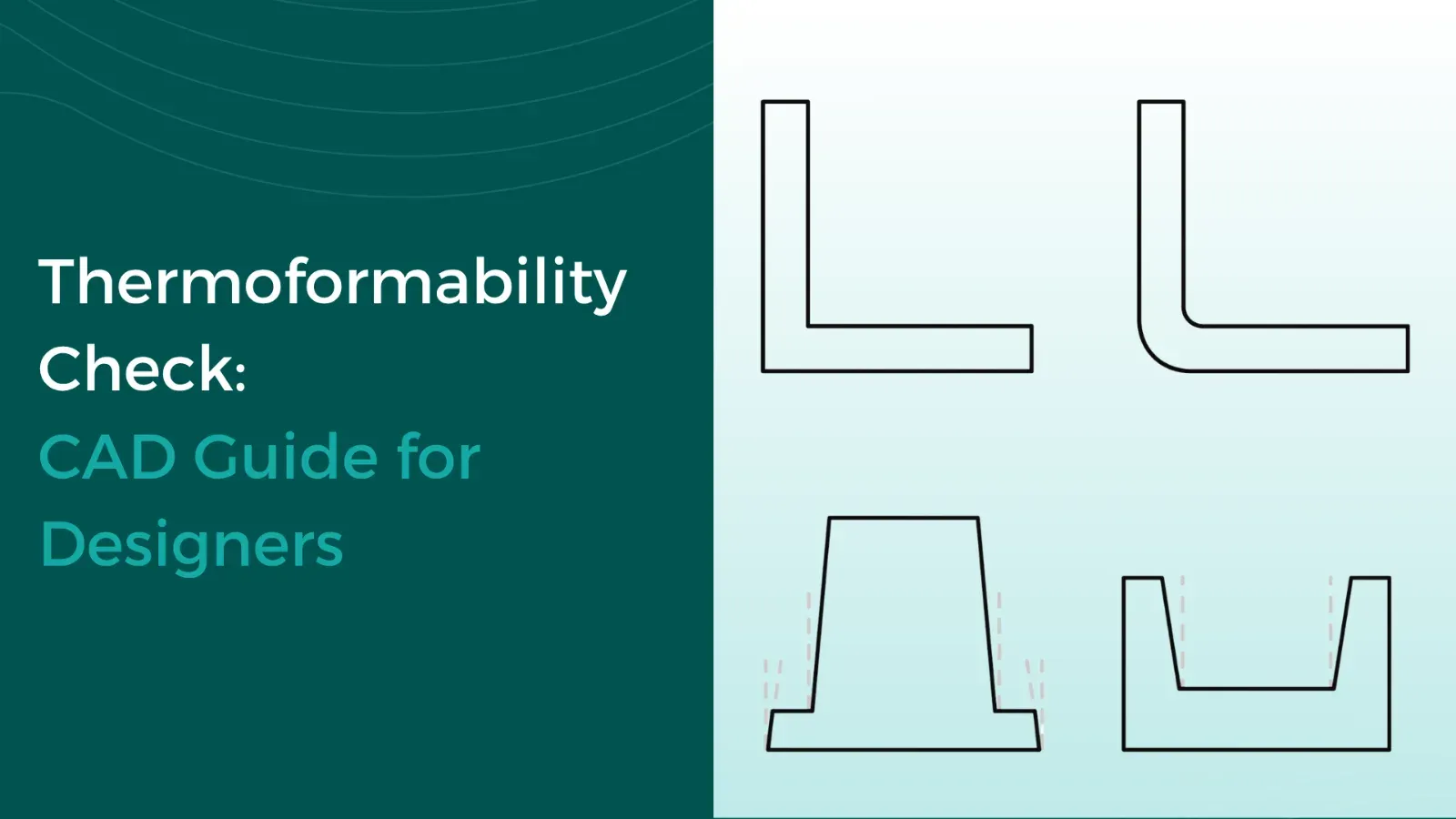
Checking CAD Models for Thermoformability: The Designer's Guide
Whether a plastic part is thermoformable is determined in the CAD model. Anyone who discusses geometry, wall thicknesses, and demoldability only after the first sampling pays for this loop with tool modifications, material waste, and lost weeks in the project timeline. This can be avoided during design: with a structured check that evaluates each model along this guide and makes typical sources of error visible early on.