Checklist: 10 Details a plastic thermoformer needs from you
You’re planning to source plastic thermoformed parts and want to submit a request for a quote. But what information does a thermoforming supplier really need to provide you with a meaningful quote? Incomplete requests lead to follow-up questions, delay the quoting process, and complicate the technical evaluation. If you provide the right information from the start, you’ll receive a reliable estimate faster and avoid unnecessary back-and-forth.
Simon Andreß
Updated on August 19, 2026
Share
Information a Thermoformer Needs From You - The Most Important Points at a Glance
CAD data or sketch: Geometry and dimensions form the basis of every inquiry
Material and properties: The type of plastic, ESD protection, or sterilizability determine the process
Quantity and order frequency: One-time small batches or recurring deliveries require different tooling strategies
Application and installation situation: The context of use shapes the geometry, tolerances, and post-processing
What does a Thermoformer Need for a Complete Inquiry?
A complete inquiry includes technical, project-related, and application-specific information. The following 10 details form the basis for an optimal project workflow.
1. CAD data, technical drawing, or sketch
The component geometry is the central starting point. Ideally, you should provide 3D CAD data in STEP format or a dimensioned 2D drawing in PDF format. If no CAD data is available, sketches with rough dimensions, photos of a reference part, or a verbal description will also help.
Based on this, formary creates an initial design concept and checks for thermoformability. If you do not have your own design data, formary will handle the creation based on your requirements and our many years of experience in developing thermoformable geometries.
💡 STEP files are platform-independent and enable seamless data exchange between different CAD systems. PDF drawings should include all relevant dimensions, tolerances, and sectional views.
2. Dimensions
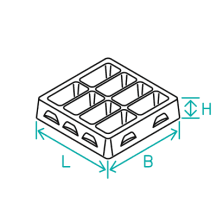
If CAD data is not available, at least the length, width, and height of the component are required. For trays with nests, the following information should also be provided:
Number of nests
Dimensions of the component to be inserted
Desired orientation within the nest
Recessed handles or removal aids
Wall thicknesses, radii, holes, or cutouts should also be communicated as early as possible to avoid follow-up inquiries.
3. Material and Material Properties
The choice of plastic affects the process, tool design, and costs. Specify the desired material or describe the required properties. Typical material information includes the type of plastic, the thickness of the starting sheet, the desired color, and special properties such as ESD protection, UV resistance, food suitability, or temperature resistance.
If you are unsure which material is suitable, describe the application. Based on this, formary will suggest suitable plastics.
Tip: In the formary Configurator, you can also get automated material recommendations based on your requirements.
4. Quantity and Order Frequency
The planned quantity is a key factor in selecting the right tooling. One-time small-batch runs require different solutions than recurring high-volume production. Relevant information includes the total quantity (one-time or recurring), the batch size per order, the planned delivery period, and the expected volume growth from prototype through small-batch runs to high-volume production.
This information determines which mold solution makes economic sense. Small quantities can often be produced cost-effectively using 3D-printed molds or urethane molds. Larger production runs justify aluminum molds with a longer service life and higher precision.
💡 Many inquiries do not specify clear quantities. This makes it much more difficult to assess the technical and financial aspects. Even rough estimates can be helpful when preparing a quote.
5. Application and Intended Use
The intended use provides insight into the functional requirements that influence the design.
Depending on the application, different tolerances, surface qualities, stackability, or grip concepts may be required.
6. Installation Situation and Integration
If the thermoformed part is integrated into an assembly or interacts with other components, information regarding the installation situation is important.
Relevant questions:
Is the part screwed, clipped, or snapped into place?
Are there defined mounting points?
Must specific tolerances be maintained?
Are assembly aids required?
Does the part fit into an existing system?
Covers, housings, or technical components should always be considered within the context of the overall design. Unclear installation situations lead to rework after prototyping.
7. Special Requirements
Special technical requirements should be communicated early on, as they affect material selection, tooling, and post-processing. Typical special requirements include
ESD protection for dissipating static charge
Sterilizability via steam
Gamma radiation or EtO
Transparency or light transmission
Chemical resistance to specific media
FDA or REACH compliance
Flame retardancy
As well as UV resistance for outdoor applications.
Each of these requirements narrows down the choice of materials and may require additional testing or certifications.
8. Post-processing and Additional Processes
Many thermoformed parts require further processing steps after forming. Standard procedures include punching or milling following the thermoforming process.
If you require such additional services, please mention them in your inquiry. As a full-service provider, formary offers all post-processing steps under one roof.
9. Delivery Date and Schedule
The desired delivery time influences the choice of tooling and the project workflow. Relevant time-related details include the desired delivery date for samples, the planned start of series production, the urgency (standard lead time or express), and the call-off schedule for recurring deliveries (weekly, monthly, quarterly).
Typically, the lead time is approximately 3–5 weeks from approval to delivery. Shorter lead times are possible for simple geometries and available materials.
10. Budget or Target Price
A rough budget estimate helps in selecting the right solution. If you have a target price or a price ceiling, formary can specifically suggest tooling variants and manufacturing options that fit within your budget.
This speeds up the decision-making process and avoids unnecessary iterations. If no budget is specified, formary will prepare a transparent quote based on the technical requirements.
How to Submit Your Request to formary
formary offers three ways to submit your request:
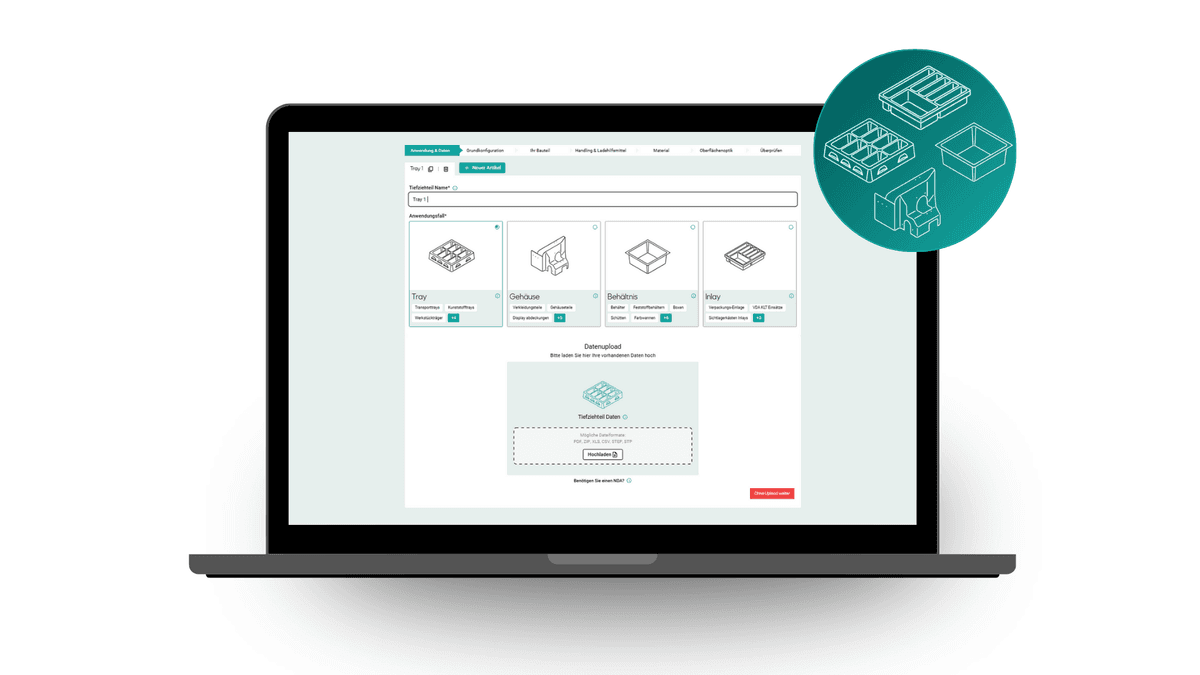
1. Use the configurator
In the configurator, you can enter all relevant details step by step. The system guides you through the most important points and ensures that no essential information is missing. You will receive an initial quote within 24 hours.
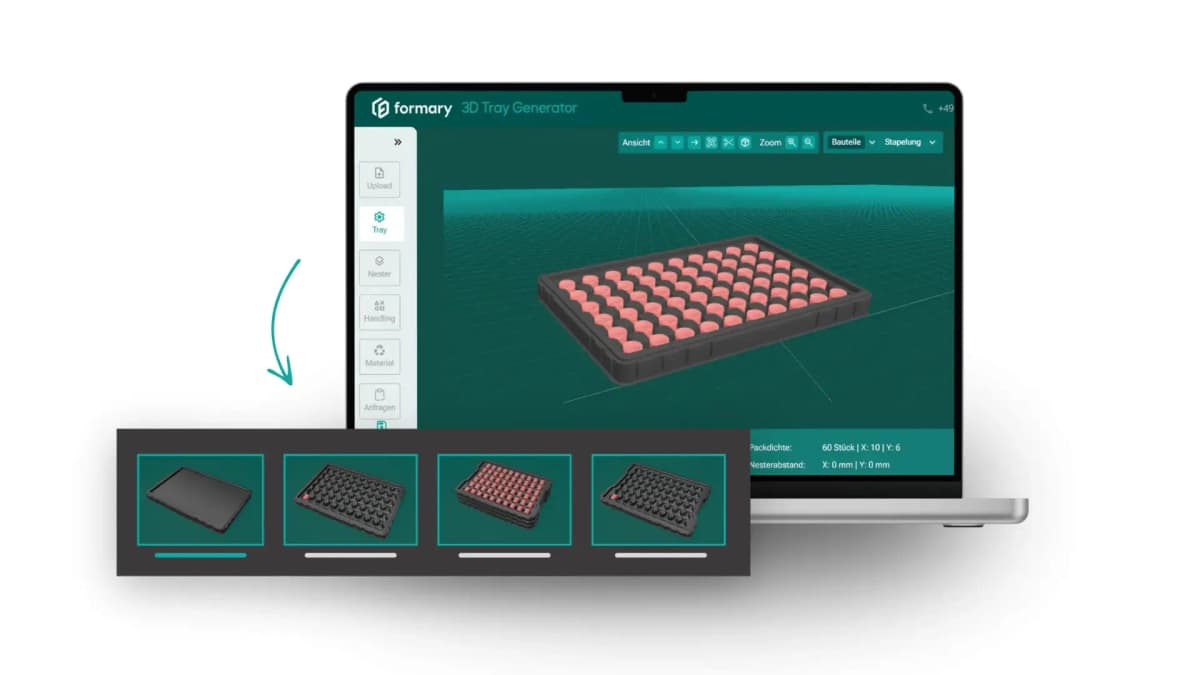
2. Using the 3D Tray Generator
If you need a custom tray for a specific component, you can use the 3D Tray Generator to create a suitable tray design directly. Upload your component, define the number of nests and orientation, as well as other specifications that are important for your requirements.
If you are satisfied with your generated 3D tray, you can submit a request directly through the 3D Tray Generator.
3. Direct Inquiry by Email
You can also send all information to formary by email. Attach CAD data, sketches, or photos and describe your project. formary will review the documents and get back to you promptly with a quote or follow-up questions.
💡 Use the Configurator, once you have all the necessary data. The 3D Tray Generator is ideal if you need a tray for a known component. It’s worth sending an email inquiry if your project isn’t fully defined yet.
What Happens After You Submit Your Inquiry?
Once we receive your inquiry, your project will go through the following steps:
Inquiry review: formary checks your information for completeness and technical feasibility.
Quotation: You will receive a quote with pricing, delivery time, and tooling options.
Design or data adaptation: formary creates the design data or adapts your CAD data for thermoforming.
Approval of design data: You review the drawing and approve it.
Sampling: Depending on the project requirements, formary produces samples using 3D-printed, urethane, or aluminum tools.
Series production: Series production begins after the samples have been successfully approved.
Every step is supported by a dedicated contact person who answers technical questions and coordinates the process.
Conclusion: Providing Complete Information Speeds Up Your Project
A well-prepared inquiry saves time, prevents misunderstandings, and leads to a reliable quote more quickly. Key details such as CAD data, material, quantity, and application form the basis for any professional quote.
formary also supports you with technical advice and design services even for incomplete inquiries. The more precise your details, the better formary can address your specific requirements.
A thermoforming specialist needs at least CAD data or a sketch, information about the material, the planned quantity, and a description of the application. The more complete the information, the faster and more accurate the quote can be.
The process consists of six phases: configuration with a quote within 24 hours, design (3–7 days), data approval, prototyping (1–3 weeks), prototype approval, and series production (3–5 weeks).
formary works with STEP files for 3D models and PDF drawings for 2D representations. STEP is platform-independent and enables data exchange between different CAD systems. If you use other formats, formary can usually convert them.
The quantity determines the choice of tooling. Small quantities can be produced using cost-effective 3D-printed or urethane tools. Larger production runs justify the use of aluminum tools, which are more durable and precise. Without a specified quantity, it is not possible to provide a cost-effective quote.
Small batches starting at 50 pieces, standard batches of 500–5,000 pieces, and large batches of 10,000–100,000+ pieces. Production capacities are flexibly scalable.
The installation situation describes how the thermoformed part is integrated into an assembly or a system. Relevant factors include mounting points, tolerances, assembly method, and compatibility with other components. For covers, housings, or technical components, the installation situation is critical to the design.
formary will prepare an initial quote within 24 hours if all relevant information is provided. Incomplete inquiries may result in follow-up questions that delay the process. A well-prepared inquiry will significantly speed up the quoting process.
Further Content
Thermoformed Parts in Practice
Warehouse Inventory: Tips & Tricks for Better Warehouse Organization and Efficiency with Trays
Warehouse inventories cost time, tie up staff, and often disrupt ongoing operations. This is especially true for small parts, serial components, or recurring components, where counting quickly becomes confusing if parts are stored loose in boxes or shelf compartments. Standard trays create a simple yet effective structure here for better warehouse organization. This article shows how trays optimize inventory counts in both the warehouse and production.
Thermoformed Parts in Practice
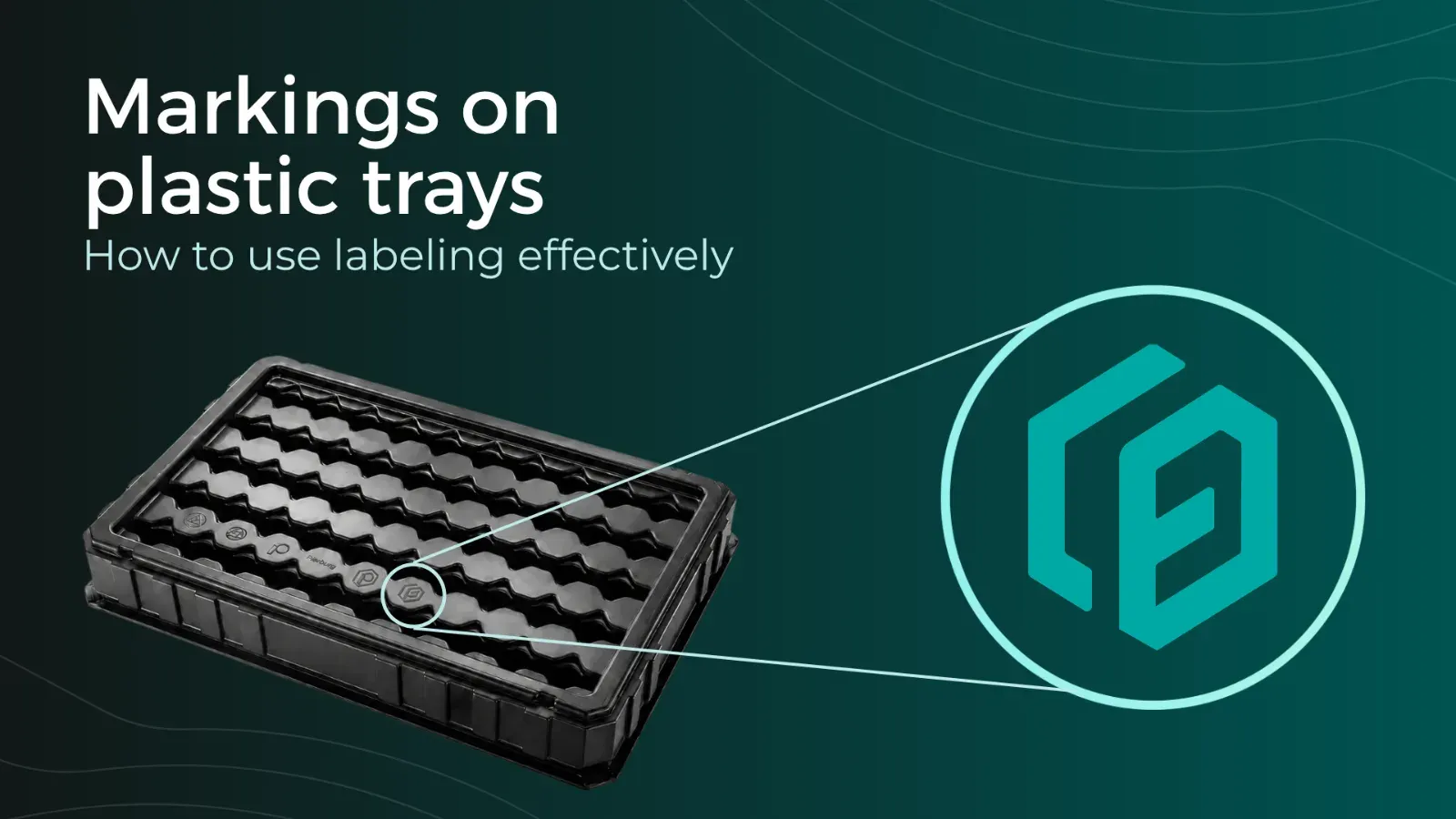
Tray Labeling: How to Use Labels Effectively for Your Packaging
To ensure that trays can be correctly identified and used, clear labeling is essential. Depending on the application, quantity, and process requirements, different methods can be used, such as permanent engraving or flexible labels. In this article, you will learn which tray labeling methods are available, when each method makes sense, and how labeling can already be incorporated into the tray design using formary’s 3D Tray Generator.
Thermoformed Parts in Practice
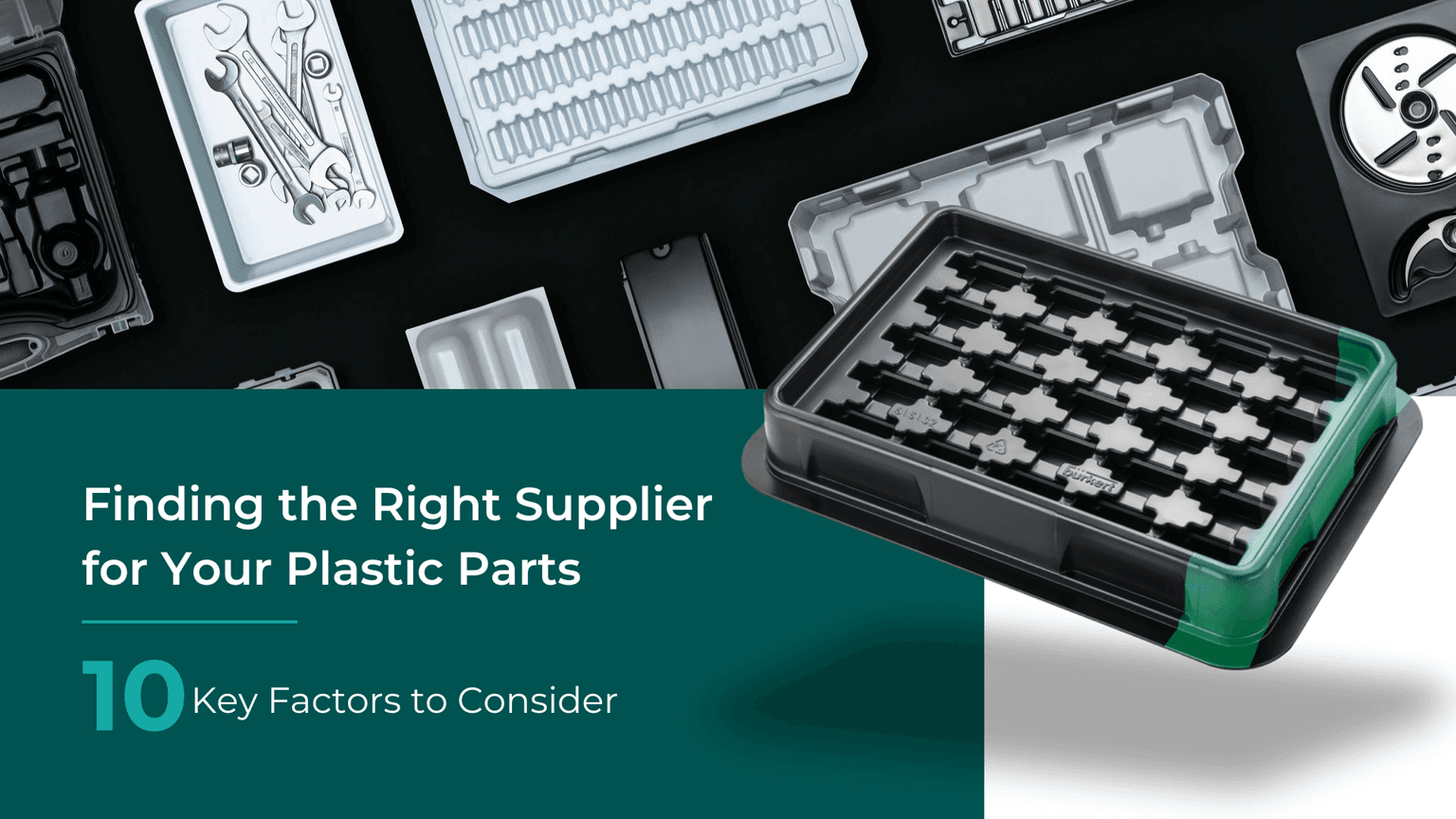
Supplier Guide for Plastic Thermoformed Parts – 10 Key Factors That Matter
Choosing the right supplier for plastic thermoformed parts is crucial for the quality, efficiency, and cost-effectiveness of your production. Our 10 tips will show you what to look for when selecting a supplier.
Platform & Features
3 Factors That Accelerate Your Procurement with formary
The three key factors—time, speed, and efficiency—are crucial for success in industrial manufacturing, from inquiry to delivery. That’s why formary has optimized this process, significantly accelerating the procurement of plastic thermoformed parts. Learn more in this article.
Thermoformed Parts in Practice
Rapid Prototyping in Thermoforming – Definition, Benefits & Processes
Rapid prototyping is used in product development to quickly create preliminary models. In thermoforming, rapid prototyping offers numerous advantages for producing high-quality prototypes efficiently and cost-effectively.
Platform & Features
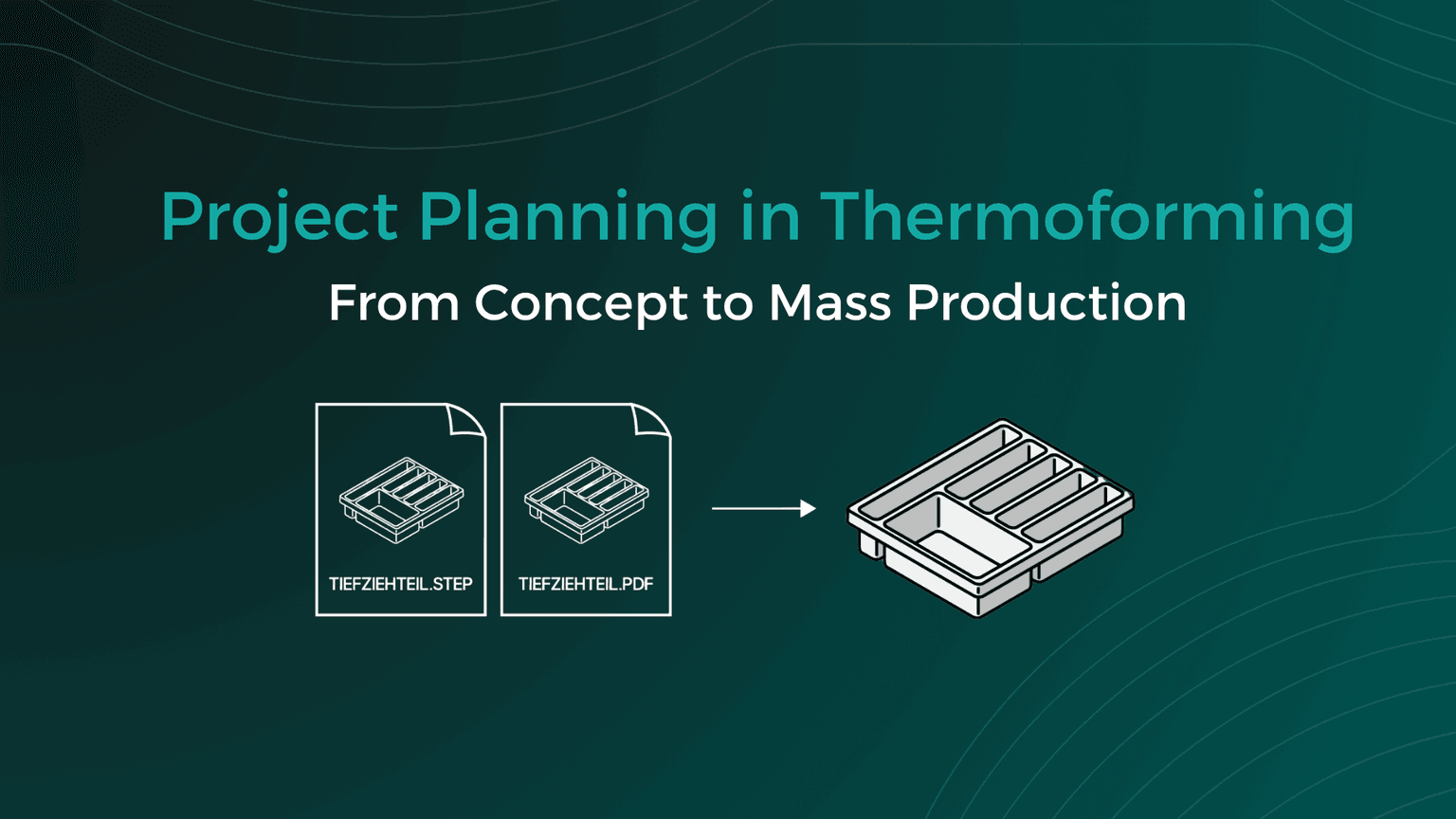
Project Planning in Thermoforming – From Concept to Mass Production
From the initial idea to mass production, various factors must be considered in thermoforming project planning, including material selection, tool manufacturing, and quality control. This article provides a detailed look at how a thermoforming project with formary is executed.
Thermoformed Parts in Practice
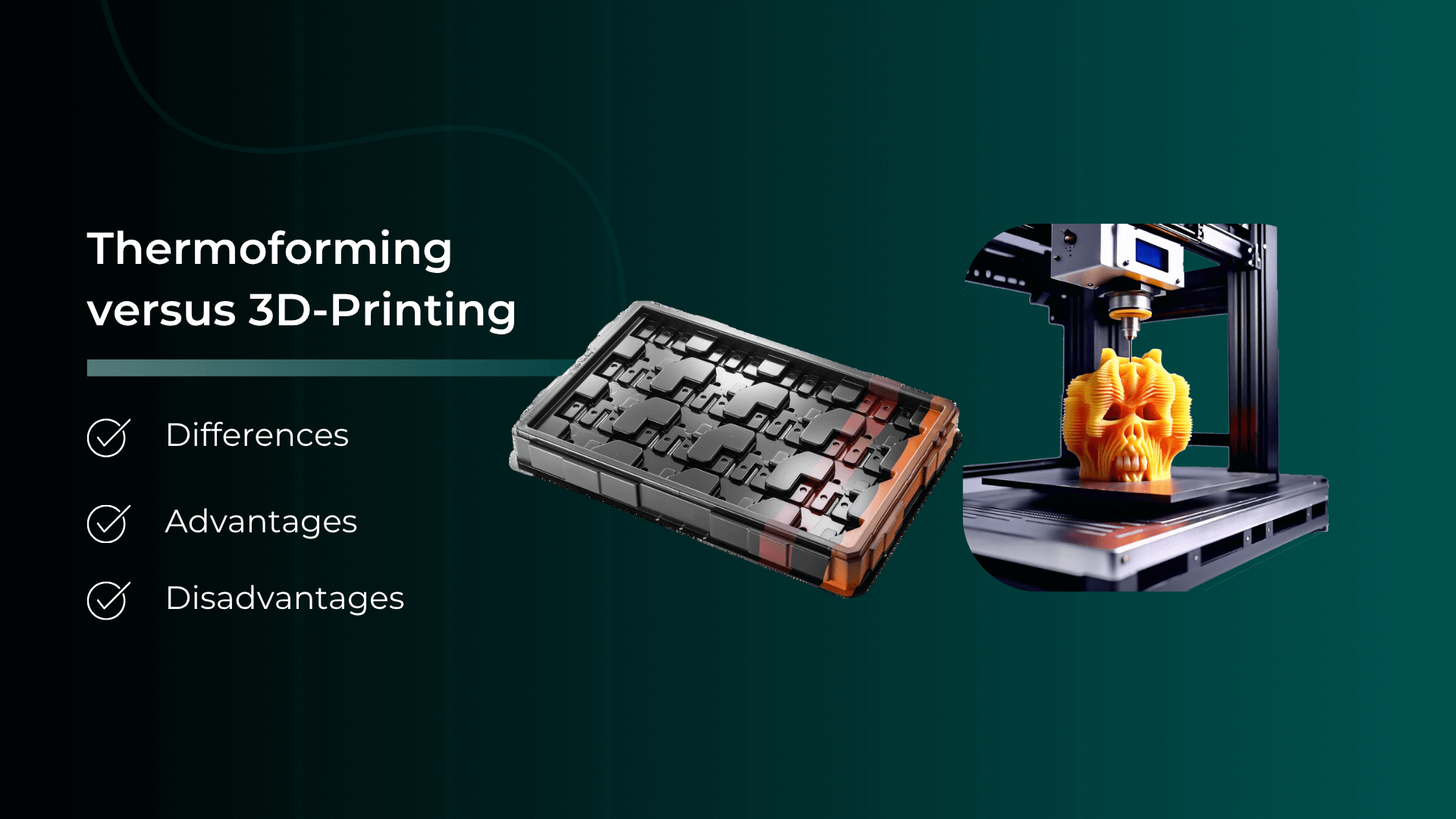
Thermoforming vs. 3D Printing – Advantages, Disadvantages, Differences, and Similarities
Plastic parts are manufactured using various processing methods. In this article, we focus on comparing the processes of plastic thermoforming and 3D printing.
Thermoformed Parts in Practice
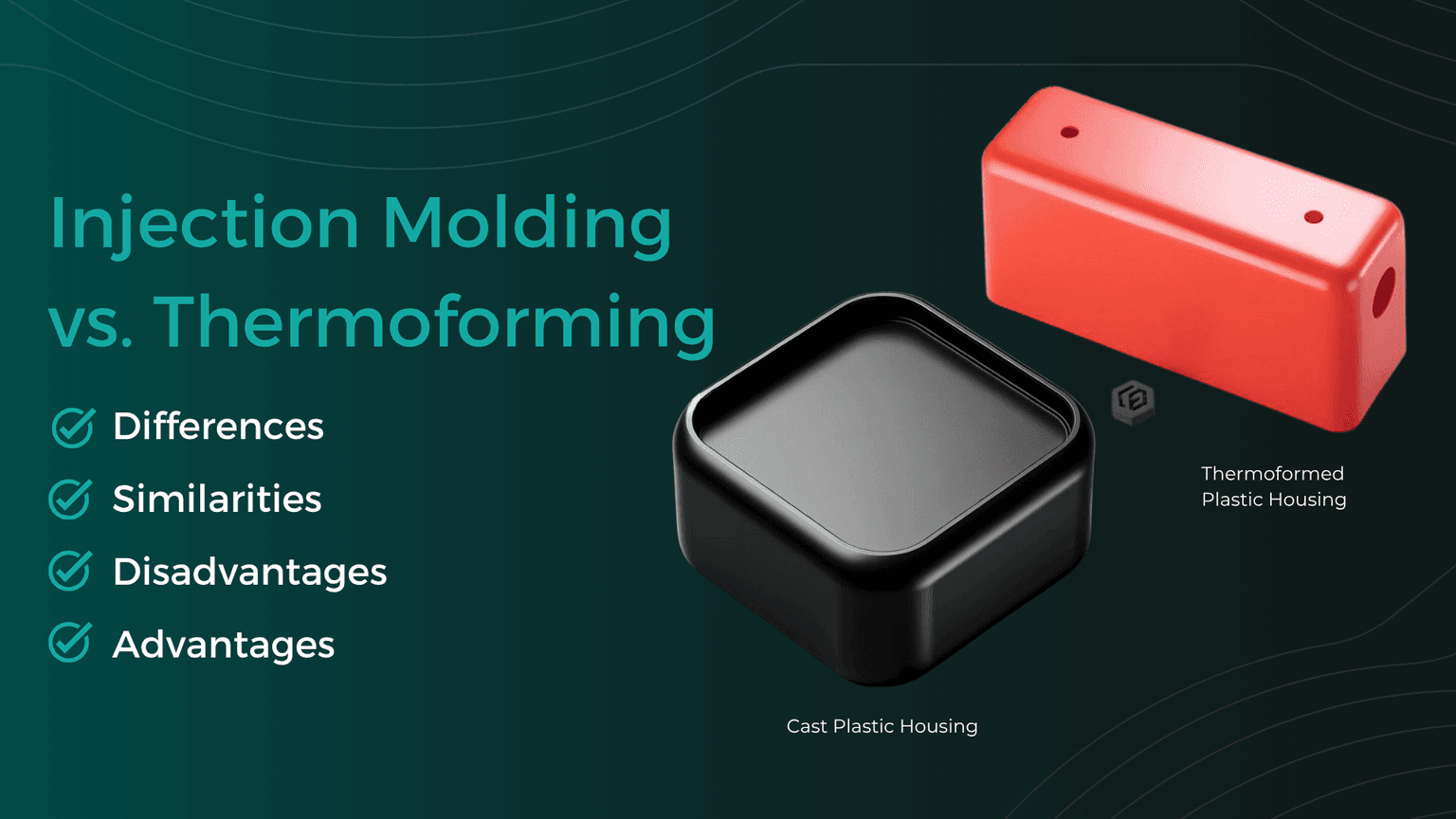
Injection Molding vs. Plastic Thermoforming – Advantages, Disadvantages, Differences, and Similarities
In the world of plastic processing, there are various common manufacturing methods used to produce precise plastic components for industrial applications. We compare two of them: Injection Molding and Plastic Thermoforming.
Thermoformed Parts in Practice
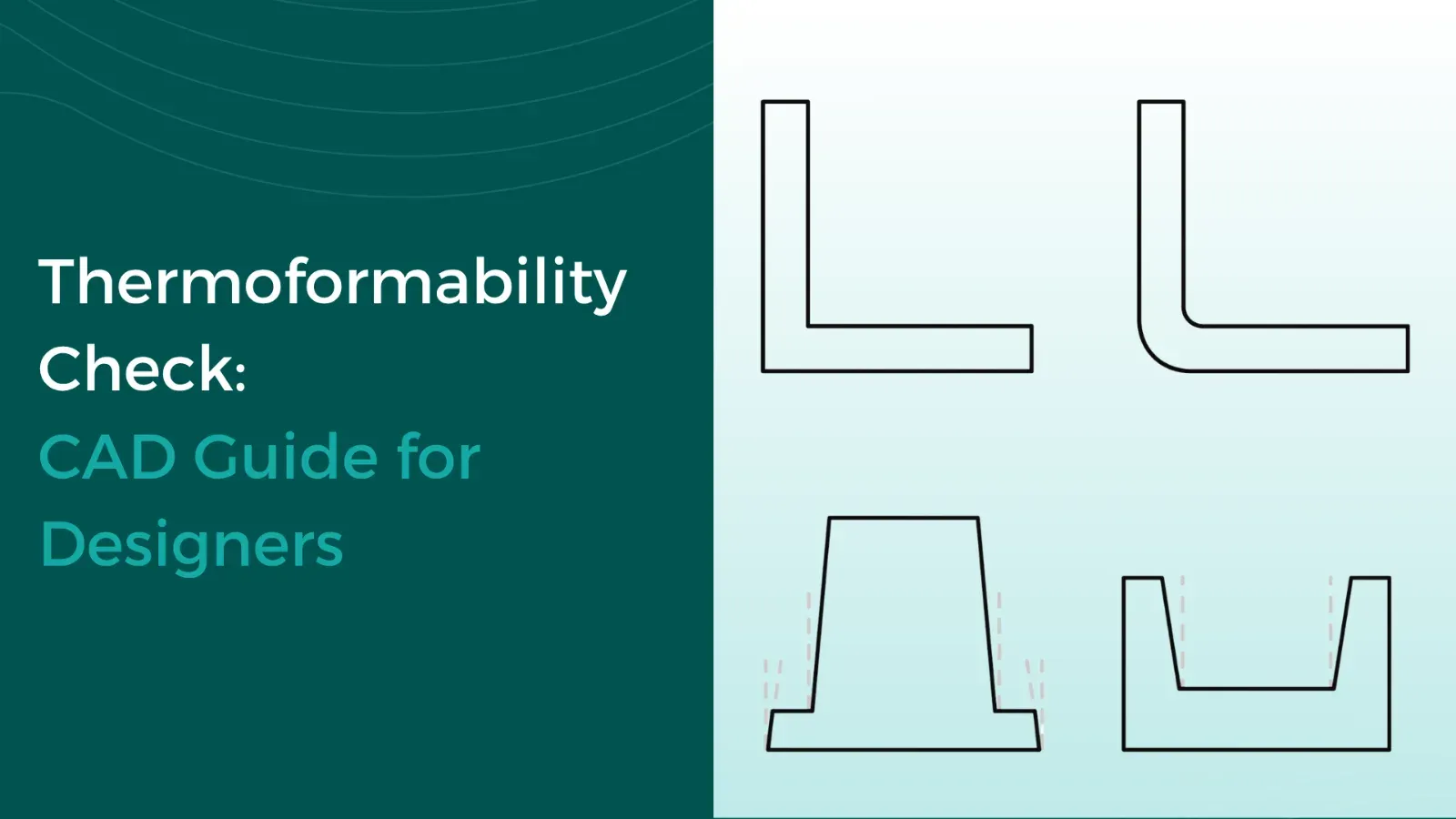
Checking CAD Models for Thermoformability: The Designer's Guide
Whether a plastic part is thermoformable is determined in the CAD model. Anyone who discusses geometry, wall thicknesses, and demoldability only after the first sampling pays for this loop with tool modifications, material waste, and lost weeks in the project timeline. This can be avoided during design: with a structured check that evaluates each model along this guide and makes typical sources of error visible early on.