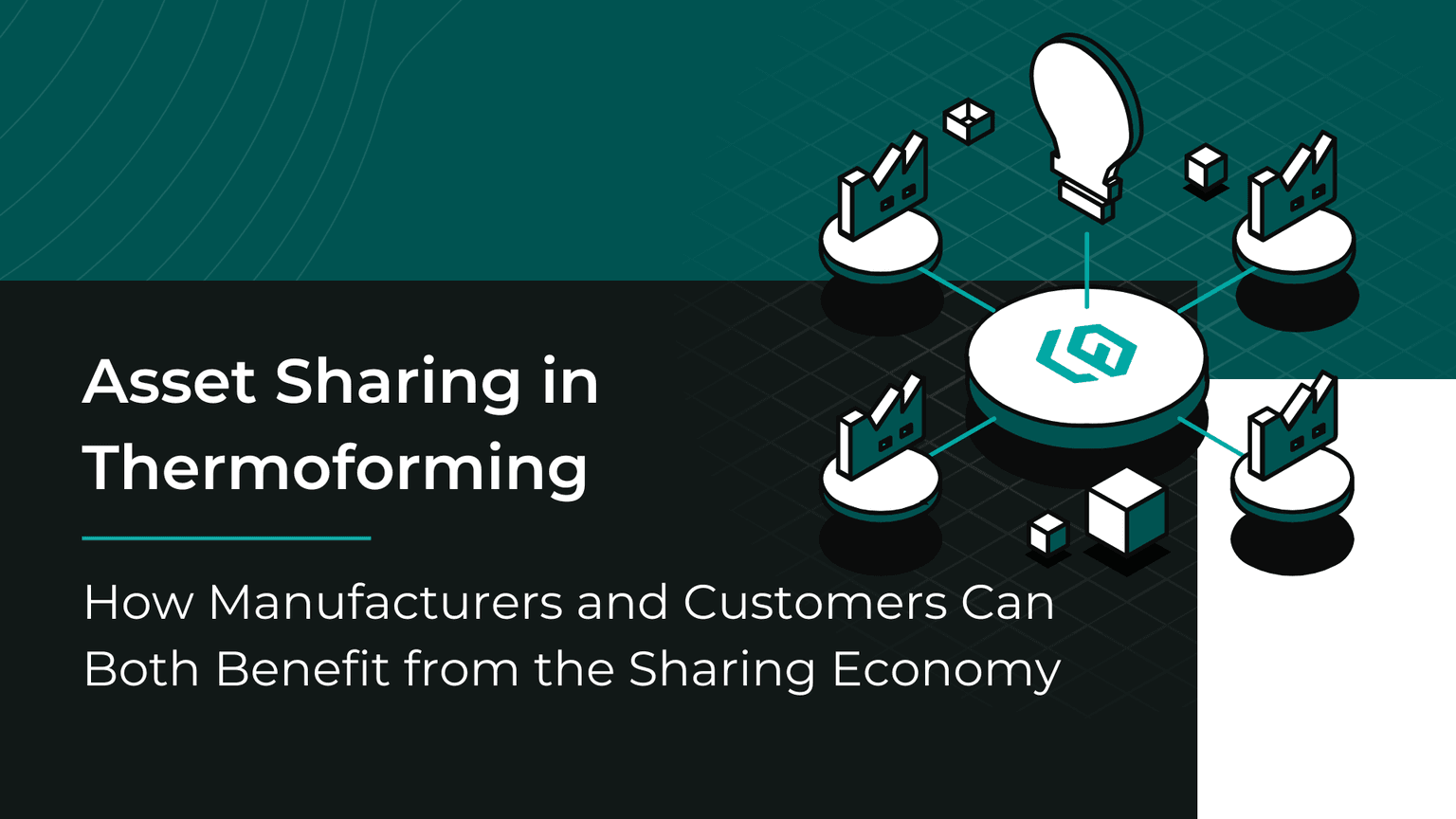
Asset Sharing in Thermoforming - Key Points
- Basic principle: Asset Sharing enables the temporary shared use of resources such as machines, space or know-how via digital platforms, whereby costs, responsibility and use are shared.
- Market and technology drivers: Advances such as IoT, machine learning and sensor technology as well as rising costs, global demand and regulatory hurdles promote the use of asset sharing, especially in the fragmented, often non-transparent thermoforming market with excess capacity.
- Advantages in thermoforming: Faster delivery times, lower transaction costs, simplified supplier search and better utilization through digital matching tools create win-win situations for customers and manufacturers.
What is Asset Sharing?
Asset sharing is a business model in which multiple parties access the same pool of resources. These can be vehicles, tools, production facilities or even expertise. Unlike purchasing, the resource is only used for the required time, whereby costs, use and responsibility are shared.
How is Asset Sharing Promoted Through Digital Platforms?
Digital platforms form the link between providers and users, facilitate communication and ensure smooth processing.
Which Trends Enable Asset Sharing?
The prerequisites for sharing models lie on the technological side in the networking of production and, on the market side, in various developments of recent years.
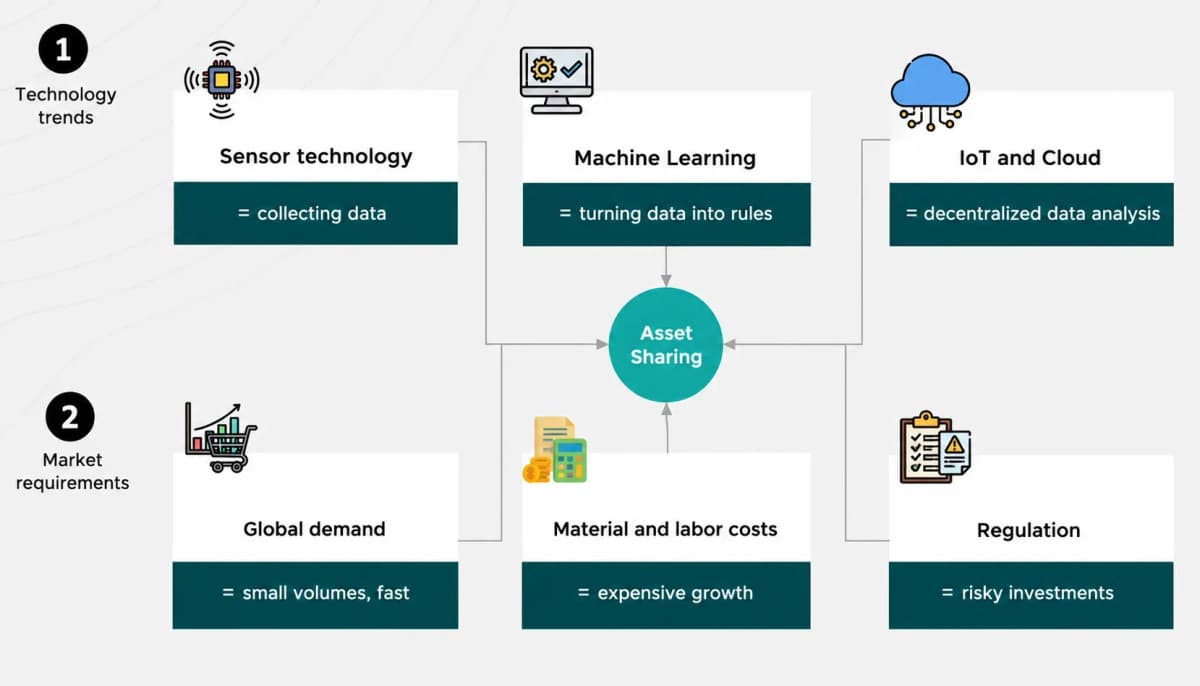
Technological Prerequisites
- Sensor technology: The use of sensors enables the collection and monitoring of information about the condition and availability of shared resources. This information is crucial for the asset sharing model to optimize communication at the interfaces between supplier and customer and thus increase efficiency.
- Machine Learning: Platforms unite market data and have much broader access to cross-functional information than individual companies. Algorithms that recognize patterns and regularities in data sets can thus offer increasingly better customer solutions.
- Internet of Things (IoT) and Cloud: IoT and cloud solutions enable both the collection and decentralized analysis of data. They enable the asset sharing model by allowing real-time connectivity, automated booking and billing systems as well as scalability and flexibility and overall contribute to more efficient use of shared resources.
Increasingly Complex Market-Side Requirements
- Global demand: Asset sharing makes it possible to use resources flexibly and sensibly to respond to global demand for rapid production of small quantities. By sharing resources, providers can adjust production and enable customized fulfillment of demand.
- Material and personnel costs: High material and personnel costs mean expensive growth for companies. Through asset sharing, machine fleets of individual manufacturers can be made available to a wide range of different customers on the platform. This means that growth for manufacturers is also possible without additional investments in new machines or sales activities.
- Regulation: Regulations, rules and guidelines in plastics processing make investments in new machines riskier. Here too, the additional business of sales via a platform can reduce the concentration risk of sales to a few key accounts in regulated end markets.
Asset Sharing - Starting Position of German Industry
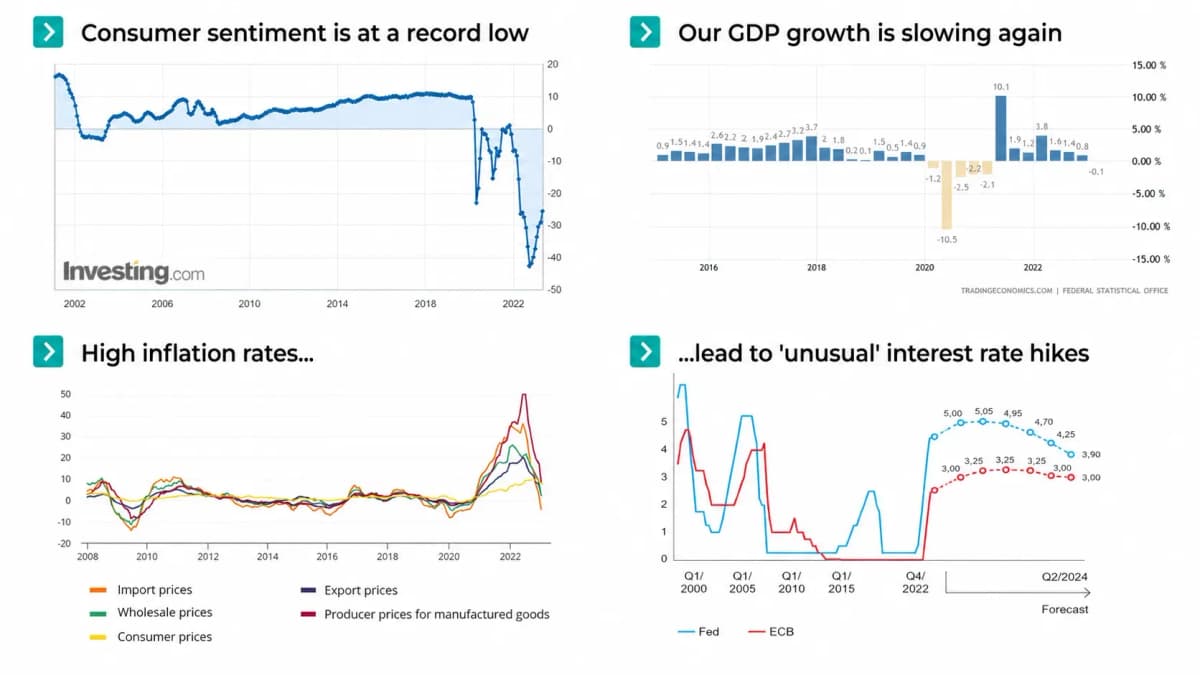
Covid19 and the war in Ukraine have changed the economic framework conditions in Germany. The fact that the preceding boom years are over is evident in various characteristics:
- Low consumer sentiment
- Flattening growth of gross domestic product
- High inflation values...
- ...which have led to interest rate increases
Decreased Capacity Utilization
Furthermore, capacity utilization in chemistry and in manufacturing has fallen, with a simultaneous increase in insolvencies. The Ukraine war, Covid19 and the recessionary market environment have fundamentally had a negative effect on production utilization and order intake.
Asset Sharing Reduces Risks: Digital Transformation Leads to Investment Pressure
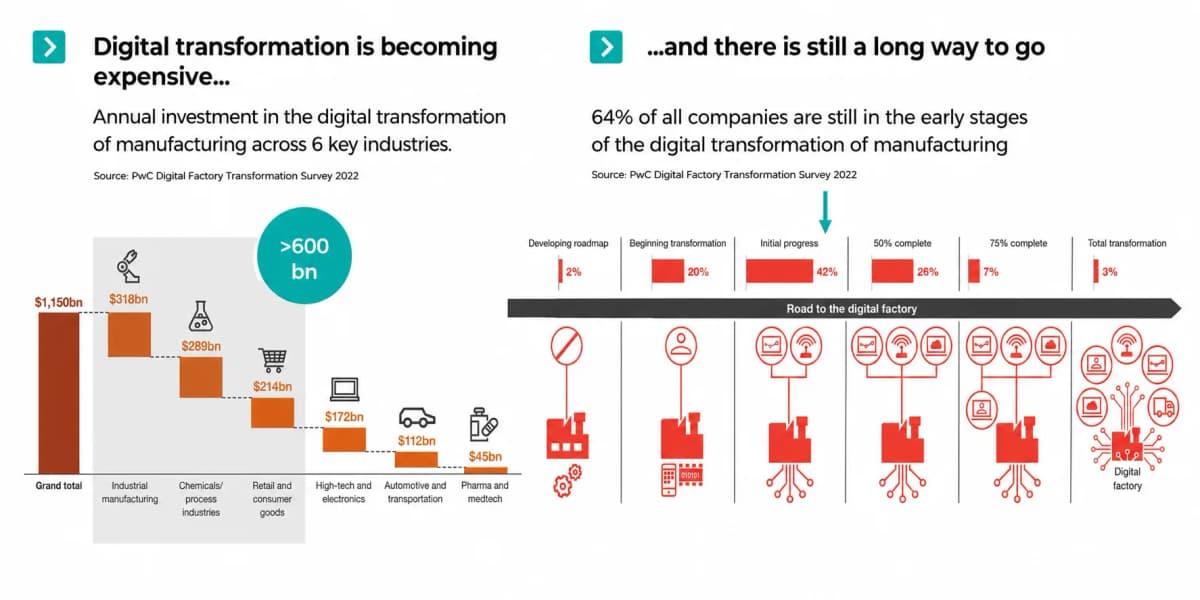
Digital transformation requires investments in the digital transformation of production - primarily in networking and digital control. It is evident that many German and European companies are still relatively at the beginning here. The transformation towards Industry 4.0, which was so euphorically initiated in 2012, is therefore far from complete.
Support of Suppliers Through Platforms
It is therefore necessary to support suppliers via asset sharing in their ongoing production utilization, especially in marketing and sales, so that they can better cushion current risks and focus on the challenges of digitizing their shop floor.
Shared Assets: Are the Prerequisites Met in the Thermoforming Market?
As part of the manufacturing industry, the thermoforming market is affected by the general developments mentioned above. In addition, there are other prerequisites which specifically in plastic thermoforming provide an optimal starting position for profitable asset sharing models. An asset sharing model in the thermoforming market solves the following market-characteristic problems in thermoforming:
Fragmentation
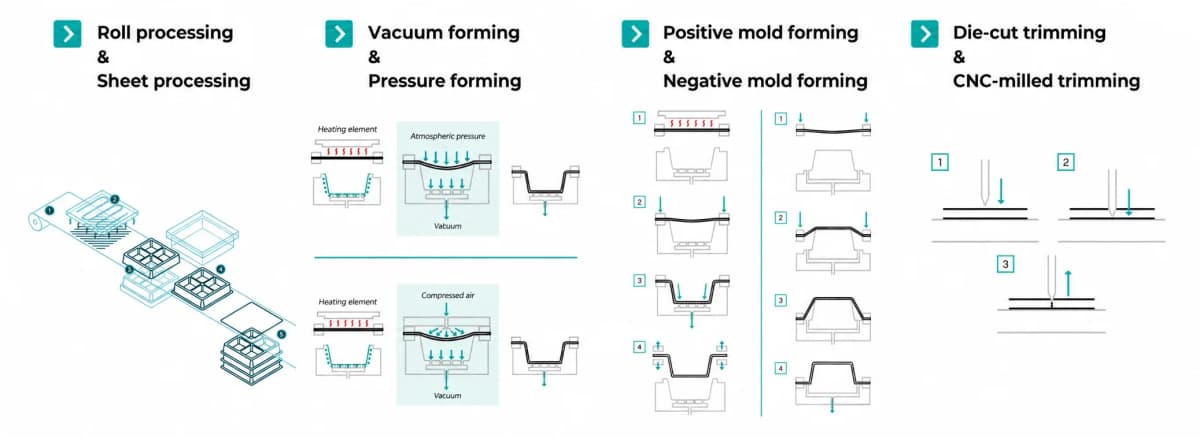
The thermoforming market is highly fragmented due to a multitude of manufacturing options, tool techniques and machine types. Most manufacturers specialize in one or a few processes in order to be able to produce economically. This makes it difficult for customers to maintain an overview in thermoformed part procurement.
Non-transparency
The fragmentation goes hand in hand with high non-transparency on the customer side. The thermoforming industry encompasses a wide range of products, such as
Each product type has different requirements:
This leads to a multitude of product variants that must be individually calculated and offered.
Different End Markets Have Their Own Requirements
Thermoformed parts are also used in various end markets, including food and beverage packaging, medical technology, automotive industry, electronics and more. Each end market has its own requirements, regulations and quality standards. The demands can therefore differ depending on the target market and customer segment.
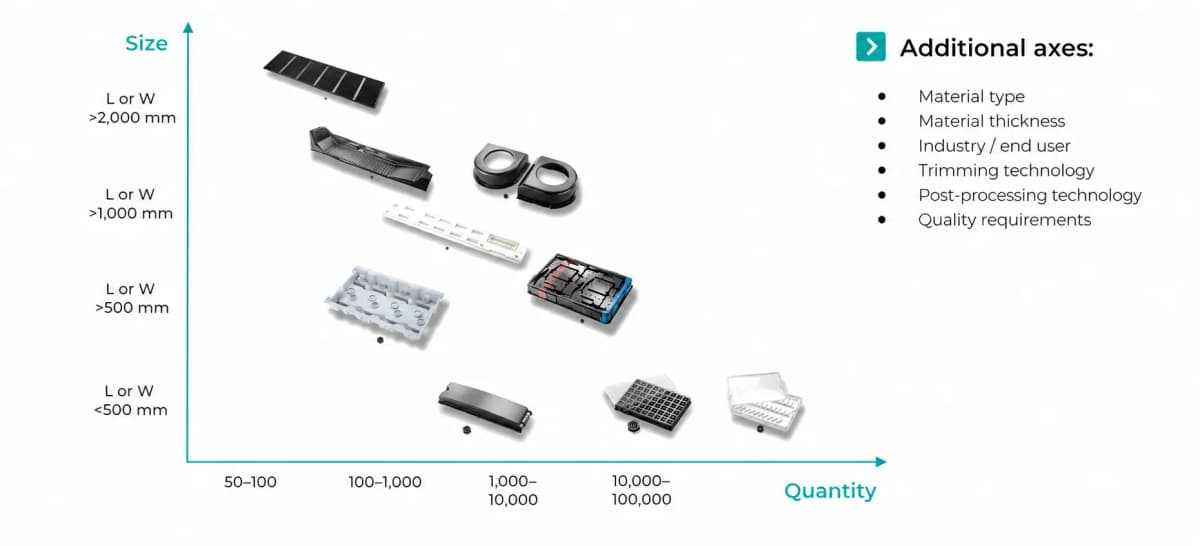
Due to the different product variants, requirements and end markets, there can be a certain non-transparency in the thermoforming market, as this diversity requires individual offers. This can make the comparability of offers and the assessment of market prices more difficult.
Structural Excess Capacity
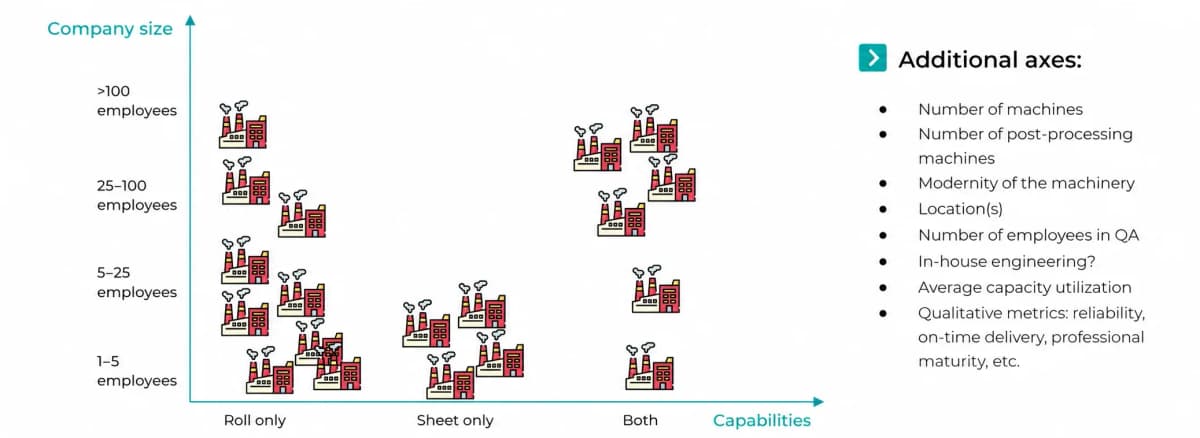
Due to the non-transparency, the thermoforming market cannot optimally utilize the available assets. This leads to structural excess capacity. The existing production capacities exceed the actual demand for thermoformable products. Therefore, there is more capacity for manufacturing or providing thermoformed parts than is actually needed.
What Advantages Does Asset Sharing Offer in Thermoforming?
- Access to large machine fleet through partner network
- No complex project-specific supplier search
- One-stop shop
- Reduced transaction costs
- Fast delivery times
...which arise primarily through more efficient digital processes such as our configurator, tray generator, DfM analysis and the matching of the optimal supplier to the request. For the supplier side, both fluctuating and underutilized order situations can thus lead to better production planning. Asset sharing therefore offers many advantages.
The Role of formary as an Asset Sharing Platform
formary has simplified the processing of requests and orders with its digital B2B platform for thermoformed parts. On our website you will find important information at a glance:
In our content formats such as the newsletter, design guide, white papers and our blog posts, there is more information about thermoforming. We educate about the possibilities of thermoforming and relate asset sharing not only to networking but also to the transfer of knowledge.
Conclusion: Asset Sharing Creates Win-Win Situations for Customers and Suppliers
Platforms like formary leverage Asset Sharing mechanisms to address the challenges of the thermoforming industry, such as digital transformation in manufacturing, recessive market trends, and structural overcapacity. Both customers and suppliers benefit from the advantages brought by sharing mechanisms, allowing both sides to collaborate more efficiently.
Have questions about our platform model? Get in touch now!