Plastic extrusion is a highly efficient manufacturing process that transforms plastic granules into continuous film. This versatile material is used across various industries, tailored to specific applications and performance requirements.
Sarah Guaglianone
Updated on June 2, 2026
Share
Plastic Extrusion - Key Points at a Glance
Plastic extrusion is a forming process for manufacturing plastic products such as films and sheets.
In the plastic extrusion process, granules or powder are melted in an extruder and pressed through a die into the desired shape.
After cooling and smoothing, the semi-finished products (films, sheets) can be further processed, for example into plastic thermoformed parts.
Extrusion definition: Plastic extrusion is a forming process for manufacturing plastic films. Extruding with plastic is done by forming and melting plastic granules.
What are Plastic Granules?
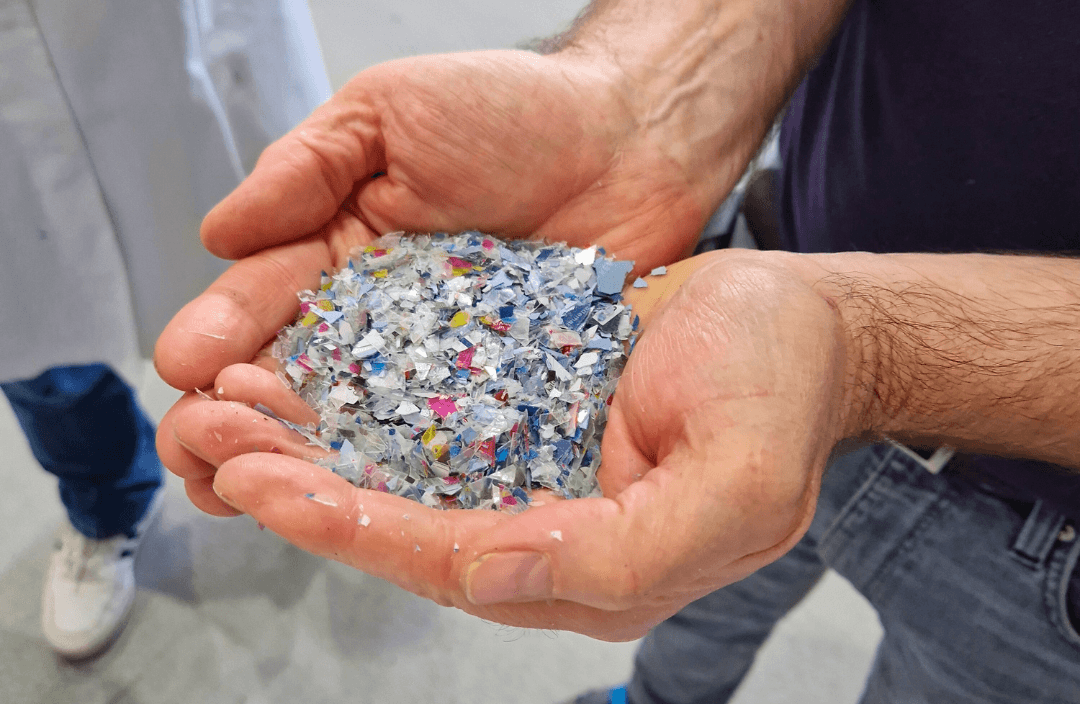
Plastic granules, also referred to as plastic pellets or plastic flakes, are a common starting form of plastics. They are small, granular particles made from various types of thermoplastics.
Plastic flakes: Thinner, flat pieces of plastic
These particles typically have a uniform size and shape, making them ideal for processing in industrial manufacturing processes. In plastic extrusion, the granules or powder are pressed through a forming die to obtain the desired shape.
What is an Extruder?
The extruder ensures that the molten plastic flows into an elongated, thin form, called melt strands. After cooling and hardening, the strand is cut into small particle grains - the finished granules - which are then collected and stored in bags, big bags, or containers.
These granules are then processed either in injection molding machines or again in the extruder. For plastic films and sheets, the latter applies.
Which Materials are Suitable for Plastic Extrusion?
Manufacturers of plastic films or sheets first purchase the required granules. This depends on which plastic film is to be processed. For example, if PET film is being produced, PET granules are needed.
Virgin Material or Recyclate as Starting Material
In addition to granules made from virgin material, recyclate can also be used for the production of plastic film. With recyclate films, plastic flakes are fed into the extruder. These come from recycling, such as shredded plastic bottles or production remnants like edge strips and scrap grids.
Difference Between Granules and Flakes
Granules: uniform grains with defined shape and size, specifically produced for extrusion.
Flakes: irregular, thin plastic pieces created through the recycling of used products.
By choosing between virgin material and recycled material, manufacturers can influence the quality, sustainability, and costs of the plastic film.
Which Plastics Can Be Extruded?
There are various types of plastics that can be used for plastic extrusion, such as
The choice of the right plastic depends on the desired properties of the plastic film, such as transparency, flexibility or rigidity, or resistance to external influences such as heat or cold resistance, UV resistance, etc.
Plastic Extrusion: How Does Film Production Work?
In extrusion technology with plastic and the associated film production, thermoplastics are transformed from granules into semi-finished products as films or thicker sheets. Semi-finished products describe products made from raw materials in their simplest form. In the following sections, plastic extrusion and how it works is explained in more detail.
Plastic extrusion for the production of plastic film
Feeding the Raw Material
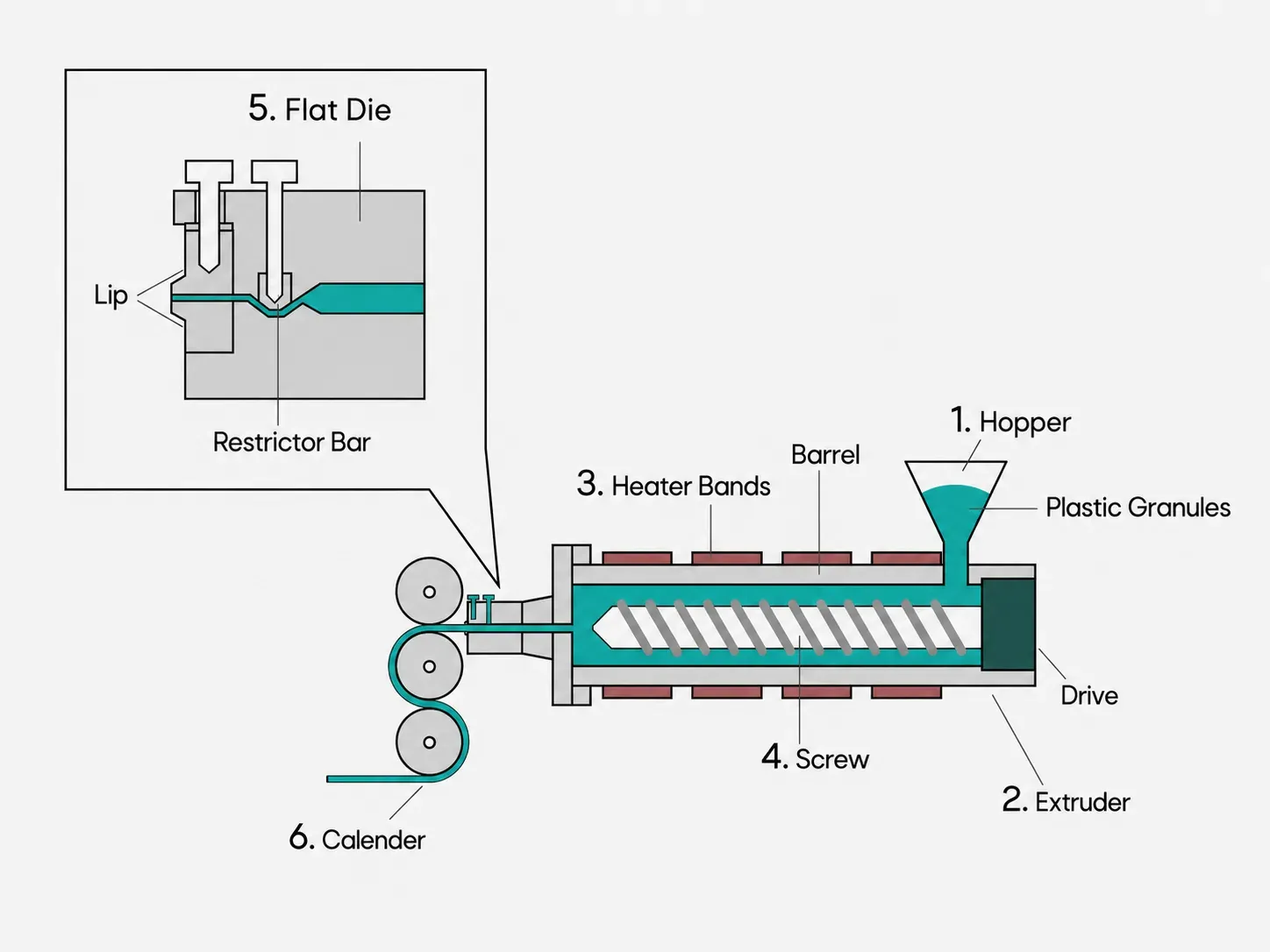
The raw material, in the form of granules or flakes, is fed into the plastic extruder via a hopper
Depending on the desired properties of the plastic film, additives such as dyes, stabilizers, or additives (e.g. for ESD protection or flame retardancy) can be added
Melting and Homogenizing the Plastic
The granules are melted and homogenized in the electrically heated cylinder of the extruder.
A screw inside the extruder ensures the conveyance of the melt flow and the mixing of the materials.
Extruder Design
The design of the extruder varies depending on the material to be processed:
Horizontal dies (with or without stagnation bars) are used for viscous melts
Vertical dies are used for low-viscosity materials such as PET
Sheet systems have a completely different design as well as different cooling sections
Forming the Plastic Film
The molten plastic leaves the extruder as a strand-shaped melt flow and is pressed into the slot die via a melt pump
The slot die forms the melt flow into a thin layer, the preliminary stage of plastic film
Smoothing and Finishing the Film
The formed layer is guided over a smoothing unit with temperature-controlled rollers to ensure uniform material thickness
The material web is then brought to the target width by single or multiple groove cutting
What Happens to the Plastic Film After Plastic Extrusion?
After the cooling section, in the cooled state, the plastic film is further processed. This process can include various steps:
Printing and Finishing
The film can be printed with information, logos, or designs. Additionally, surface treatments such as lamination with other materials or the application of special coatings are possible to improve properties such as gloss, scratch resistance, or barrier effect.
Rolling or Cutting
Finally, the plastic film is usually wound onto rolls. For thicker plastic sheets, cutting is done with circular saws or guillotine shears to achieve the desired widths and lengths.
Plastic Film in Thermoforming
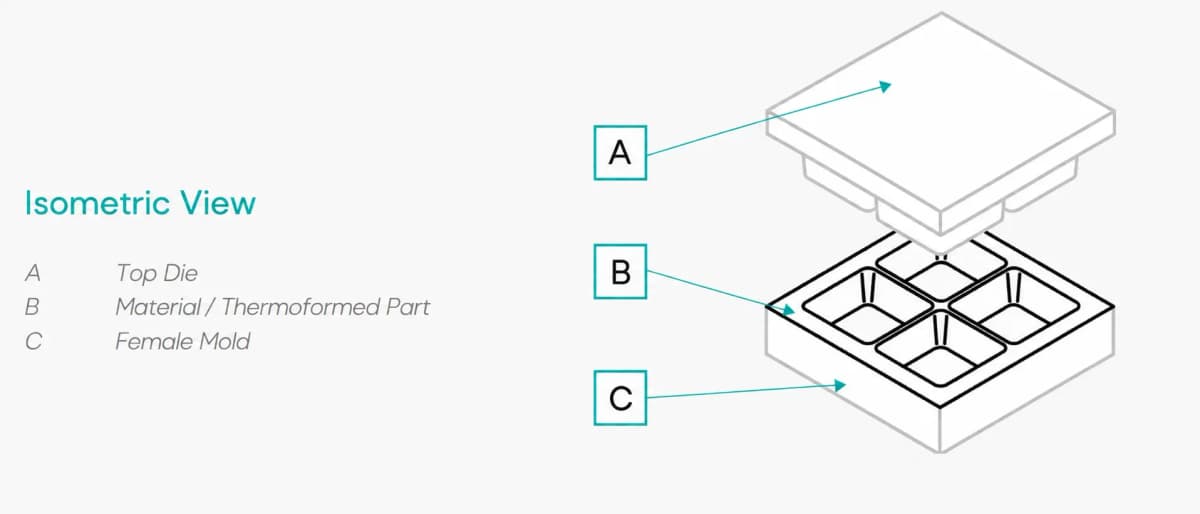
The resulting plastic rolls or plastic sheets are used after extrusion as starting material for the production of plastic thermoformed parts, among other things. For the production of plastic thermoformed parts in plastic thermoforming, semi-finished products are heated and drawn into a thermoforming tool. Here the semi-finished product is either unrolled from a plastic roll or placed in the machine in the form of a plastic sheet.
Initial Thickness of Plastic Films
The semi-finished product for plastic rolls has a maximum initial thickness of 3mm, although many manufacturers already set an upper limit at 2.5mm. This limit is solely due to the fact that plastic film can only be wound onto a roll to this thickness. After that, the semi-finished product becomes too inflexible for processing and is instead cut into sheets.
Application Possibilities of Plastic Film
Plastic film is a versatile material that is used in numerous industries after thermoforming. Whether as packaging, trays, or covers, thermoformed products made from plastic film combine protection, hygiene, and efficiency.
Industry Overview and Typical Applications of Plastic Thermoformed Parts
Automotive: Thermoformed load carriers and reusable trays for small parts, film thickness usually 0.2–0.8 mm.
Plastic Extrusion with the formary Supplier Network
In most cases, plastic thermoformers purchase the required plastic film. However, there are also some suppliers in the formary network that extrude their thermoforming film themselves. This in-house extrusion offers several advantages:
Customized solutions that are flexibly tailored to customer needs (material properties, additives, colors)
Better control over the quality of the end product, because the film has exactly the desired properties
Optimization of production processes and increased efficiency through deeper value creation
ℹ️ To learn about the other advantages our supplier network offers, watch the webinar on the procurement process for plastic thermoformed parts.
By playing the video, you agree that your data will be transmitted to YouTube and that you have read the Privacy Policy.
Conclusion: Plastic Extrusion as Essential Foundation for the Thermoforming Process
Plastic extrusion is an essential process for the production of plastic films. Thanks to their diverse properties and application areas, thermoformed parts made from plastic films are indispensable in numerous industries. Do you need thermoforming films for your industry to benefit from the properties mentioned above? Then configure your thermoformed product now.
Frequently Asked Questions about Plastic Extrusion
Plastic films are primarily produced through plastic extrusion, in which plastic granules (mostly polyolefins such as PE or PP) are melted, pressed through dies, and cooled.
Plastic flakes are thin, flat pieces of plastic that are often created through the recycling of used plastic products such as bottles. Unlike granules, flakes do not have a uniform shape or size.
Semi-finished products are products made from raw materials in their simplest form. In plastic extrusion, semi-finished products such as films or thicker sheets are created, which can then be formed in further processing steps.
There are many plastics that are suitable. Polyethylene (PE), polypropylene (PP), and PET are widely used. The choice always depends on the required properties of the end product.
Yes, extruded films and sheets often serve as starting material for other processes, such as plastic thermoforming, where they are heated and drawn into a mold.
Further Content
Thermoformed Parts in Practice
Warehouse Inventory: Tips & Tricks for Better Warehouse Organization and Efficiency with Trays
Warehouse inventories cost time, tie up staff, and often disrupt ongoing operations. This is especially true for small parts, serial components, or recurring components, where counting quickly becomes confusing if parts are stored loose in boxes or shelf compartments. Standard trays create a simple yet effective structure here for better warehouse organization. This article shows how trays optimize inventory counts in both the warehouse and production.
Thermoformed Parts in Practice
Tray Labeling: How to Use Labels Effectively for Your Packaging
To ensure that trays can be correctly identified and used, clear labeling is essential. Depending on the application, quantity, and process requirements, different methods can be used, such as permanent engraving or flexible labels. In this article, you will learn which tray labeling methods are available, when each method makes sense, and how labeling can already be incorporated into the tray design using formary’s 3D Tray Generator.
Thermoformed Parts in Practice
Supplier Guide for Plastic Thermoformed Parts – 10 Key Factors That Matter
Choosing the right supplier for plastic thermoformed parts is crucial for the quality, efficiency, and cost-effectiveness of your production. Our 10 tips will show you what to look for when selecting a supplier.
Platform & Features
3 Factors That Accelerate Your Procurement with formary
The three key factors—time, speed, and efficiency—are crucial for success in industrial manufacturing, from inquiry to delivery. That’s why formary has optimized this process, significantly accelerating the procurement of plastic thermoformed parts. Learn more in this article.
Thermoformed Parts in Practice
Rapid Prototyping in Thermoforming – Definition, Benefits & Processes
Rapid prototyping is used in product development to quickly create preliminary models. In thermoforming, rapid prototyping offers numerous advantages for producing high-quality prototypes efficiently and cost-effectively.
Platform & Features
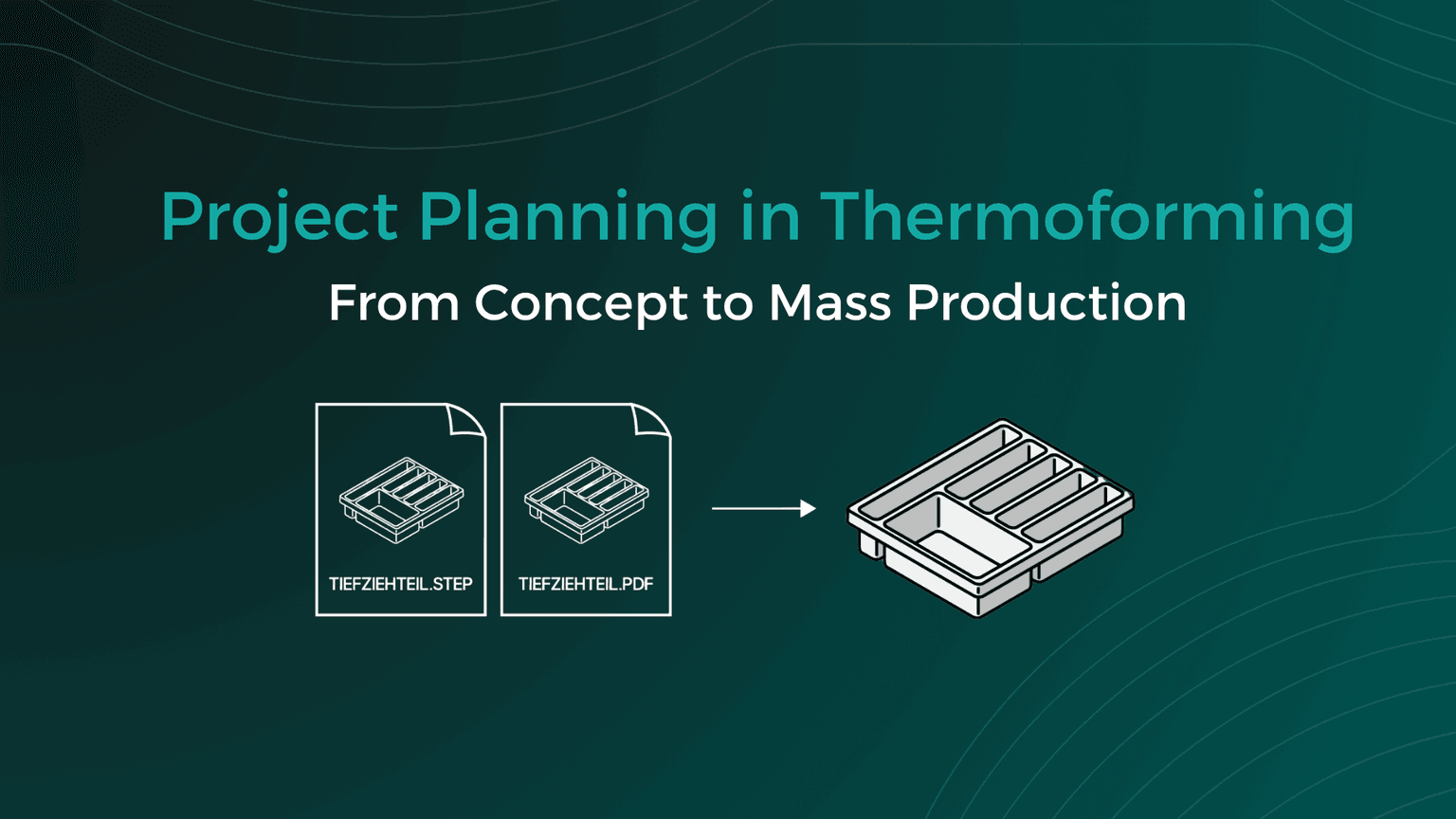
Project Planning in Thermoforming – From Concept to Mass Production
From the initial idea to mass production, various factors must be considered in thermoforming project planning, including material selection, tool manufacturing, and quality control. This article provides a detailed look at how a thermoforming project with formary is executed.
Thermoformed Parts in Practice
Thermoforming vs. 3D Printing – Advantages, Disadvantages, Differences, and Similarities
Plastic parts are manufactured using various processing methods. In this article, we focus on comparing the processes of plastic thermoforming and 3D printing.
Thermoformed Parts in Practice
Injection Molding vs. Plastic Thermoforming – Advantages, Disadvantages, Differences, and Similarities
In the world of plastic processing, there are various common manufacturing methods used to produce precise plastic components for industrial applications. We compare two of them: Injection Molding and Plastic Thermoforming.
Thermoformed Parts in Practice
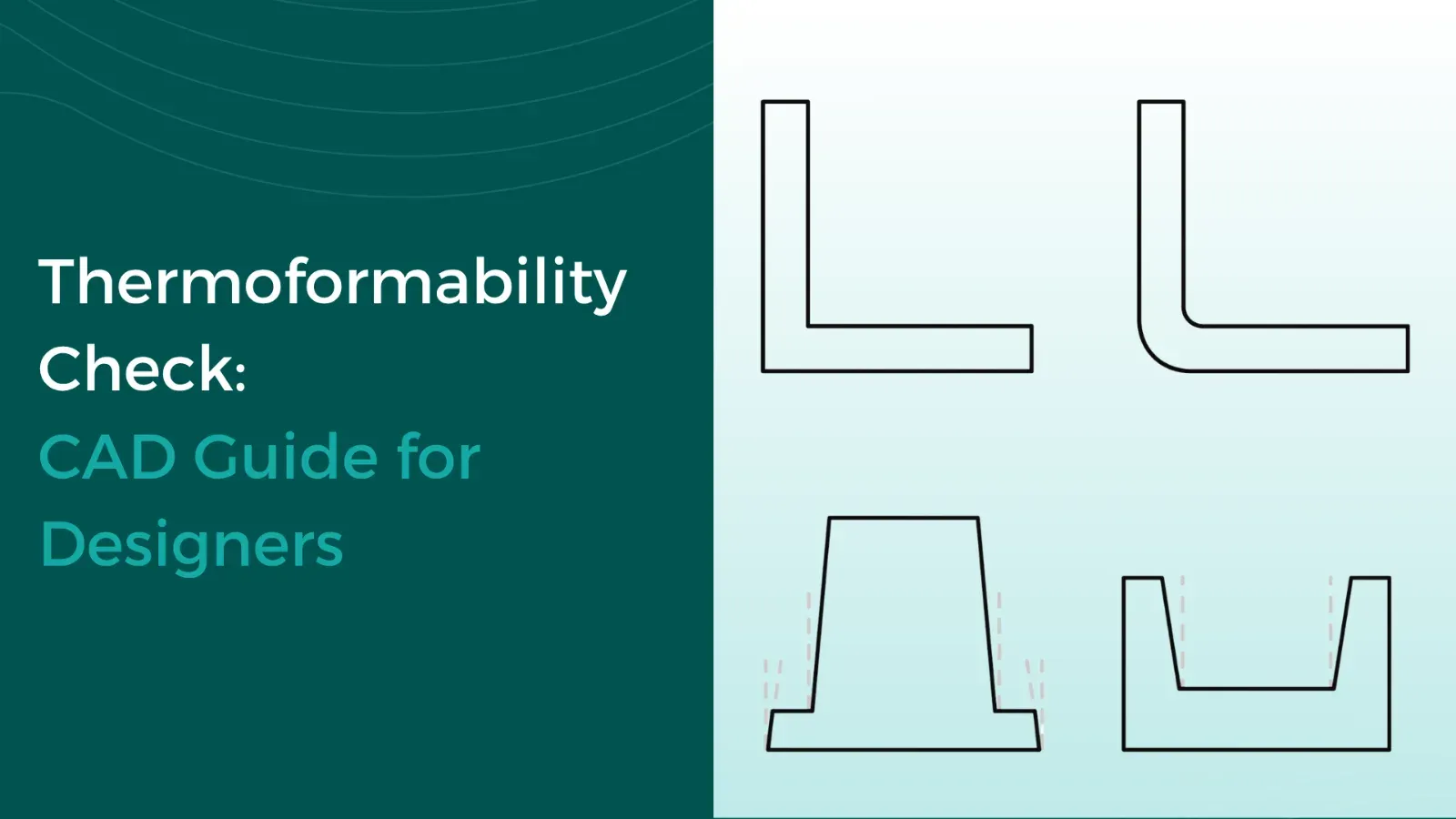
Checking CAD Models for Thermoformability: The Designer's Guide
Whether a plastic part is thermoformable is determined in the CAD model. Anyone who discusses geometry, wall thicknesses, and demoldability only after the first sampling pays for this loop with tool modifications, material waste, and lost weeks in the project timeline. This can be avoided during design: with a structured check that evaluates each model along this guide and makes typical sources of error visible early on.