What Are Bioplastics? Definition, Applications, Advantages, and Limitations
Bioplastics are plastics that are either made from renewable raw materials or are biodegradable - or both. They offer a wide range of possible applications - but what exactly are bioplastics, how are they produced and what advantages or limitations do they have compared to traditional plastics?
Sarah Guaglianone
Updated on June 2, 2026
Share
Bioplastics – Key facts at a glance
Definition: Bioplastics are either bio-based (made from renewable raw materials) or biodegradable; some are both.
Applications: Bio-based plastics are used in packaging, medical devices, the automotive industry and consumer goods.
Advantages: Reduced dependence on oil, potentially lower CO₂ emissions, biodegradability.
Limitations: Requires a large amount of space for raw materials, limited recyclability, higher costs, not suitable for high-performance applications.
What are bioplastics?
Bioplastics explained simply: Bioplastics, also known as bioplastics or technical biopolymers, are plastics that are either completely or partially made from renewable raw materials, i.e. biobased and/or biodegradable. In comparison, conventional plastic materials are based on fossil raw materials.
What types of bioplastics are there?
Bioplastics can primarily be divided into two main categories: Bio-based and biodegradable plastics. In the following section, we present some examples of bioplastics to give you an overview of the different types of bioplastics.
Biobased plastics
What does bio-based mean? Bio-based plastics are made from biological, renewable raw materials such as corn starch, sugar cane or cellulose. Bio-based bioplastics are not necessarily biodegradable.
Bioplastic properties, such as mouldability, hardness, elasticity, breaking strength, temperature resistance, heat resistance and chemical resistance, vary depending on the composition, manufacturing process and the addition of additives.
Bioplastics Overview: Bio-based plastics
Polylactic acid (PLA): Made from fermented plant starch and biodegradable.
Bio-polyethylene (bio-PE): Made from sugar cane and not biodegradable.
Bio-polyethylene terephthalate (bio-PET): Partly made from renewable raw materials (e.g. ethanol from sugar cane). Chemically identical to conventional polyethylene, therefore not biodegradable.
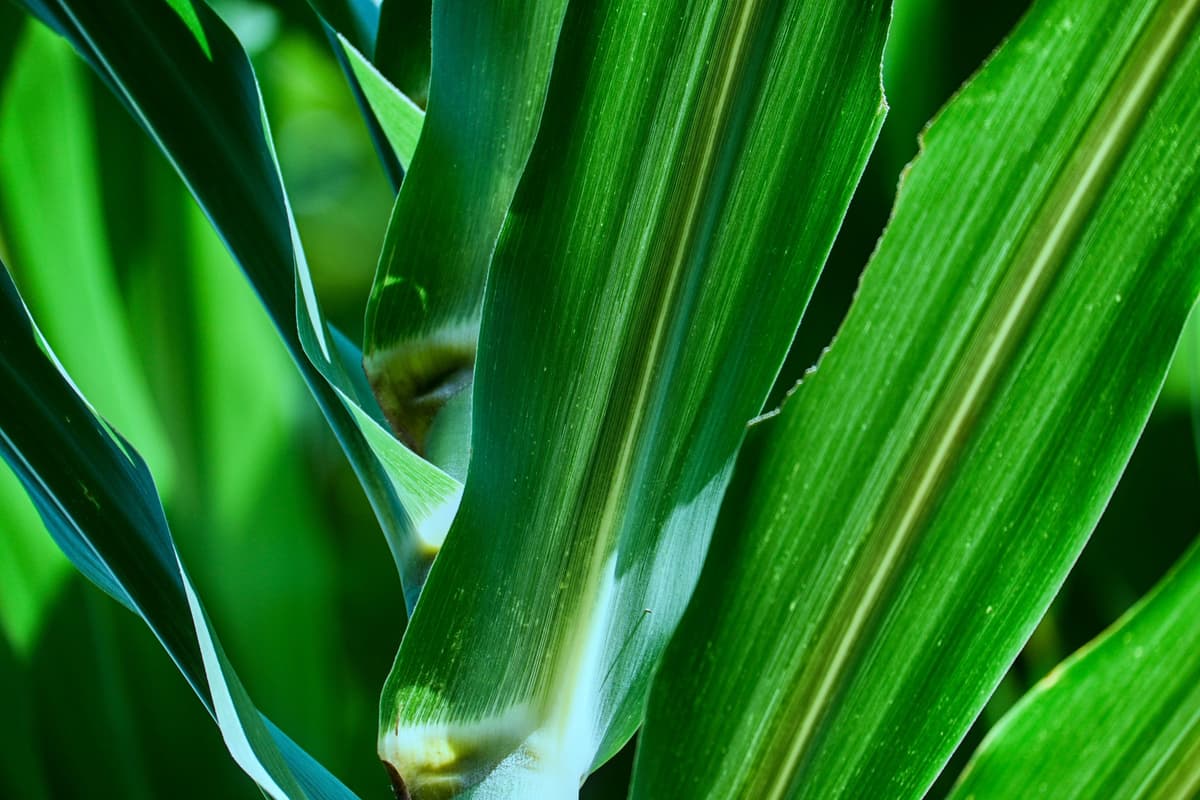
Sugar cane
Biodegradable plastics
Biodegradable plastics are produced by natural processes (microorganisms such as bacteria or fungi), which can be broken down into natural substances such as water, carbon dioxide (CO2) and biomass. Bioplastics degrade under certain environmental conditions that are necessary for the activity of the microorganisms (more on this later).
Bioplastics overview: Biodegradable plastics
Polyhydroxyalkanoates (PHA): Fermented by bacteria.
Polybutylene succinate (PBS): Can be produced from renewable or fossil raw materials.
Polycaprolactone (PCL): Made from fossil raw materials.
Bioplastics overview: Bio-based and biodegradable plastics
Some bioplastics fulfil both criteria: The biopolymers are both biobased and biodegradable.
Polylactic acid (PLA): Made from plant starch and biodegradable.
Polyhydroxyalkanoates (PHA): Fermented by bacteria from renewable raw materials and biodegradable.
Starch-based plastics: Made from plant starch and biodegradable.
Overview of all types of bioplastics
Bioplastics category
Bio-based plastics
Biodegradable plastics
Bio-based and biodegradable plastics
Bioplastics examples
Bio-PE, Bio-PET, PLA
PHA, PBS, PCL
Starch-based plastics, PLA, PHA
Raw materials
Renewable raw materials (e.g. sugar cane, plant starch)
Microorganisms, various raw materials
Plant starch, bacteria
The properties of bio-based plastics and biodegradable plastics vary depending on the raw material used and the manufacturing processes. In principle, bioplastics can have the same properties as conventional polymers. Plastic films made from bioplastics are also produced by plastic extrusion, just like conventional thermoplastics.
What can bioplastics be used for? - Products made from bioplastics
The properties of bioplastics vary depending on the raw materials used and the manufacturing processes. In principle, bioplastics can have the same properties as conventional polymers. Plastic films made of bioplastics are also produced by plastic extrusion like conventional thermoplastics.
However, bioplastics are not suitable for high-performance applications. The use of bio-based materials is restricted by limited quantities, price and qualities, based on limited raw materials and higher manufacturing costs. Currently, bioplastics can be used primarily for these applications:
Packaging material / agriculture:
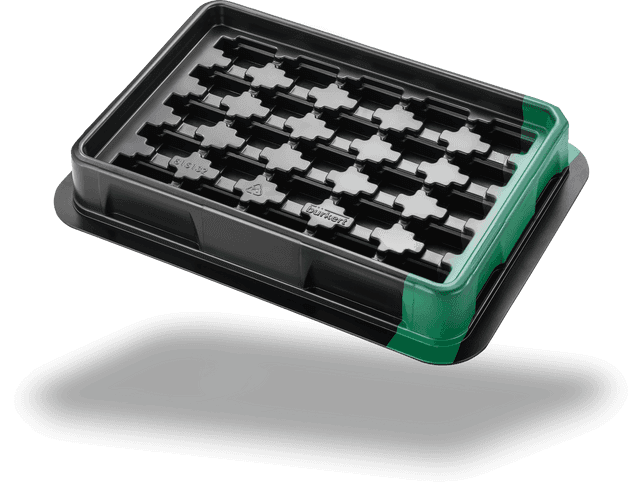
Packaging products made from compostable bioplastics, such as trays for vegetables, fruit, eggs and meat, containers for drinks and dairy products and cosmetics packaging.
Medicine / Pharmaceuticals
For bioplastics in medicine and pharmaceuticals, the focus is on the resorbability of the products, such as suture materials or implants, which can be broken down by the body after use.
ℹ️ For anyone involved in developing medical blister packs: find out in the white paper which plastics are suitable for sterile, validatable and increasingly sustainable medtech packaging – including options using bio-based materials.
Automotive engineering
Bio-based materials are used in the automotive sector in a “sandwich construction”. The core of the component is made of bio-based polymer, with a layer of higher-quality conventional material applied on top (e.g. for visual appearance, feel and functionality).
Bioplastics vs. plastics: advantages and disadvantages
Bioplastics have both advantages and limitations compared to conventional plastics, with the latter influencing their suitability for various applications. Here, we take a detailed look at the differences and challenges associated with bioplastics compared to conventional thermoplastics.
Advantages of bioplastics
The use of biopolymers offers a number of advantages, including:
Renewable raw materials
Crude oil is a finite resource. In contrast, renewable resources are inexhaustible. This is because bioplastics are made from raw materials such as maize, sugar cane or cellulose, which reduces our dependence on fossil fuels.
Potential for lower CO2 emissions
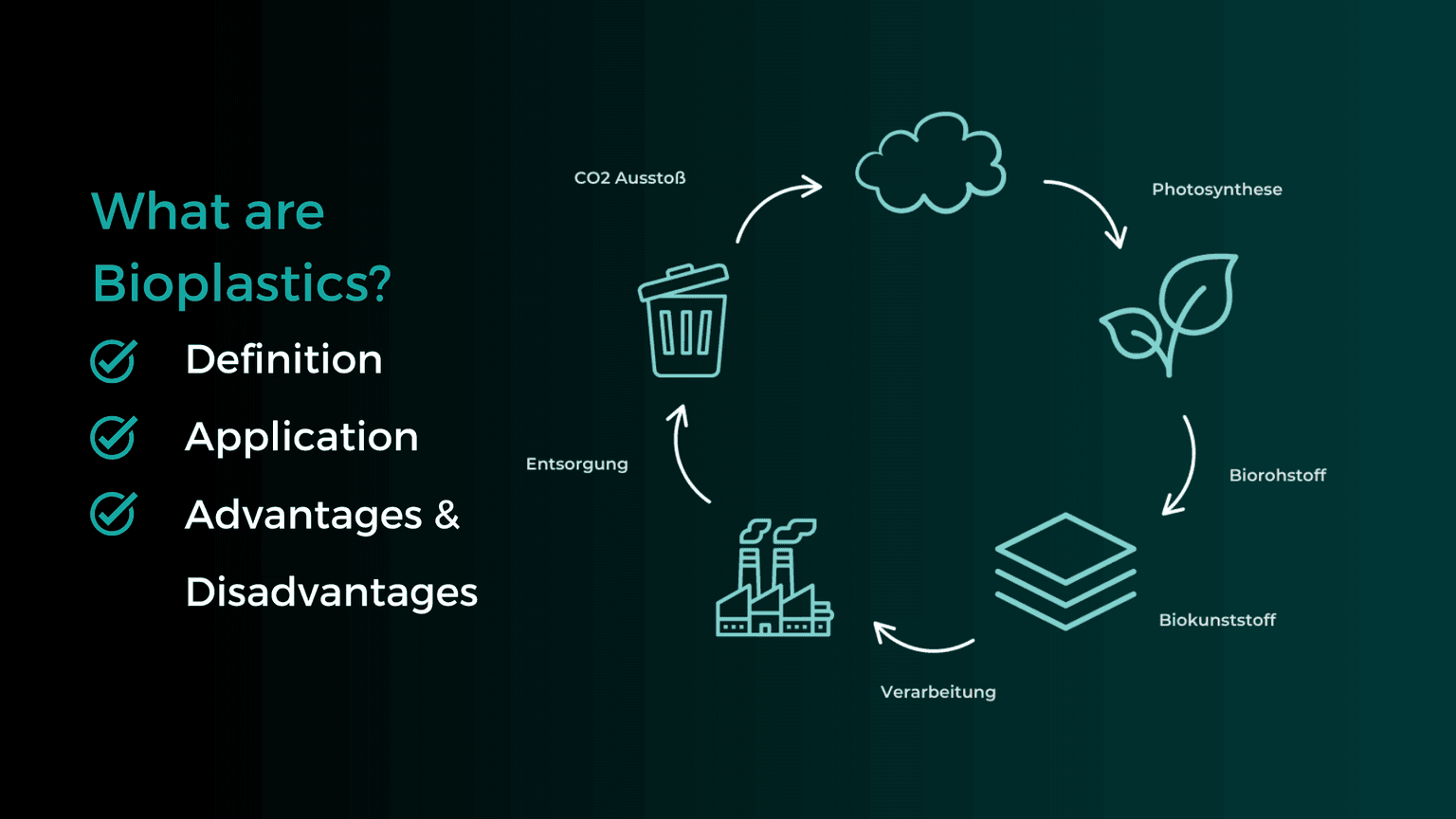
Starch from plants is used for the production of bioplastics. These plants extract CO2 from the atmosphere for their growth. When the bioplastic is incinerated, only the amount of CO2 previously absorbed by the plant is released. This creates a closed CO2 cycle.
Biodegradability
Some bioplastics, such as PLA and PHA, are biodegradable/compostable and decompose under certain conditions (e.g. in industrial composting plants) into harmless substances such as CO2, water and biomass.
Bioplastics disadvantages
Despite the advantages mentioned, however, there are several disadvantages that must be taken into account when assessing their environmental friendliness and practicality. Here are the main challenges and disadvantages of bioplastics in detail.
High land requirements
The cultivation of raw materials for bioplastics requires agricultural land that could also be used for food production. This can lead to competition for agricultural resources.
Energy and resource consumption
Bioplastics = better environment - unfortunately this is not true in terms of energy and resource consumption. The production of bioplastics can be energy-intensive and require high water consumption, which can have a negative impact on their environmental footprint.
Degradation conditions
Many bio-based and biodegradable plastics require special conditions (e.g. industrial composting plants) for degradation, which are not always available everywhere or require energy.
Costs
The prices of bioplastics are often more expensive than conventional plastics, which can limit their widespread use.
Limited recycling options
Without specialised recycling processes tailored to the specific material stream, bioplastics cannot be recycled into new material, unlike conventional recycled plastic. Recycling bioplastics is therefore challenging, as biodegradable plastics often require a longer retention time in composting facilities.
Bioplastics in thermoforming
Can bioplastics now also be used for plastic thermoforming and thus for trays, containers, inlays and covers? And how do bioplastics perform compared to conventional thermoplastics? More on this in the following sections.
Material properties
Bioplastics have different properties compared to conventional plastics. Some bio-based plastics, such as polylactic acid (PLA) and polyhydroxyalkanoates (PHA), are thermoplastic and can therefore theoretically be used for thermoforming.
However, due to their different structure, bioplastics have special requirements in terms of temperature and processing that may differ from those of conventional plastics. Adapting moulding tools to the specific properties of bioplastics can therefore incur additional costs.
Processing parameters
The processing temperatures and times for bioplastics can vary. PLA, for example, has a lower processing temperature compared to many standard plastics such as polyethylene (PE) or polypropylene (PP).
Some bioplastics are hygroscopic, which means that they absorb moisture from the environment. This can lead to processing problems such as bubble formation or undesirable material changes.
Mechanical properties
Bioplastics often have different mechanical properties than traditional plastics. Some may be less impact resistantor less elastic, which influences the choice of applications. The strength and flexibility must be carefully tested to ensure that the end products meet the requirements.
ℹ️ Want to get started on your thermoforming project but not sure which plastic to choose? Our 6-step guide explains the criteria you need to consider when selecting the right material.
Is bioplastic an alternative? - A conclusion
The market share of bioplastics currently stands at around 1%. Consequently, there is still considerable untapped potential when it comes to the use of biopolymers in thermoforming. The advantages of bioplastics are a major factor in their wider adoption: biodegradability, lower CO₂ emissions and the conservation of resources. However, the use of bioplastics also has its limitations and drawbacks. Not only can bioplastic products not compete with standard thermoplastics when it comes to high-performance applications, but their production can also consume significant amounts of agricultural resources.
Biopolymers often require specific conditions for decomposition and do not break down completely in conventional composting facilities. Furthermore, there is currently a lack of efficient recycling processes, meaning that incineration remains the most common method of disposal. Another important factor is that bioplastics are often more expensive to produce than conventional plastics, which reduces their economic appeal. However, if the market share of bioplastics were to grow and exceed 1%, these aspects could change.
Not all bioplastics are biodegradable. Being bio-based does not automatically mean that a material is biodegradable. Examples: Bio-PE is not biodegradable, whereas PLA is.
Yes, some, such as PLA or PHA, are thermoplastic and can be used for thermoforming processes, though they require special adjustments in terms of processing and tooling.
Related content
Thermoformed Parts in Practice
Warehouse Inventory: Tips & Tricks for Better Warehouse Organization and Efficiency with Trays
Warehouse inventories cost time, tie up staff, and often disrupt ongoing operations. This is especially true for small parts, serial components, or recurring components, where counting quickly becomes confusing if parts are stored loose in boxes or shelf compartments. Standard trays create a simple yet effective structure here for better warehouse organization. This article shows how trays optimize inventory counts in both the warehouse and production.
Thermoformed Parts in Practice
Tray Labeling: How to Use Labels Effectively for Your Packaging
To ensure that trays can be correctly identified and used, clear labeling is essential. Depending on the application, quantity, and process requirements, different methods can be used, such as permanent engraving or flexible labels. In this article, you will learn which tray labeling methods are available, when each method makes sense, and how labeling can already be incorporated into the tray design using formary’s 3D Tray Generator.
Thermoformed Parts in Practice
Supplier Guide for Plastic Thermoformed Parts – 10 Key Factors That Matter
Choosing the right supplier for plastic thermoformed parts is crucial for the quality, efficiency, and cost-effectiveness of your production. Our 10 tips will show you what to look for when selecting a supplier.
Platform & Features
3 Factors That Accelerate Your Procurement with formary
The three key factors—time, speed, and efficiency—are crucial for success in industrial manufacturing, from inquiry to delivery. That’s why formary has optimized this process, significantly accelerating the procurement of plastic thermoformed parts. Learn more in this article.
Thermoformed Parts in Practice
Rapid Prototyping in Thermoforming – Definition, Benefits & Processes
Rapid prototyping is used in product development to quickly create preliminary models. In thermoforming, rapid prototyping offers numerous advantages for producing high-quality prototypes efficiently and cost-effectively.
Platform & Features
Project Planning in Thermoforming – From Concept to Mass Production
From the initial idea to mass production, various factors must be considered in thermoforming project planning, including material selection, tool manufacturing, and quality control. This article provides a detailed look at how a thermoforming project with formary is executed.
Thermoformed Parts in Practice
Thermoforming vs. 3D Printing – Advantages, Disadvantages, Differences, and Similarities
Plastic parts are manufactured using various processing methods. In this article, we focus on comparing the processes of plastic thermoforming and 3D printing.
Thermoformed Parts in Practice
Injection Molding vs. Plastic Thermoforming – Advantages, Disadvantages, Differences, and Similarities
In the world of plastic processing, there are various common manufacturing methods used to produce precise plastic components for industrial applications. We compare two of them: Injection Molding and Plastic Thermoforming.
Thermoformed Parts in Practice
Checking CAD Models for Thermoformability: The Designer's Guide
Whether a plastic part is thermoformable is determined in the CAD model. Anyone who discusses geometry, wall thicknesses, and demoldability only after the first sampling pays for this loop with tool modifications, material waste, and lost weeks in the project timeline. This can be avoided during design: with a structured check that evaluates each model along this guide and makes typical sources of error visible early on.