Plastic Compounds Explained Simply: How Additives Turn Standard Plastics into True High-Performance Materials
In practice, plastics are rarely “pure.” Their properties are specifically tailored to meet specific requirements. This is exactly where plastic compounds come into play. When you develop or procure plastic parts, compounds significantly influence function, cost, and quality. They determine whether a component is robust, UV-resistant, or electrically conductive. Read more in this article.
Simon Andreß
Updated on June 3, 2026
Share
Plastic Compounds - Key Points at a Glance
Plastic compounds are modified plastics containing additives or fillers
They specifically enhance properties such as strength, UV resistance, or conductivity
Compounds enable customized solutions for various industries
They enhance performance, but can also increase costs and complexity
Plastic compounds are plastics whose properties are specifically adjusted through the use of additives. To achieve this, a base polymer such as (e.g., ABS,PS,PC, etc.) is combined with additives, fillers, or fibers. This process is called compounding. The goal is to improve existing material properties or create new functions.
Fiber-reinforced compounds such as GMT or LFT are primarily used in organic sheet technology. This article focuses on compounds for traditional plastic deep drawing. The focus is on functional additives that enhance the performance of standard plastics
Standard plastic vs. compound: What's the difference?
Standard Plastic
Plastic Compound
consists of pure polymer
contains additives or fillers
limited properties
properties that can be specifically tailored
less expensive
more expensive, but higher-performance
Universally applicable
Optimized for specific applications
💡 Standard plastics are “all-rounders”, compounds are specialists.
Which plastics are typically compounded?
Many common thermoplastics can be further developed into compounds:
Plastic additives are used to specifically improve the properties of plastics. Typical modifications include:
higher mechanical strength
better UV resistance
reduced friction
electrical conductivity or insulation
Accordingly, plastic additives are used to specifically influence mechanical, thermal, and chemical properties. Without them, many technical applications would not be feasible at all.
What is compounding? The manufacturing process explained simply
The term “compounding” refers to the industrial process of material preparation. In compounding, polymers and additives are processed in several steps.
Dosing of raw materials
Melting of the plastic
Mixing and dispersing of additives
Degassing of the melt
Granulation to produce the finished compound
1. Dosing of raw materials
This involves precisely determining which components are needed and in what quantities:
Base polymer (e.g., PP or ABS)
Additives (e.g., UV protection, flame retardants)
Fillers
💡 Important: Even small deviations can significantly alter the material properties.
2. Melting the Plastic
The base material is heated in a machine, usually an extruder (see Plastic Extrusion), until it melts. You can think of this as melting plastic pellets into a viscous mass. In this state, the material can be processed optimally.
3. Mixing and dispersing the additives
The additives are now incorporated into the plastic melt. It is crucial that:
all components are evenly distributed
no lumps or variations in concentration occur
This step determines the final quality of the plastic compound.
4. Degassing
During the process, undesirable components may form, e.g.:
trapped air
moisture
volatile substances
These are specifically removed to ensure material quality.
5. Extrusion and pelletizing
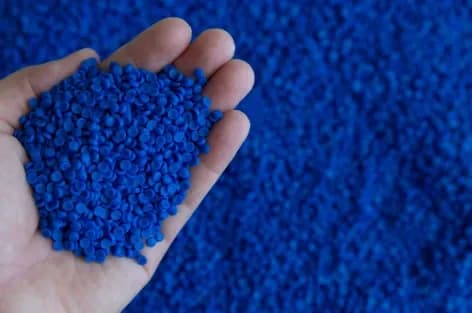
The finished plastic mixture is then extruded from the machine and cooled. It is then cut into small, uniform pellets. This granulate is the actual “compound” that is later processed further.
What types of plastic compounds are there?
Plastic compounds can be distinguished by the type of additives used.
Additive-based compounds
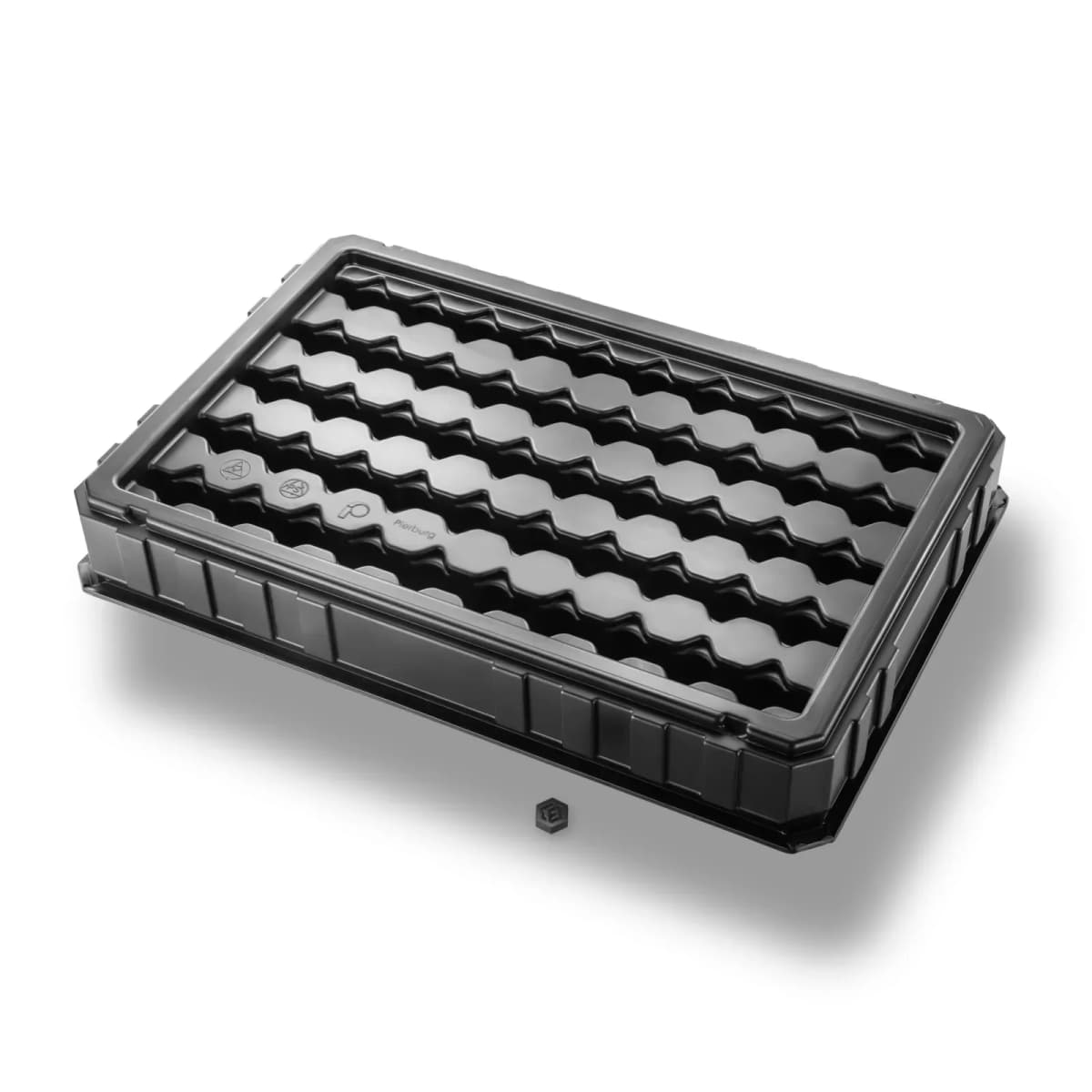
Plastic housing with ESD protection
Additive-based compounds are primarily used for functional modification. In this process, substances are added to the plastic to specifically produce certain effects. For example, antistatic agents reduce electrostatic charge and provide ESD protection, while flame retardants improve fire resistance.
Stabilizers protect the plastic from UV radiation or thermal aging, and lubricants ensure better processability and lower friction.
Filler-based compounds
Filler-based compounds are primarily aimed at mechanical optimization. Mineral fillers such as calcium carbonate or talc increase stiffness and improve dimensional stability. At the same time, they can reduce costs by partially replacing the more expensive base polymer. Carbon black is also used to increase UV resistance and extend the service life of components used outdoors.
When is it worth using plastic compounds?
Plastic compounds are a good choice when standard materials are not sufficient. Typical applications include, for example:
High mechanical stress
UV or weather exposure
Electrical requirements (ESD, insulation)
Temperature resistance
Long service life required
💡 Rule of thumb: The more specific the requirements, the more worthwhile it is to use a compound.
Sustainability of Plastic Compounds
Plastic compounding enables the use of recycled materials and improves their properties for more demanding applications. They reduce material consumption through lighter components and extend service life.
At the same time, fluctuating material qualities and complex blends can make recycling more difficult. Higher development and material costs are also possible, which is why a targeted and application-oriented material selection is crucial.
Practical Applications of Plastic Compounds
Plastic compounds are used wherever standard materials are not sufficient.
Protective enclosures for sensors and control systems
Construction Industry
Weather-resistant facade elements
Outdoor covers and protective enclosures
Insulation components with insulating properties
Cable ducts and technical installation systems
Advantages and Disadvantages of Plastic Compounds
Advantages of Plastic Compounds
Disadvantages of Plastic Compounds
Customized properties
Higher material costs
Higher performance than standard plastics
More complex processing
Wide range of applications
Longer development time
Combination of multiple functions in a single material
Do you need plastic compounds for your project? Request a quote now!
Plastic compounds are a key component for high-performance thermoformed plastic parts. They allow materials to be precisely tailored to your requirements, whether you need higher strength, better UV resistance or special functions. Compounds transform standard plastics into true high-performance materials. Inquire now!
Frequently asked questions about plastic compounds
Yes, compounding plastics is generally more expensive than using standard plastics. However, compounds offer better performance and can reduce costs in the long term.
In principle, yes, plastic compounds can be recycled. However, the quality depends heavily on the composition. Recyclates can be reused in compounds, often in combination with additives to stabilize their properties.
Many common thermoplastics are suitable for plastic compounds. ABS and ASA are frequently used for robust applications, HD-PE and PP for cost-effective solutions, as well as PC and PMMA for high transparency and strength. PET-A and PET-G are ideal for packaging, while PS and PVC are widely used in technical and industrial applications. The key factor is the desired property of the component.
More about Plastics
Thermoformed Parts in Practice
Warehouse Inventory: Tips & Tricks for Better Warehouse Organization and Efficiency with Trays
Warehouse inventories cost time, tie up staff, and often disrupt ongoing operations. This is especially true for small parts, serial components, or recurring components, where counting quickly becomes confusing if parts are stored loose in boxes or shelf compartments. Standard trays create a simple yet effective structure here for better warehouse organization. This article shows how trays optimize inventory counts in both the warehouse and production.
Thermoformed Parts in Practice
Tray Labeling: How to Use Labels Effectively for Your Packaging
To ensure that trays can be correctly identified and used, clear labeling is essential. Depending on the application, quantity, and process requirements, different methods can be used, such as permanent engraving or flexible labels. In this article, you will learn which tray labeling methods are available, when each method makes sense, and how labeling can already be incorporated into the tray design using formary’s 3D Tray Generator.
Thermoformed Parts in Practice
Supplier Guide for Plastic Thermoformed Parts – 10 Key Factors That Matter
Choosing the right supplier for plastic thermoformed parts is crucial for the quality, efficiency, and cost-effectiveness of your production. Our 10 tips will show you what to look for when selecting a supplier.
Platform & Features
3 Factors That Accelerate Your Procurement with formary
The three key factors—time, speed, and efficiency—are crucial for success in industrial manufacturing, from inquiry to delivery. That’s why formary has optimized this process, significantly accelerating the procurement of plastic thermoformed parts. Learn more in this article.
Thermoformed Parts in Practice
Rapid Prototyping in Thermoforming – Definition, Benefits & Processes
Rapid prototyping is used in product development to quickly create preliminary models. In thermoforming, rapid prototyping offers numerous advantages for producing high-quality prototypes efficiently and cost-effectively.
Platform & Features
Project Planning in Thermoforming – From Concept to Mass Production
From the initial idea to mass production, various factors must be considered in thermoforming project planning, including material selection, tool manufacturing, and quality control. This article provides a detailed look at how a thermoforming project with formary is executed.
Thermoformed Parts in Practice
Thermoforming vs. 3D Printing – Advantages, Disadvantages, Differences, and Similarities
Plastic parts are manufactured using various processing methods. In this article, we focus on comparing the processes of plastic thermoforming and 3D printing.
Thermoformed Parts in Practice
Injection Molding vs. Plastic Thermoforming – Advantages, Disadvantages, Differences, and Similarities
In the world of plastic processing, there are various common manufacturing methods used to produce precise plastic components for industrial applications. We compare two of them: Injection Molding and Plastic Thermoforming.
Thermoformed Parts in Practice
Checking CAD Models for Thermoformability: The Designer's Guide
Whether a plastic part is thermoformable is determined in the CAD model. Anyone who discusses geometry, wall thicknesses, and demoldability only after the first sampling pays for this loop with tool modifications, material waste, and lost weeks in the project timeline. This can be avoided during design: with a structured check that evaluates each model along this guide and makes typical sources of error visible early on.